Officials from the Department of Education in Davao City (DepEd-Davao City) have firmly reiterated that conflicts involving teachers and parents must be resolved through the department's official channels, not through barangay councils. This statement was issued after a teacher from Daniel R. Aguinaldo National High School received a summons from the local barangay.
DepEd Officials Clarify Proper Jurisdiction
Rey Solitario, the Schools Division Superintendent of DepEd-Davao City, emphasized that complaints against teachers should be submitted directly to the appropriate DepEd office within the school or to the Schools Division Office (SDO). He made this clear in a comment on a Davao-based news outlet's post on December 13, 2025.
"The filing of complaints in barangay is not within the proper jurisdiction when the matter involves DepEd personnel in the performance of official duties," Solitario stated. He added that such cases must be handled according to existing DepEd orders and Civil Service rules.

Barangay Action Deemed Beyond Procedure
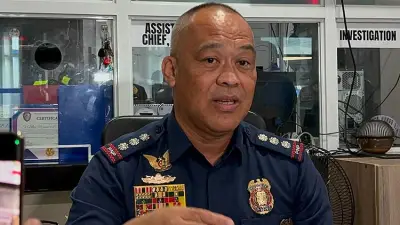
This position was strongly echoed by DepEd–Davao Region spokesperson Jenielito 'Dodong' Atillo. He called on barangay councils to ensure that teacher-parent disputes are directed through DepEd's established grievance processes.
"The Barangay has already gone beyond the proper procedure in this matter," Atillo said. He explained that the complaint should have been forwarded by the Barangay to DepEd, as they are not equipped to resolve such issues. He stressed it is vital for barangays to understand their limitations and direct concerns about teachers to the department.
The involved barangay had issued a statement but later took down its Facebook post.
The Conflict: A Summons Over a Student's Grade
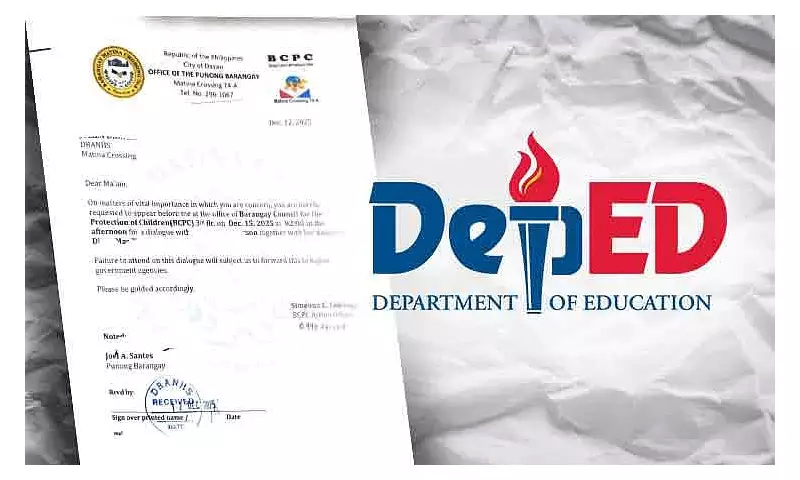
The incident began when the Office of the Punong Barangay sent a letter dated December 12, 2025, to the teacher. The letter, signed by BCPC Action Officer Simeona C. Lionbago and Punong Barangay Joel A. Santes, requested the teacher's appearance before the Barangay Council for the Protection of Children (BCPC) on December 15, 2025, for a dialogue with a parent and child. The letter warned that failure to attend would lead to the case being forwarded to higher government agencies.
The teacher's daughter sought help from DepEd-Davao, alleging her mother was humiliated. According to her account, a parent confronted the teacher, questioning why her child received a grade of 79. The teacher showed her computation, revealing the student's actual grade was 73 but had been adjusted to a passing rate.
Upon learning this, the parent allegedly shouted, "There are no competent teachers here at DRANHS!" The teacher, feeling humiliated, expressed her feelings in class, which then led the parent to invoke the Child Protection Policy, resulting in the barangay summons.
Public Reaction and Broader Lessons
The case sparked reactions from Dabawenyos, highlighting broader issues about parental expectations and proper protocols.
Grace Rosal shared that her child, an honor student in a private school, received a 76 after transferring to a public school. Instead of confronting the teacher, she challenged her child to improve. "Dear parents, instead of getting furious why not teach our children to embrace challenges... their best training starts at home," she advised.
Meanwhile, Ian Intens noted the situation serves as a critical lesson for parents to set realistic expectations aligned with their children's abilities. He also emphasized that the barangay officials who issued the summons should review the scope of their jurisdiction and should have educated the parent on the correct procedures for raising concerns.
The DepEd-Davao's firm stance underscores the importance of following official grievance mechanisms to protect both educators' rights and the integrity of the educational process.