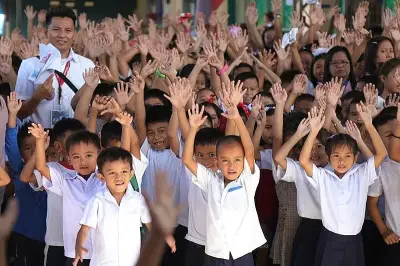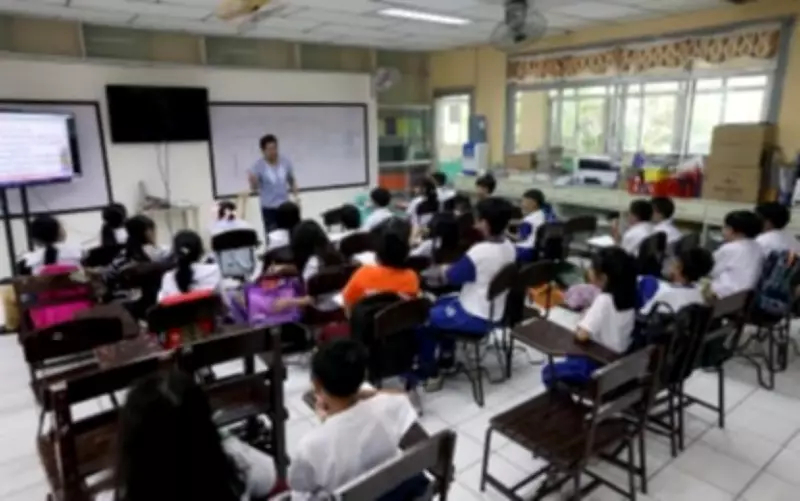
The Department of Education (DepEd) will continue providing subsidies for underprivileged learners in private schools for the upcoming school year, targeting more than 2.4 million beneficiaries under the Expanded Government Assistance to Students and Teachers in Private Education (E-GASTPE).
Program Coverage
Nearly 990,000 junior high school students will be covered by the Educational Service Contracting (ESC) program, while around 1.47 million senior high school learners will benefit from the Senior High School voucher program (SHS-VP) for School Year 2026-2027.
Education Secretary Sonny Angara emphasized that the program aims to ease financial pressure on families and help decongest public classrooms. He stated, as quoted in a news release, that President Bongbong Marcos prioritizes easing the burden of Filipino families regarding tuition and other school fees. Angara stressed that a child's education should not stop due to lack of money and that government assistance should reach the most needy families.

Revised Guidelines
DepEd has rolled out revised guidelines for E-GASTPE, unifying the implementation of ESC, SHS-VP, and the Teachers’ Salary Subsidy (TSS) under a single framework. The new rules place stronger emphasis on prioritizing learners from disadvantaged backgrounds, including low-income households, Indigenous Peoples communities, and geographically isolated areas — groups often most vulnerable to dropping out due to financial constraints.
Support for private school teachers through the TSS, which has increased from PHP18,000 to PHP24,000, remains part of the overall system to sustain education delivery, particularly in schools serving subsidized students.
Addressing Persistent Problems
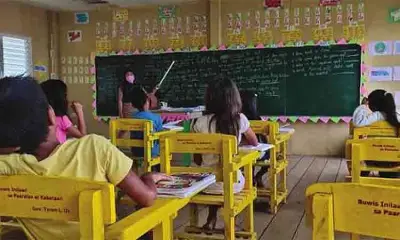
Angara noted that the cost of staying in school — including transport, uniforms, and private school fees — continues to strain household budgets, especially for families just above the poverty line. The Department also linked the subsidy program to broader system pressures, noting that congestion in public schools often forces students into overcrowded classrooms, affecting learning outcomes. By supporting enrollment in private schools, the government redistributes students and preserves education quality across both sectors.
The revised policy introduces a more systematic targeting approach, including stricter screening and monitoring systems to ensure subsidies are directed to learners who need them most, particularly those from low-income and vulnerable sectors.
Partnership with Private Schools
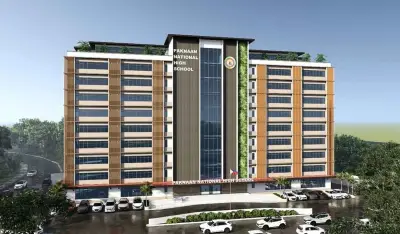
DepEd maintained that the role of private schools remains critical in this effort, describing the partnership as a practical way to expand access without overextending public infrastructure. The updated guidelines under DepEd Order No. 11, series of 2026, will take effect in School Year 2026–2027.