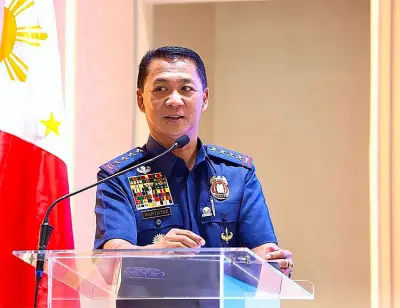
The House of Representatives Speaker Faustino “Bojie” Dy III announced Friday that the proposed Basic Education Voucher Assistance Act will bring the government closer to expanding access to quality basic education. The measure gives more Filipino families greater educational choices while reinforcing the vital role of private schools as partners in nation-building.
Bicameral Conference Committee Approves Reconciled Version
The bicameral conference committee approved on Thursday the reconciled version of House Bill 4744 and Senate Bill 1981, harmonizing the provisions of both measures even after the First Regular Session of the 20th Congress had adjourned sine die.
Under the proposed law, voucher assistance will be expanded to learners from Kindergarten to Grade 12. This allows more families to access available spaces in qualified private schools, especially in communities where public schools are already congested or where learners have limited options.

Speaker Dy: Education is the Best Investment
“Education remains the best investment we can make for our country’s future. By strengthening the voucher program, we are giving more Filipino families meaningful educational choices while supporting the important role that private schools play in our education system,” Dy said in a statement.
He said the measure underscores the government’s commitment to ensuring that every Filipino child has access to quality education regardless of economic circumstance. “Every reform we pursue is ultimately about creating better opportunities for every Filipino. Our goal is to ensure that government works better for our people today while building stronger institutions for generations to come,” he added.
House and Senate Representatives
The House contingent to the bicameral conference committee was led by Committee on Basic Education and Culture Chairperson and Pasig City Lone District Rep. Roman Romulo, Committee on Higher and Technical Education Chairperson and Tingog Party-list Rep. Jude Acidre, Valenzuela City 1st District Rep. Kenneth Gatchalian, Sorsogon 1st District Rep. Bernadette Escudero, and Akbayan Party-list Rep. Jose Manuel Tadeo “Chel” Diokno. Representing the Senate were Senators Bam Aquino and Camille Villar, together with officials of the Department of Education.
Acidre: Addressing Classroom Shortages and Congestion
In a separate statement, Acidre said the measure brings the country closer to providing timely support to learners and families affected by classroom shortages and school congestion. “For many Filipino children, the lack of classroom space is not just a policy issue. It is felt in crowded rooms, shortened learning time, shifting schedules, overburdened teachers, and parents who worry whether their children are truly getting the education they deserve,” he said.
He said the measure recognizes that both public and private schools have a role to play in helping Filipino children continue learning, particularly in areas where existing capacity can help ease the pressure on overcrowded public schools. Acidre added that the bill is also about fairness, especially for learners whose opportunities are affected by poverty, distance, school congestion, or the lack of accessible alternatives.
“A child’s opportunity to learn should not depend on whether the nearest public school still has space, or whether a family can afford another option. Government assistance must reach those who need it most: learners in congested areas, disadvantaged and underserved communities, and families who need support to keep their children in school,” he said.
Strengthened Voucher System with Safeguards
The lawmaker also said the reconciled measure strengthens the voucher system by making it more targeted, transparent, and accountable. These include school congestion mapping, a public registry of participating schools, quality assurance mechanisms, periodic assessments, and safeguards against fraud.
Next Steps
The bicameral conference committee report will be submitted to both the House and the Senate for ratification before it is transmitted to President Ferdinand R. Marcos Jr. for signature into law.