The Department of Education in Central Visayas (DepEd 7) is grappling with a severe financial and logistical crisis as it attempts to repair public schools devastated by a double calamity. A powerful earthquake in September followed by Typhoon Tino in November left a trail of destruction, and the agency now warns that its available funds are nearly exhausted.
Massive Funding Shortfall Hinders Recovery
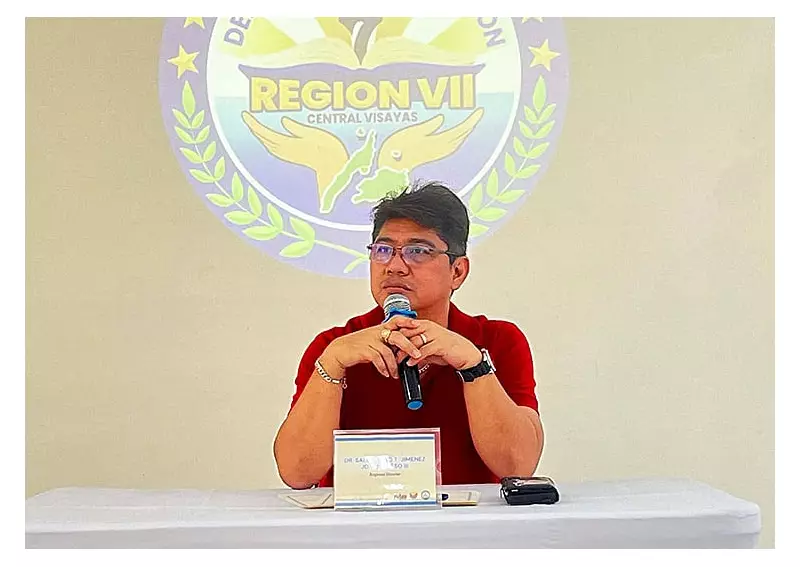
During a press conference on Thursday, December 18, Regional Director Dr. Salustiano Jimenez revealed a stark reality. While approximately P1.2 billion has been released for calamity response, this amount falls drastically short of the P5.5 billion the region requested for comprehensive repairs. "We have not even reached one-fourth of the funds we need," Jimenez stated in Cebuano. He cautioned that the budget for the 2025 school year is almost depleted, even as damage assessments are still ongoing.
The scale of destruction is immense. Initial data from mid-October showed the September 30 magnitude 6.9 earthquake near Bogo City affected around 200 public schools. It completely destroyed 500 classrooms, caused major damage to 700 more, and inflicted minor damage on over 2,000 others. Director Jimenez described the devastation as worse than that caused by Typhoon Odette in 2021, with estimated losses hitting P4 billion.

Technical and Logistical Hurdles Compound Crisis
Beyond the funding gap, DepEd 7 faces a critical shortage of structural engineers, a problem that extends to the Department of Public Works and Highways (DPWH). "Even the DPWH lacks structural engineers," Jimenez noted, adding that they are considering tapping private sector experts to accelerate building safety evaluations.
The situation was exacerbated by Typhoon Tino, which struck Cebu on November 4. The storm upgraded damage levels in many schools, turning minor issues into major or total losses. Assessments for Tino-affected schools are now with the DPWH for potential additional funding.
Some schools face existential threats. The Hagnaya Integrated Elementary School in San Remigio has been declared permanently unusable after government geologists identified a sinkhole on site. DepEd is now coordinating with local officials and its central office to relocate the school, a process complicated by limited buildable space in hazard-prone areas.
Interim Measures and Calls for Collaboration
With repairs expected to extend into 2026, DepEd 7 is relying on stopgap solutions. These include setting up Temporary Learning Spaces (TLS) and implementing modular or blended learning to recoup lost school days. Jimenez emphasized that face-to-face classes remain essential, and any extension beyond the required 200 class days will be decided locally.
The disruption is significant on a regional scale. While less than 10% of classrooms were affected, the calamities impacted around 700,000 students across Central Visayas, with learning backlogs reaching up to 30 days in some schools.
To bridge the massive resource gap, DepEd 7 is exploring all avenues. This includes pursuing public-private partnerships (PPP) for school construction and restoration, and urgently calling on local government units (LGUs) and non-governmental organizations (NGOs) for assistance. "We really need help from LGUs and NGOs," Jimenez appealed, as the region continues its recovery from successive disasters.