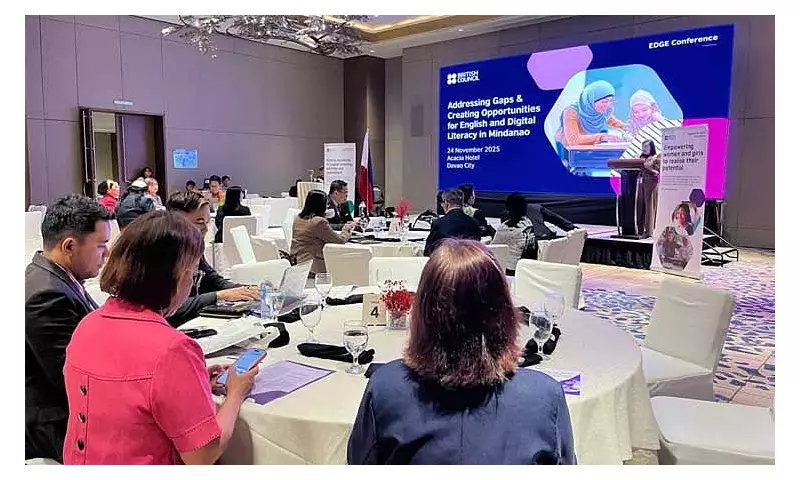
The British Council is launching a significant initiative aimed at empowering young women in the Bangsamoro Autonomous Region in Muslim Mindanao (BARMM). The organization is set to roll out specialized English and Digital Literacy Skills training for adolescent girls in the region, a move announced during the English and Digital for Girls’ Education (Edge) conference held in Davao City.
Addressing Persistent Barriers for Girls
Lotus Postrado, the Country Director of the British Council Philippines, detailed the program's foundations to the Philippine Information Agency (PIA). The initiative builds on insights from recent studies and roundtable discussions conducted under the Edge framework. A pivotal 2024 scoping study carried out in Barangay Kauran and Barangay Kuya within BARMM identified several persistent challenges hindering girls' education and advancement.
The research uncovered limited leadership opportunities, cultural restrictions, and significant gaps in digital literacy. While adolescent girls commonly use mobile phones for communication and entertainment, the study found that many lack the necessary skills to leverage technology for academic growth and future opportunities.

Further obstacles include financial constraints, long distances to schools, unreliable internet connectivity, frequent power outages, and substantial household responsibilities. These combined factors often diminish motivation and access to continued education.
The Edge Program: Empowerment Through Literacy
Postrado explained that the Edge program is designed specifically to close these identified gaps. Its core mission is to equip adolescent girls from marginalized and socioeconomically disadvantaged backgrounds with critical tools to make informed and independent life choices.
"It’s a program about improving competencies of disadvantaged groups, particularly girls, in improving their capacity to use English and Digital literacy," Postrado stated. "So now, we’re in the process of really taking it to different localities to convey the message of the importance of providing digital literacy and English for girls’ education."
The program, which has seen successful implementation in countries like Bangladesh and Pakistan, is now being carefully contextualized for the unique environment and needs of BARMM. The primary target group is girls aged 13 to 19 who are either out of school or come from disadvantaged backgrounds.
Collaborative Rollout and Lasting Impact
Sustainability and local ownership are central to the program's strategy. The British Council plans to work closely with a network of local stakeholders to ensure the initiative's success and longevity. This collaborative approach will involve:
- Local Government Units (LGUs)
- Schools and educational institutions
- Community-based organizations
- Civil society groups
Postrado emphasized that the Edge program transcends mere skill-building. "The idea is to provide interventions to students outside formal schooling, especially girls. Edge is our way of empowering them through literacy and English language skills," she noted. The initiative is fundamentally about amplifying the voices of young women who are often overlooked, giving them a platform to share their stories, build confidence, and ultimately become active agents of positive change within their own communities.