The Alliance of Concerned Teachers in Davao Region has announced its full participation in an upcoming nationwide sit-down strike, organizing alternative classes that will tackle critical issues facing the education sector.
Why Teachers Are Taking a Stand
ACT-Davao Union President Reynaldo S. Pardillo explained their decision to join the strike, pointing to dangerous learning environments where classrooms are literally collapsing and putting student safety at risk. He revealed that billions of pesos intended for education are being diverted to confidential funds and corrupt practices.
"This is not about convenience — this is about survival. This is not about politics — this is about our children's future," Pardillo stated emphatically during the announcement made on November 30, 2025.

Pardillo expressed frustration that teachers have been repeatedly told to be patient and wait for promised reforms that never materialize. While educators are urged to wait, he noted that education funds continue flowing into confidential allocations, with zero accountability for overpriced infrastructure projects that fail during rainy seasons.
Confronting Intimidation and Neglect
The union leader reported that teachers advocating for safe schools and living wages now face red-tagging, surveillance, and threats. However, he stressed that educators will not be silenced or intimidated in their fight for proper education funding.
"Education is a human right, and so are the rights to organize, protest, and demand dignity and safety," Pardillo emphasized. "These are not privileges but fundamental freedoms."
During the strike period, teachers will conduct alternative classes focusing on corruption, bureaucratic failures, and systemic neglect of education. These sessions will educate students about injustice, methods to oppose it, the destination of classroom funds, and the reasons compelling teachers to strike.
The Broader Impact on Filipino Society
Pardillo clarified that the strike extends beyond teacher concerns, representing all Filipinos who witness public funds disappearing while essential services deteriorate. The action stands for every parent worried about their child's school safety and every worker denied a living wage while those in power live comfortably.
The union president called on parents, students, and the general public to value education and support the sit-down strike. He urged the public to listen to teachers' concerns and join their demand for governmental accountability.
Alarming Classroom Shortage Statistics
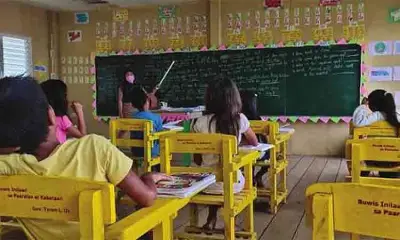
The classroom strike responds directly to government neglect, with 167,000 classrooms nationwide currently considered unsafe for use. Pardillo highlighted the stark contrast between thousands of unrepaired classrooms and the ₱10 billion allocation to confidential funds.
He specifically noted that ₱7.3 billion from these confidential allocations could instead fund substantial classroom construction projects.
Earlier assessments from Department of Education-Davao City Schools Division Superintendent Reynante Solitario revealed that Davao City faces a severe shortage of at least 4,053 classrooms, based on the standard ratio of one classroom per thirty elementary pupils.
Solitario expressed hope that local government would soon implement necessary programs, assuring that DepEd-Davao City stands ready to provide required documentation for additional classroom construction.
To manage the current shortage, numerous schools throughout the city have implemented shifting schedules, reducing instructional time for many students.
Local Government Response
Davao City Councilor Petite Principe, who chairs the committee on education, addressed the classroom crisis during the Pulong-Pulong sa Dabawenyos on Tuesday, November 25, 2025.
Principe stated that the city government is fast-tracking documentation for constructing more schools to address the pressing shortage. "We really want to come up with buildings in order to address it. Especially in far-flung areas, where we need to build more," she explained.

The councilor identified a significant obstacle: several city schools have land titles under local government control but lack proper documentation, frequently hindering construction progress.
Principe confirmed that the city has funds available for classroom construction but cannot proceed due to incomplete documentation, highlighting the bureaucratic challenges slowing educational infrastructure development.