Growing older has changed my definition of luxury. It isn’t found in extravagant experiences, but in the first spoonful of nilagang baboy that tastes exactly like my mother’s. It’s finally getting my bistek Tagalog recipe right after calling home one too many times to ask, “Ma, how much soy sauce again?”
When you leave your family home to build one of your own, you don’t just pack clothes or furniture. You bring recipes. Some are scribbled in old notebooks. Others live only in memory until one day you find yourself craving not just the food, but the feeling of home that came with it.
Perhaps that’s why, during NUSTAR Resort Cebu’s intimate preview of “Taste Cebu: Heirloom Culinary Gallery” on July 1, 2026, the stories behind every dish became just as memorable as the flavors themselves.

Preserving Memory Through Food
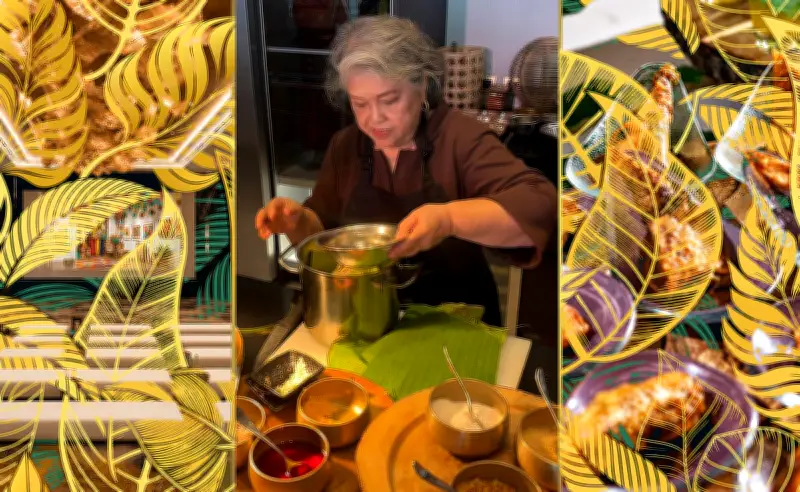
Across the table, food historian and “Hikay: The Culinary Heritage of Cebu” author Louella Eslao-Alix, affectionately known as Tita Loi, shared the histories behind Cebu’s heirloom recipes while demonstrating how they are prepared. Tita Loi has spent years documenting Cebu’s culinary heritage — not merely preserving recipes, but preserving memory. “It’s the food that brings you back home,” she said. “Home cooking is, for me, a very important part of our lives because it’s what we experienced daily as children growing up, and it ties you to home.”
For Tita Loi, Cebuano food has always been defined by restraint rather than excess. “We use what is available to us here. We prepare food in the most basic way, without too much intervention to the ingredients.” She spoke of dishes like sugba, tuwa and kilaw, where freshness is allowed to shine. “Our ingredients are cooked as simply as possible — straightforward and honest.”
Rare Dish Tamaus Rescued From Obscurity
Among the heirloom dishes she has helped preserve is Tamaus, also known as Cebu’s version of the tamales. Made with ground corn, peanuts, achuete oil and topped with meat, the dish reflects centuries of cultural exchange while becoming distinctly Cebuano. Once commonly found in Mandaue, it has become increasingly rare. “There was only one known person in Mandaue who made Tamaus,” Tita Loi recalled. “When she died, I thought the recipe had disappeared.” Then she heard about another woman selling it. “She used to be the original cook’s helper. She memorized everything she learned.”
Finding her meant navigating the maze-like alleyways of Mandaue. “I had to go through these tiny alleyways to find her. She cooked with all the windows closed because she guarded the recipe so carefully.” Eventually, Tita Loi pieced together the recipe through interviews and documentation. “No recipe should be hidden like that,” she said.
Timke: A Forgotten Comfort Dish
Another dish she hopes people rediscover is Timke, an almost-forgotten Cebuano chicken dish that perfectly captures the island’s philosophy of simple cooking. At first glance, Timke seems like a simple chicken broth prepared with ginger, salt, pepper and broth. But like many comfort foods, its magic lies in patience. Ginger plays a starring role, not only for flavor but also for its medicinal qualities. “It’s almost a universal recipe for getting well,” Tita Loi said. “The first thing your mother makes when you’re sick is hot chicken soup with ginger.”
The chicken is gently braised with locally made Mallorca gin before being wrapped tightly in layers of banana leaves. The parcels are then left to cook over low heat for nearly four hours, allowing the chicken to absorb every aromatic note. “The use of Mallorca is so Cebuano because it’s made here in Cebu. I don’t even think it’s known in Manila.” The resulting dish is comforting and quietly reflects the Chinese influence that has long shaped Cebuano cuisine.

Stories That Could Have Disappeared
Listening to Tita Loi, I realized these dishes are more than recipes. They are stories that could have disappeared if no one had cared enough to document them. They are mothers who cooked by instinct instead of measurement. Helpers who carried recipes only in memory. Historians who wandered through narrow alleyways so forgotten dishes could find their way back to the table. Maybe that’s what home cooking has always been, remembrance. Every time we recreate these heirloom dishes, we’re preserving home.
“Taste Cebu: Heirloom Culinary Gallery” will run from July 9 to 10, 2026, at the Grand Ballroom of NUSTAR Resort Cebu. Designed as an immersive culinary gallery, the event takes guests through different chapters of Cebu’s food heritage, celebrating the heirloom dishes, traditions and stories that continue to shape the island’s culinary identity.