The breadth of culture relies on the ways in which it is represented. The arts act as a mirror of shared values, beliefs, behaviors and material objects that culture produces. In the early 2000s, major films in Hollywood created a subculture of chick flick films that feature lifestyle and cultural publications. These films depict the glamour and merit behind print media, notably magazine publications and feature journalism in its entirety, molding a generation of young girls into storytellers with dreams of making it into a masthead somewhere. Print media has always been vital to culture in ways that gives it a tangible record of society's progression, history and heritage.
The Golden Era of Print Media
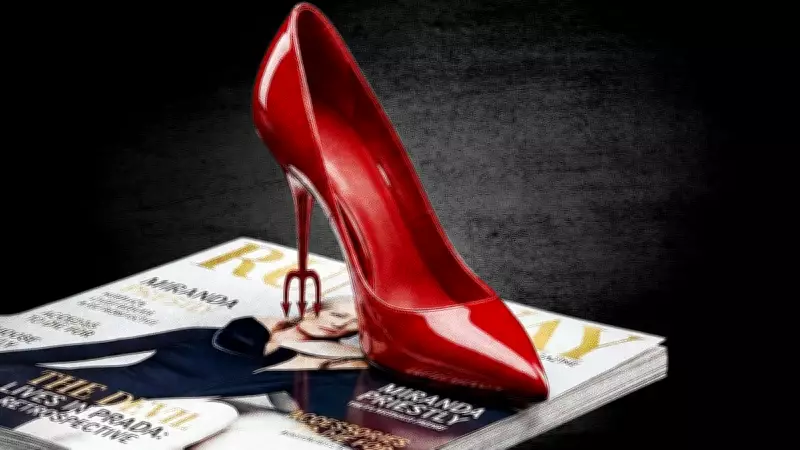
"The Devil Wears Prada" and its fictional publication, Runway Magazine, captured this golden era with precision. It became a fashion cult classic, laying the groundwork for the celebration of women visionaries in arts and culture. The much-awaited sequel, "The Devil Wears Prada 2," maintains its cutthroat depiction of editorial publications running from the ground up. In its landscape, it tackles cultural capital and how in the face of modernity, some traditions of journalism are threatened.
Is Print Media Dying?
With the digitalization of media, one would think: is print dying? Tradition points back to the days where women would collect stacks of their favorite magazines, with its glossy pages carefully kept and archived as markers of personal taste and style. If you were born in the golden days of the early 2000s, you may have tried a hand at scrapbooking with magazine clippings. Today, that ritual seems distant with the emergence of social media. When you peruse the aisles of bookstores, sadly the volume of magazine production has evidently dwindled down through the years. Where "The Devil Wears Prada" focused on Andrea Sachs' coming-of-age as a journalist and finding her footing in the publishing industry, the sequel undertakes more of a corporate nightmare that threatens to rob the very soul of print media.

A Poignant Scene
In a poignant scene in the film, following the passing of Irv Ravitz, the chairman of Elias Clarke Publications, Runway Magazine was about to be sold to Benji Barnes (Emily Charlton's love interest), a tech billionaire, who had a very different, profit-driven and soulless vision of Runway. In his conversation with its formidable editor-in-chief Miranda Priestly he posited, "Who knows, Runway may not even need models, locations or even designers in the future. It will all just be AI." Miranda countered, "Surely some things will stay. Like commitment to beauty, to artistry; the best in human achievement." Alas, change in every facet of the evolving world is imminent as premised by Benjie in the conversation. This points toward the dejected fact that the practical availability of digitalized media within reach makes it a favored mode of consumption for many. Print has sadly become a lost art due to its lack of immediacy in an age that demands instant gratification, a reality mourned by Miranda in one scene where she quipped that the once-supersized September issue that generated advertising revenue was now "so thin you could floss with it."
Editorial Integrity vs. Market Demand
Modern media often pursues virality. Digital platforms reward visibility and engagement, its success hinging on social metrics and algorithm frequency, pandering to clickbait. In this sense, the value of the story is increasingly measured by the traffic and revenue it brings. Legacy media like Runway Magazine are forced to adapt, compromising their editorial integrity for market demand. Miranda, in one confrontation with Emily, has said to her: "You're not a visionary, you're a vendor." Though it is a jab towards the unresolved conflict between the characters, it also encapsulates the central thesis of the film. Visionaries shape culture through thoughtful and intentional curation while "vendors" supply what is in demand. It becomes a critique of modern media, where commercialism is prioritized over cultural stewardship, causing media to lose its capacity to shape culture and instead becomes something marketed solely for revenue generation.

Conclusion
Ultimately, "The Devil Wears Prada 2" dissects the evolution of the social spheres of culture and the arts brought about by the emergence of digital media. It posits the question: can culture still be transformed in a world obsessed with metrics and numbers? Beyond virality, what remains worth pursuing?