ISTANBUL, Turkey — Philippine officials emphasized recent reforms in mining policies and permitting processes as the country seeks to attract more investments in critical minerals and enhance its position in global supply chains. The discussion occurred during a regional forum on Southeast Asia's expanding role in critical minerals production, where policymakers and industry leaders explored strategies for attracting investments while addressing fiscal, environmental, and social risks.
Regional Collaboration and Panel Discussions
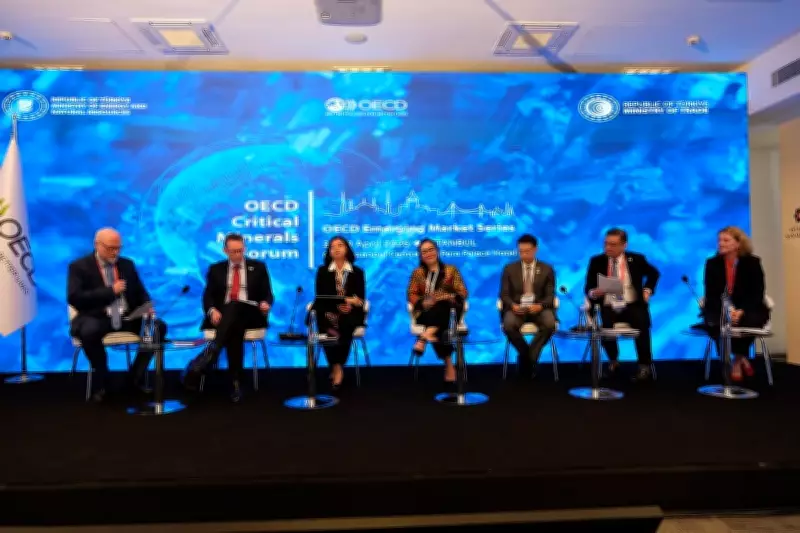
The Philippines participated alongside panelists from Thailand, Indonesia, Australia, and the Asian Development Bank (ADB) to deliberate on regional approaches for downstream industries, responsible mining practices, and stronger cooperation within Southeast Asia. The forum was part of the OECD Critical Minerals Forum held in Istanbul, Turkey.
Philippine Trade Undersecretary's Remarks
Trade Undersecretary and Board of Investments Managing Head Dr. Ceferino Rodolfo stated that the Philippines continues to position itself as an attractive alternative to existing nickel supply chains while pursuing agreements with strategic partners. He highlighted key reforms introduced by the government to resolve longstanding concerns that previously discouraged investments in the mining sector.

These reforms include the passage of the Enhanced Fiscal Regime for Large-Scale Metallic Mining Act, which establishes clearer rules on revenue sharing, valuation, and timing. Additionally, Rodolfo cited efforts to streamline the permitting process through technology-driven systems, reducing approval timelines from 11 years to 11 months.
Addressing Past Restrictions
The Philippines had previously implemented policies that slowed mining development, such as a moratorium on new mineral agreements and a ban on open-pit mining, along with restrictions imposed by some local government units. Rodolfo noted that these issues have been resolved through a clearer and more stable policy framework that promotes sustainable mining development.
He added that the earlier restrictions also preserved the country's mineral resources at a time when demand for critical minerals has increased due to energy transition projects and artificial intelligence technologies.
Remaining Challenges and International Support
Despite the reforms, officials acknowledged that challenges persist in identifying and developing bankable mining projects. The Philippines welcomed support from the OECD and the ADB in areas such as early-stage exploration, project preparation, innovative financing mechanisms, and mineral surveys.
Officials emphasized that stronger regional cooperation and support from institutions like the ADB could help resource-rich countries develop local industries and generate greater value from their mineral resources. The forum concluded with a call for enhanced collaboration to ensure sustainable and responsible mining practices across Southeast Asia.