In a significant move to combat the declining seaweed industry, at least ten key stakeholders have joined forces to establish a technical working group aimed at addressing critical challenges posed by climate change and other pressing factors.
Unified Response to Industry Crisis
The formation of this crucial technical working group was formalized through a Memorandum of Understanding signed on Thursday, November 27, 2025. This agreement serves as a comprehensive framework for cooperation among diverse sectors including four national government agencies, three government financial institutions, three academic institutions, three local government units, one legislative district, two processors, two civil society organizations, two traders and exporters, and three farmer organizations.
The Bureau of Fisheries and Aquatic Resources (BFAR) 7 has confirmed that this collaborative effort will consolidate previously fragmented initiatives, enabling stakeholders to mount a unified response to the industry's alarming collapse.

Leadership Commitment to Revival
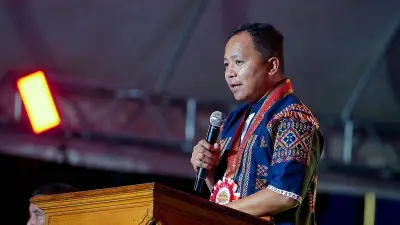
BFAR 7 Director Mario Ruinata delivered a powerful statement during the MOU signing ceremony, declaring, "We will not allow the seaweed industry to further decline." The technical working group operates under the Seaweed Revitalization Program, marking a pivotal moment for the sector.
According to Director Ruinata, the agreement represents a fundamental transformation from scattered activities to a coordinated strategy. This approach ensures clearly defined roles and harmonized support throughout the entire seaweed sector.
Comprehensive Recovery Strategy
The group's rehabilitation plan involves synchronizing programs across the complete value chain, encompassing everything from seed stock recovery and nursery development to value chain strengthening and market access improvement.
BFAR 7 Regional Seaweed and Milkfish Project Coordinator Joseph Martin Borromeo emphasized that the technical working group demonstrates a firm commitment to rebuilding an industry severely impacted by multiple challenges including environmental stress, disease outbreaks, poor planting materials, and unstable market conditions.
Borromeo highlighted the strategic shift from isolated efforts to coordinated action, stating, "It signifies our shift from working in isolation to working in coordination toward one unified objective — the rehabilitation and revitalization of the seaweed industry in Central Visayas."
He further revealed that Region 7 aims not only to recover lost production capacity but to establish itself as "a national model for seaweed rehabilitation", setting new standards for industry recovery nationwide.