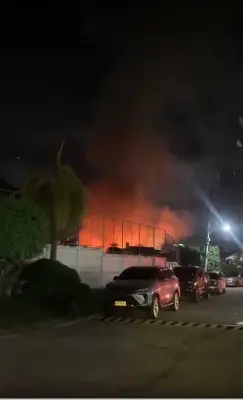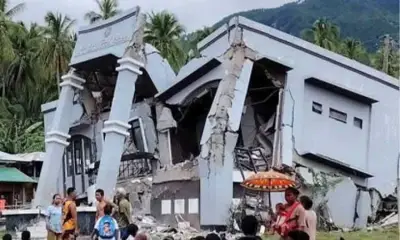
The severe flooding that struck Cebu during the recent onslaught of Typhoon Tino has ignited renewed public pressure on the government to implement swift and effective countermeasures. The disaster has prompted the advocacy group Movement for a Livable Cebu (MLC) to submit a formal petition, outlining what it believes are the most critical steps needed to prevent future catastrophes.
MLC's Six-Point Flood Action Plan
In response to the widespread damage, the MLC has laid out a comprehensive six-point plan directed at provincial and national authorities. The group argues that a fragmented system has led to overlapping responsibilities and poor project outcomes, which worsened the impact of the typhoon.
First, the petition calls for the creation of a dedicated Cebu Floodwater Management Office. This new body would be placed under the Department of Environment and Natural Resources (DENR) 7 and would be tasked with coordinating all agencies involved in flood control. This includes the Department of Public Works and Highways (DPWH) for infrastructure, the Department of Human Settlements and Urban Development (DHSUD) for settlements, and local government units (LGUs) for land use planning, among others.

Second, the MLC demands that authorities declare no-build zones in all areas submerged during the November 4 flood. The goal is to prevent future loss of life and property in zones that have been proven unsafe.
Third, the group is pushing for the permanent and safe relocation of families currently living in designated danger zones. Officials have reportedly agreed to coordinate with DHSUD and LGUs to make this happen.
Fourth, the petition highlights that some existing flood-control structures were built incorrectly and now actively worsen flooding by blocking natural river flows. The MLC insists these must be removed.
Addressing Root Causes and Government Reaction
Fifth, a moratorium on riverbed quarrying is a key demand. The MLC wants all sand and gravel extraction in rivers to stop until strict standards are established, citing that such activities deepen riverbeds, weaken banks, and disrupt natural water flow.
Finally, the sixth point emphasizes the urgent need to restore and protect Cebu's watersheds. This is seen as a vital long-term solution to improve natural water absorption and reduce destructive runoff.
The MLC squarely places the blame for the disaster's severity on human factors. “While the heavy rainfall brought about by typhoon Tino was a natural trigger, we are convinced that the disaster’s severity was exacerbated by the lack of political will, wrong engineering and criminal neglect of established technical studies,” the group stated.
In reaction, Governor Pamela Baricuatro expressed support for the call for urgent reforms, placing flood management as her administration's top priority. She stated, “Pareha ta’g goal nga this will not happen again in Cebu.”
Provincial Administrator Ace Durano addressed the financial aspect, noting that funding is not the primary issue. He revealed that a staggering P26 billion has already been spent on flood-control projects. “There is money; it just needs to be placed in the right direction,” Durano emphasized.
Revisiting Past Studies for Future Solutions
The recent meeting also brought the 2017 Mega Cebu Master Plan back into the spotlight. Engineer Fortunato 'Jun' Sanchez Jr. presented the plan to Governor Baricuatro, highlighting its proposal for nine dams from Carcar City to Danao City. Sanchez identified the Mananga, Lusaran, and Butuanon dams as priority projects and suggested the plan needs updating under the direction of President Ferdinand Marcos Jr. and DPWH Secretary Vince Dizon.
This master plan is a comprehensive urban development strategy developed with the Japan International Cooperation Agency, aiming for sustainable growth and improved infrastructure for Metro Cebu up to the year 2050.

The MLC ended its petition with a powerful call to action, urging leaders to act “with utmost resolve and tenacity” and affirming that Cebuanos have a fundamental right to a safe and well-managed environment.