Massive Evacuation as Super Typhoon Uwan Batters Philippines
The Philippines initiated one of its largest preemptive evacuation operations in recent history as Super Typhoon Uwan made landfall on Sunday, November 9, 2025. According to the Office of the Civil Defense, nearly a million individuals were moved to safety ahead of the typhoon's onslaught.
Evacuation Numbers and Regional Impact
During a press conference, OCD Deputy Administrators Bernardo and Rafaelito Alejandro IV revealed that 270,682 families, equivalent to 916,863 people, had been transported to designated evacuation centers. The massive operation aimed to protect vulnerable communities from the typhoon's destructive path.
The Bicol Region recorded the highest number of evacuees with 192,765 families or 660,721 individuals seeking shelter. Other affected regions included Cordillera Administrative Region, Ilocos, Cagayan, Central Luzon, Calabarzon, Mimaropa, National Capital Region, Eastern Visayas, Central Visayas, and Western Visayas.

Emergency Situations and Response Efforts
Alejandro reported that Bicol was experiencing strong winds and heavy to moderate rainfall as Uwan moved toward northern Luzon. Several critical incidents had already been documented by 10 a.m. Sunday.
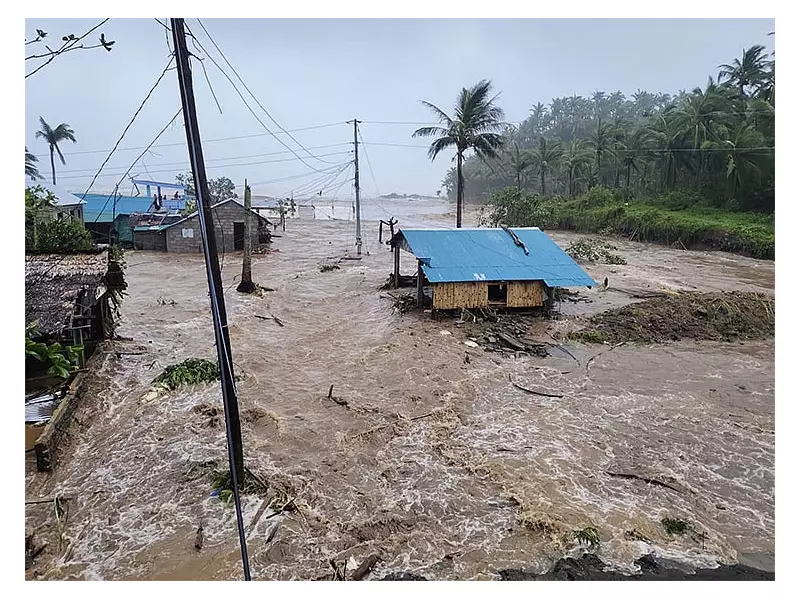
Flooding was reported in Barangay Masarawag, Guinobatan, Albay, an area repeatedly affected by lahar flow during severe weather events. In Catanduanes province, Virac experienced storm surges and flooding in multiple areas including Barangay Gogon, San Isidro, and Imelda Boulevard. Additional flooding was reported in Gigmoto, Catanduanes.
The region also faced power outages and communication line issues, complicating rescue and relief operations. In response, search, retrieval and rescue teams from multiple agencies including the Armed Forces of the Philippines, Philippine National Police, Philippine Coast Guard, and Bureau of Fire Protection had been deployed as part of comprehensive preparedness measures.
Police Mobilization and Public Assurance
PNP acting chief Police Lieutenant General Jose Melencio Nartatez Jr. confirmed the deployment of both personnel and essential equipment across areas expected to be hit hardest by the typhoon. More than 4,000 police personnel were deployed nationwide to support pre-disaster preparedness, while an additional 8,300 Reactionary Standby Support Force members remained on standby for immediate deployment.
The PNP had prepositioned 187 vehicles and mobility assets for rescue, relief, and evacuation operations. Local police were actively monitoring 20,433 designated evacuation centers to ensure safety and orderliness for evacuees.
Nartatez urged the public to remain calm and vigilant while avoiding the spread of unverified information online. He emphasized listening only to advisories from legitimate sources such as verified accounts of the police and local government units, assuring Filipinos that the PNP stands ready to assist in facing and recovering from the typhoon.
The coordinated response represents one of the most significant disaster management operations in recent Philippine history as the nation braces for Super Typhoon Uwan's full impact.