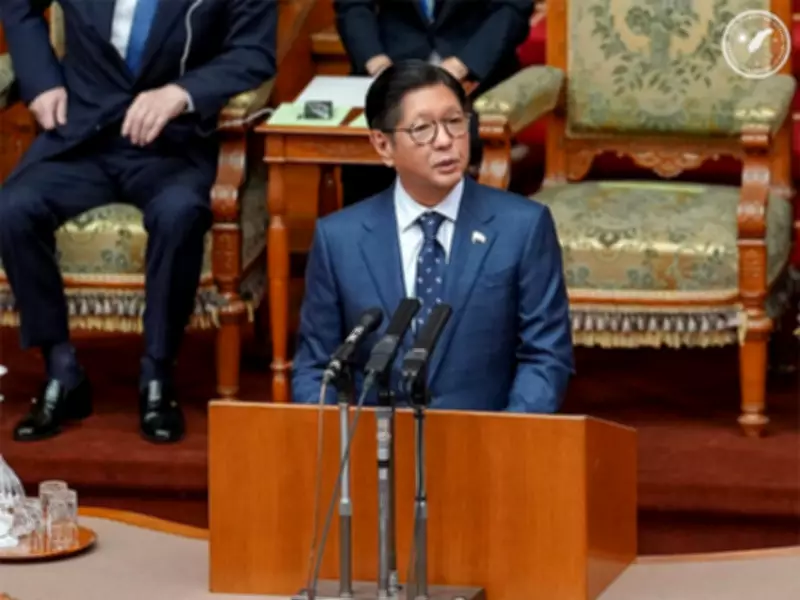
Philippine President Ferdinand Marcos Jr. concluded a four-day state visit to Japan on Friday, May 29, 2026, securing approximately US$3.4 billion in investment commitments, deepening security cooperation, and elevating bilateral relations to a Comprehensive Strategic Partnership as the two countries celebrate 70 years of diplomatic ties.
Describing the trip as “highly productive and constructive,” Marcos said the agreements and discussions held in Tokyo would support the Philippines’ push to become a regional hub for high-tech industries, manufacturing, and shipbuilding.
Investment Commitments
The President said Japanese companies expressed strong interest in expanding investments in sectors such as semiconductors, advanced electronics, automotive manufacturing, artificial intelligence, battery production, renewable energy, and shipbuilding. Among the major investment commitments announced during the visit were expansion plans by Japanese firms in semiconductor, precision manufacturing, and shipbuilding industries worth around P56.3 billion, projects expected to generate more than 10,000 jobs for Filipinos.

Marcos highlighted the role of Japanese shipbuilder Tsuneishi Group in helping revive the country's shipbuilding industry, saying the investments could restore the Philippines’ position among the world's leading shipbuilding nations. “These engagements reaffirmed strong confidence in the Philippine economy and opened new opportunities for investments that will benefit our people,” he said.
Elevated Partnership
A key outcome of the visit was the agreement between Marcos and Japanese Prime Minister Sanae Takaichi to elevate Philippines-Japan relations from a Strengthened Strategic Partnership to a Comprehensive Strategic Partnership. The upgraded relationship expands cooperation beyond traditional areas such as trade, investment, maritime security, and defense to include energy security, supply chain resilience, decarbonization, artificial intelligence, space technology, and other emerging industries.
The two leaders also exchanged views on regional security issues, including developments in the South China Sea and the Middle East, while reaffirming support for international law and freedom of navigation under the United Nations Convention on the Law of the Sea. In the defense sector, both countries announced the start of negotiations for a General Security of Military Information Agreement (GSOMIA) and maritime boundary delimitation talks.
Technology and Disaster Preparedness
Marcos said enhanced information-sharing arrangements with Japan would strengthen the Philippines’ disaster preparedness, agricultural planning, and urban development efforts. He noted that cooperation would cover weather forecasting, satellite data, smart city technologies, and other innovations that could help improve public services and resilience against natural disasters. The President said Japan’s advanced meteorological and satellite capabilities could help the Philippines better prepare for typhoons, heavy rains, droughts, and other climate-related threats while supporting agricultural productivity and food security.
Infrastructure and Development Support
During the visit, Marcos also met with Japan International Cooperation Agency (Jica) President Tanaka Akihiko to discuss ongoing and future development projects. Japan remains the Philippines’ largest source of official development assistance, supporting major railway, road, bridge, disaster risk management, healthcare, climate resilience, and coast guard modernization projects. The discussions covered additional financing for infrastructure and public health initiatives, including programs aimed at strengthening universal healthcare and climate change adaptation.
Marcos also thanked the Japanese government for its rapid deployment of technical experts to assist Philippine authorities in addressing the prolonged fire at the Navotas Sanitary Landfill. The President said the assistance demonstrated the practical value of the Philippines’ partnership with Japan, particularly during emergencies and other national challenges. He likewise cited Japan’s continued support on maritime issues, energy security, and science and technology cooperation, including joint initiatives in satellite development, robotics, and artificial intelligence.

Cultural and Community Engagement
Aside from meetings with Japanese officials and business leaders, Marcos met with members of the Filipino community in Japan, estimated at around 330,000 people, and assured them that their welfare remains a priority of his administration. The President also held an Imperial Audience with Emperor Naruhito and Empress Masako, a symbolic event that underscored the longstanding friendship between the Filipino and Japanese people.
As he wrapped up the visit, Marcos expressed confidence that the newly elevated Comprehensive Strategic Partnership would open new opportunities for cooperation and bring lasting benefits to both countries. “As our relations with Japan reached new heights under a Comprehensive Strategic Partnership, I am confident that our cooperation will continue to deepen and broaden and will open new frontiers for the benefit of both our peoples,” the President said.
The state visit coincided with the 70th anniversary of diplomatic relations between the Philippines and Japan, one of Manila’s closest economic and strategic partners in the region.