The Philippines and Indonesia are moving to establish a "nickel corridor" that could reshape the global battery supply chain, strengthen Southeast Asia's role in the electric vehicle (EV) transition, and accelerate the Philippines' push toward value-added mineral processing.
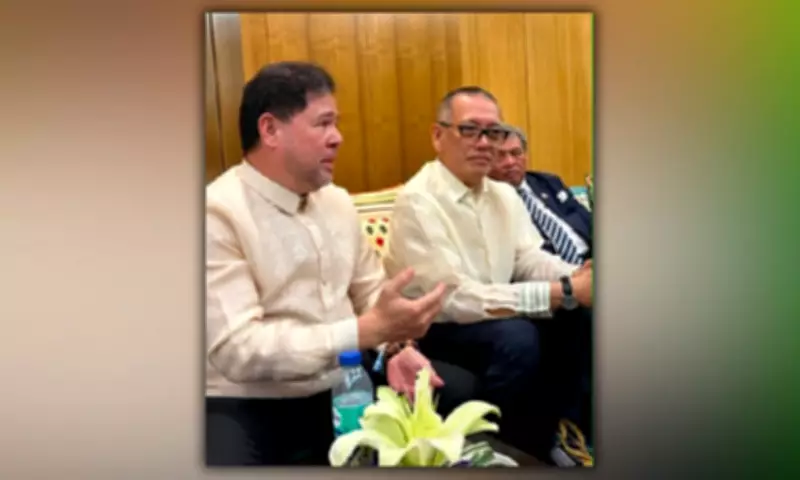
The proposed alliance was among five memoranda of understanding (MOUs) signed on Thursday, May 7, 2026, during the Indonesia-Philippines High-Level Business Roundtable held on the sidelines of the 48th Asean Summit in Cebu, where business leaders and government officials from both countries agreed to deepen cooperation in critical minerals, food security, renewable energy, financing and coal supply.
Officials described the nickel agreement as a historic partnership that would combine Indonesia's advanced nickel processing industry with the Philippines' vast mineral reserves, potentially giving the two Southeast Asian nations control of as much as 70 percent to 75 percent of global nickel supply.

Opec of nickel
In a media interview, following the high-level discussions Meidy Katrin Lengkey, secretary general of the Indonesian Nickel Minors Association, likened the combined influence of the Philippines and India as "Opec of nickel" in global nickel production. The Organization of the Petroleum Exporting Countries or Opec, composed of 12 member nations, manages oil production levels to influence global oil prices, often described as an oil cartel.
Indonesia currently controls around 65 percent of global nickel production and imported about 15 million metric tons of nickel ore from the Philippines in 2025, valued at approximately US$742 million, officials said. Philippines, on the other hand, produces about 15 percent.
Philippine Chamber of Commerce and Industry president Ferdinand Ferrer described the partnership as a "game changer," saying Indonesia's experience in rapidly building its downstream nickel industry could help the Philippines finally develop its own value-added mineral sector.
"We are not looking at competition, but rather at complementarity between the two countries," Ferrer said.
Moving up in the value chain
The Philippines remains one of the world's largest nickel ore suppliers but has long struggled to establish large-scale downstream processing facilities. Dante Bravo, president of Philippine Nickel Industry Association (PNIA), said Indonesia's expertise in smelting and battery-material production could help the Philippines move up the value chain instead of relying mainly on raw ore exports.
"What we cannot process here, they can buy," Bravo said, adding that the alliance would help ensure Asean remains a major supplier of battery-grade nickel materials needed for the global energy transition.
Nickel is a versatile, corrosion-resistant, and durable metal primarily used in stainless steel production (over 60 percent), electric vehicle (EV) batteries, and specialized alloys. It is essential for enhancing strength at high temperatures and is heavily utilized in industrial, automotive, and household applications, such as kitchen cutlery, electronics, and aerospace components.
The country's major nickel deposits are concentrated in Surigao del Norte, Surigao del Sur, Dinagat Islands, and Palawan. Lengkey said Philippine nickel ore complements Indonesian ore because of its lower silica-magnesium ratio, making it suitable for blending operations in processing plants.
She said the collaboration is also expected to support growing demand for EV batteries while helping stabilize global nickel prices amid oversupply concerns. The alliance is timely with the Philippines eyeing a bigger role in e-vehicle race in the Asean. Indonesia had already developed 55 nickel processing plants and several battery-material facilities.
Other key areas
Beyond mining, both countries also identified energy security, renewable energy, digital economy development and food security as key areas for deeper collaboration. Bernardino Moningka Vega, vice chair of Foreign Affairs of Kadin Indonesia, said Indonesia is also prepared to supply more coal to the Philippines in the short term to help address energy needs while both countries pursue renewable energy projects such as solar and hydroelectric power.

Department of Trade and Industry Undersecretary Allan Gepty said the agreements align with Asean's push for deeper regional economic integration and resilience amid global economic uncertainties. Gepty cited several Asean priority economic deliverables under the Philippines' Asean chairmanship in 2026, including the Asean power grid initiative, the Digital Economy Framework Agreement (Defa), food security programs, critical minerals cooperation and green infrastructure investment.
"It is good to see earlier that there was an MOU that would pave the way for stronger cooperation between our nickel industry in the Philippines and also in Indonesia," Gepty said.
Indonesia's Coordinating Minister for Economic Affairs Airlangga Hartarto said the partnership comes at a critical time as the global economy faces geopolitical tensions, energy price volatility, climate risks and technological disruption. Hartarto described the Philippines as a key economic partner and strategic buffer against global volatility, noting that the Philippines is Indonesia's third-largest trading partner.
Regional digital integration
He also encouraged investors to maximize opportunities in special economic zones, digital infrastructure and renewable energy development while pushing for the immediate conclusion of the Asean-Defa to accelerate regional digital integration. "The whole world is looking at Defa," Hartarto said. "This is the economy of the younger generation and an economy that is not prone to tariff wars." Business groups from both countries are expected to create technical working groups and sectoral task forces to implement the agreements and identify immediate and long-term projects.