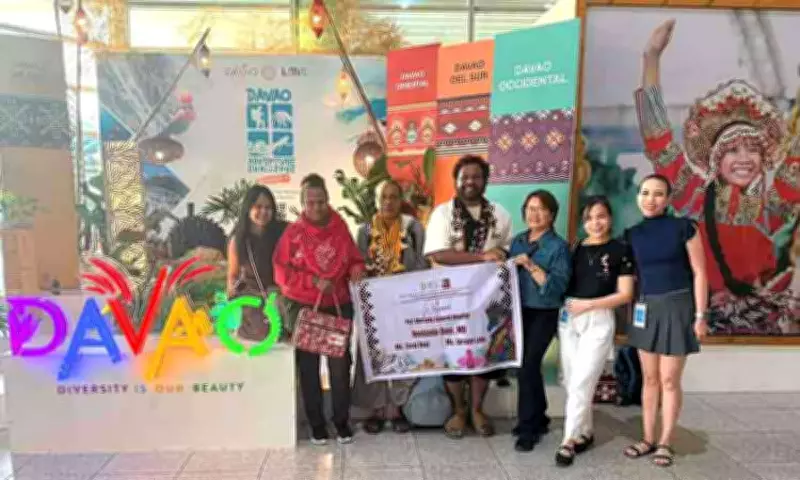
A delegation from Port Moresby General Hospital (PMGH) in Papua New Guinea received a warm welcome at the Francisco Bangoy International Airport as they began a 10-day observership at the Southern Philippines Medical Center's (SPMC) Children's Cancer Institute (CCI) in Davao City. The visit aimed to witness firsthand how a once four-bed unit grew into a leading pediatric oncology center through resourcefulness, collaboration, and commitment to child-centered care.
From Humble Beginnings to a Leading Center
The Children's Cancer Center of SPMC started with just four beds in the pediatric ward of what was then Davao Medical Center. Two years later, in 2006, it expanded to ten beds. By 2010, it had become the largest dedicated pediatric oncology unit in a public hospital, complete with hematology and oncology specialists and support staff. In 2016, it became the Children Cancer Center under SPMC's Cancer Institute, and in 2022, the Cancer Diagnostic and Treatment Facility was inaugurated—a final gift from former President Rodrigo R. Duterte to children with cancer in Mindanao.
This remarkable growth has made the center a showcase for others facing similar challenges.

The PMGH Delegation's Mission
The team from PMGH, the largest hospital in Papua New Guinea with an official bed capacity of 900 (but often accommodating up to 1,200 patients), came to observe, learn, and apply the center's strategies. Dr. Benjamin Daur, a pediatric oncologist at PMGH, explained that their unit has ten beds for child cancer patients—similar to SPMC in 2006. It is the only child cancer ward in all of PNG, which has a population of 10 to 11 million, roughly half of Mindanao's population.
Dr. Daur learned about the Children Cancer Center through former CCC Director Dr. Mae Concepcion J. Dolendo at the 4th ICPCN International Conference on Children’s Palliative Care in Manila in 2025. He expressed his interest in learning from other institutions, and Dr. Dolendo suggested SPMC. "I was so inspired by her story, how she told me that she started off from four beds and how those four beds have turned into an entire cancer institute," Dr. Daur said.
He admitted that the facility took him by surprise. "I didn’t understand the scale of the institute until I came here on Monday (April 11, 2026). Then I realized, wow, it’s an entire building. That was really amazing. That’s very inspiring."
Accompanying Dr. Daur were Seralyne Lino, a registered nurse, and Sr. Carol Konj, also a registered nurse at PMGH’s pediatric oncology ward. Their unit was initiated by Dr. Gwenda Anga, the first pediatric oncologist at their hospital. Currently, they have around a 40% survival rate for diagnosed and treated patients, which they hope to improve.
Key Learnings from the Observership
RN Lino noted that they learned more about chemotherapy drugs and their administration, but emphasized CCI's focus on hygiene, which alone solves many complications. RN Konj was delighted that their visit coincided with a two-day biotherapy workshop, which they attended and found very informative.
What impressed Dr. Daur most was the weekly multidisciplinary team meeting that CCI holds with other hospital units to discuss each case. "They do a lot of case discussions. One thing we learned here is whenever a child comes into the hospital, a new patient, on the next Monday they discuss the cases straight away," he said. "That’s something we haven’t been doing in our setting, but it’s something we can do right away. The team has a plan for each child as soon as they come in."
Dr. Dolendo explained that the multidisciplinary team meeting includes doctors, nurses, and support staff—pediatric hematologists and oncologists, infectious diseases specialists, palliative care, intensive care, and other invited teams. This weekly practice has been the culture since 2004, when the center started with just four beds.

Social Workers and Support Systems
Dr. Daur also found the presence of social workers at SPMC-CCI to be an eye-opener. These social workers, provided by the House of Hope Foundation for Kids with Cancer exclusively for CCI patients, offer psychosocial support and help families access financial assistance from programs like Davao City’s Lingap para sa Mahirap, the Department of Health’s Medical Assistance for Indigent Program (MAIP), and the Malasakit Center.
Inspiration for Change
Dr. Daur emphasized that one major takeaway from their visit is how small changes within their institution can save resources and enable them to serve more patients. He noted that observing CCI’s approach was more relatable than visiting advanced settings like Singapore or Australia, where the service gap might seem overwhelming. "Seeing how CCI does it, I feel more inspired to do more. It was like, ‘Oh, this makes sense!’ I just felt appreciative to be here. It was more than what I expected. We are optimistic that we can start working on things."
The ten-day observership training at SPMC-CCI was made possible through the St. Jude Global Asia Pacific regional program and SIOP Oceania, the regional continental branch of the International Society of Paediatric Oncology (SIOP), which represents professionals in Australia, New Zealand, and the Pacific Islands working to improve childhood cancer care.