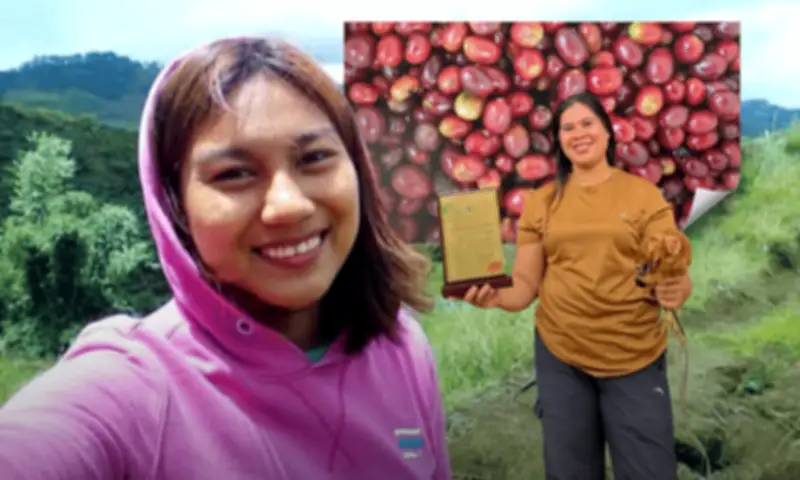
In the highlands of Bansalan, Davao del Sur, women are redefining the traditionally male-dominated field of agriculture. Through patience, dedication, and passion, they are becoming key players in the coffee industry—not just as laborers but as decision-makers, entrepreneurs, processors, and quality advocates. Members of the Balutakay Coffee Farmers Agriculture Cooperative (Bacofa Coop) in Sitio Balutakay, Barangay Managa, are exemplifying how women can transform coffee farming from a simple livelihood into a thriving industry.
Roxanne Abegail Naya: Balancing Teaching and Farming
Roxanne Abegail Naya, a teacher and coffee farmer, placed in the top 2 for Best Processed Arabica-Naturals at the Philippine Coffee Quality Competition (PCQC) 2026. Her award-winning mixture features notes of caramel, cocoa, Mandarin orange, plums, honey, and florals, scoring 85.61. Naya joined Bacofa Coop after her parents entrusted her with a piece of land in Balutakay. "Una sa tanan, naaghat ako nga mahimong coffee farmer tungod kay gitagaan ako sa akong mga ginikanan og usa ka luna sa Balutakay, Bansalan (First of all, I was encouraged to become a coffee farmer because my parents gave me a piece of land in Balutakay, Bansalan, Davao del Sur)," she shared. She joined the cooperative to access government programs and opportunities that improve their livelihood.
Naya emphasizes that women farmers serve as models for others, especially men, through their dedication and productive farming. "Ang kababayen-an nga mag-uuma mahimong sumbanan o modelo sa tanang mag-uuma labi na sa mga kalalakin-an tungod sa ilang dedikasyon ug mabungahon nga pagpanguma (The women farmers can become examples or models to other farmers, especially to men, because of their dedication and productive farming)," she said. She believes women play a major role in strengthening Davao Region's coffee industry by helping farmers adopt better practices and produce high-quality coffee.

Challenges and Dual Obligations
Balancing teaching and farming is challenging. Naya monitors her coffee farm on weekends and gives instructions to workers on school days. "Lisod gyud ang dual obligation, pero antuson gyud kay dako man pud og ikatabang ang farming sa among kinabuhi, labi na sa financial needs (It is really difficult to manage the dual obligation, but we endure it because farming also greatly helps our lives, especially in meeting our financial needs)," she said. Despite difficulties, she encourages women to engage in agriculture and support the farming sector. "Sa mga kababayen-an nga naa sa agricultural sector, hinaot ilang ipadayon ang ilang pangandoy sa pagpalambo sa panginabuhian sa mga farmers. Di ba naa tay panultihon nga 'farming is the backbone of our nation', so dapat gyud nato tabangan ang mga farmers kay kung walay farmers, walay magtanom, wala pud tay makaon kay walay produksyon. Bisan babae ta, aduna gihapon kitay dako nga ambag sa agrikultura (To the women in the agricultural sector, I hope they continue pursuing their dreams of improving the livelihoods of farmers. We have a saying that 'farming is the backbone of our nation,' so we should really help farmers because without farmers, there would be no one to plant, and we would have no food because there would be no production. Even if we are women, we still have a significant contribution to agriculture)," she said.
Princess Dian Tapdasan: From Harvester to Finalist
Princess Dian Tapdasan, a coffee farmer and processor from Balutakay, has been involved in coffee production since joining Bacofa Coop in 2022. Starting as a harvester, she became a processor and contributed to the cooperative's success in competitions. She was among the members who competed in the Southeast Asia (SEA) Green Coffee Competition 2026-Arabica Category. After placing in the Philippines National Round, she became a finalist representing the country in the regional competition in Vietnam. Tapdasan highlighted women's patience and attention to detail in processing coffee. "Dako kaayo role ang babae sa industry sa coffee tungod kay labi na sa pag-market sa mga produkto ug taas kaayo ug pasensya ug pailob (Women have a very important role in the coffee industry, especially in marketing products, because they have great patience and perseverance)," she said. Women are often involved in picking cherries, sorting, processing, and ensuring quality beans reach consumers.

Women in Cooperative Leadership
Bacofa Coop chairperson Rogelio Gonzales, who placed Top 3 in the national round of the SEA Green Coffee 2026 competition-Arabica Category, acknowledged women's crucial role. "Giila namo ang dakong parte o role sa mga kababayenhan diha sa atong Bacofa coop tungod kay sila ang mas gihatagan namo ug prayoridad sa mga posisyon sa coop kay sila ang mas hands on ilabi na gayud sa hisgotanan sa pag proseso ug Specialty Coffee kay mas taas ang ilang pasensya ug dedikasyon sa trabaho (We recognize the significant role and contribution of women in our Bacofa cooperative because we give them priority in cooperative positions. They are more hands-on, especially when it comes to processing specialty coffee, because they have greater patience and dedication in their work)," Gonzales said. Women also serve as partners in managing farms and supporting families. Gonzales noted that the success of Balutakay coffee is strengthened by government agencies, partner organizations, and mostly by women.
Awards and Recognition
Bacofa Coop coffee reaches third-wave coffee shops in Davao and Manila and has gained recognition among international buyers. The cooperative has received numerous awards for the exceptional quality of its Arabica coffee. For women like Naya and Tapdasan, coffee farming is more than a livelihood—it proves that agriculture is defined by commitment, knowledge, and willingness to grow, not by gender. As more women take their place in the coffee value chain, they are cultivating opportunities, empowering communities, and brewing a future where everyone has a role in the industry's success.