ICC Prosecutors Present Videos and 'Narco List' as Evidence Against Duterte
The prosecution team at the International Criminal Court (ICC) has unveiled a series of videos and documents in a recent hearing, aiming to demonstrate that the term neutralization under the previous administration's war on drugs directly referred to killings. This move marks a significant development in the ongoing case, as the ICC seeks to establish a link between official language and alleged state-sanctioned violence.
Key Evidence Presented in the Hearing
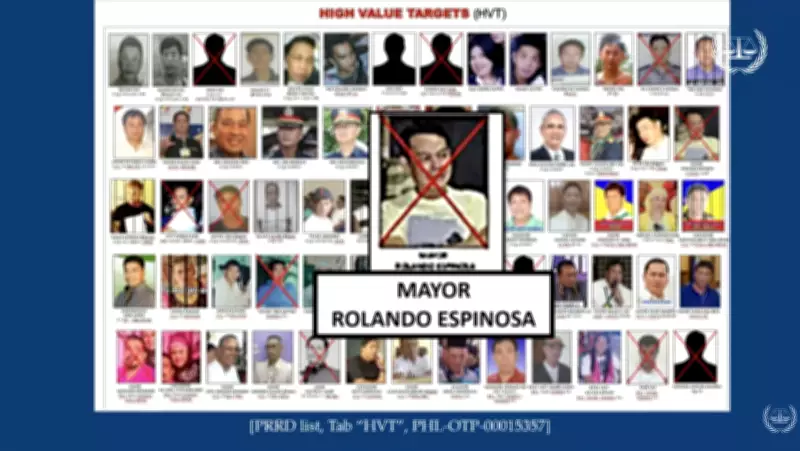
During the proceedings, ICC Trial Lawyer Edward Jeremy presented what is known as the Duterte list as crucial evidence. This list reportedly includes individuals such as former Mayor Rolando Espinosa and Mayor Reynaldo Parojinog, both marked as neutralized on the very days they were killed. The prosecution argues that this terminology was not merely bureaucratic but a deliberate euphemism for extrajudicial executions.
In addition to the list, Jeremy displayed a chart allegedly showing former President Rodrigo Duterte proudly crossing out Espinosa's photo after his death. This visual evidence is intended to illustrate a pattern of behavior that the prosecution claims reflects a celebratory attitude towards the killings.

Video Footage and Alleged Admissions
To further bolster their case, the prosecution released several videos featuring Duterte. One video purportedly shows the former president admitting that his only capability is extrajudicial killings, while another depicts him celebrating the deaths of 32 individuals during an operation in Bulacan. These recordings are presented as direct proof of intent and policy, challenging any claims of accidental or isolated incidents.
According to the prosecution, the combined evidence—including the narco list, charts, and videos—is sufficient to prove that the killings were part of a systematic attack on civilians and constituted a formal state policy. They argue that this systematic nature elevates the acts to crimes against humanity, falling under the ICC's jurisdiction.
Implications and Broader Context
The presentation of this evidence underscores the ICC's determination to hold high-level officials accountable for alleged human rights abuses. By focusing on the term neutralization and its documented use, the prosecution aims to dismantle any defense that the drug war was merely a law enforcement operation gone awry. Instead, they portray it as a premeditated campaign with deadly consequences.
This hearing is part of a larger international effort to address extrajudicial killings in the Philippines, drawing attention to the need for transparency and justice in conflict zones. The outcome could set a precedent for how similar cases are handled globally, emphasizing the importance of linguistic analysis in proving criminal intent.