Court of Appeals Acquits Rights Advocate Sally Ujano, Orders Immediate Release
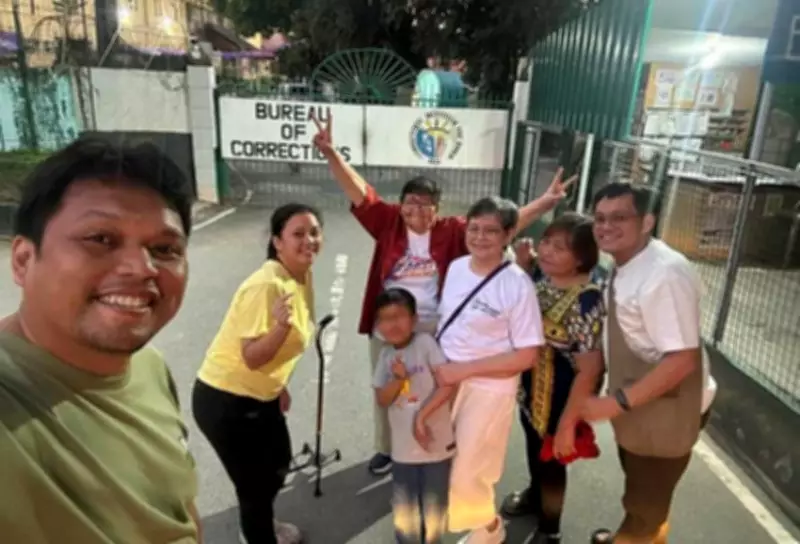
In a landmark decision that has been hailed as a victory for human rights, the Court of Appeals (CA) has acquitted women and child rights advocate Ma. Salome "Nanay Sally" Ujano of rebellion charges. The ruling, dated March 23, 2026, overturns a previous conviction by the Taguig Regional Trial Court (RTC) and mandates her immediate release from the Correctional Institute for Women in Mandaluyong City.
Judicial Reversal and Legal Basis
The CA's decision explicitly stated that "the evidence presented fails to establish with the required moral certainty that Ujano and her co-accused were among those who participated in the alleged rebellion." This judicial finding means the prosecution could not prove the charges beyond a reasonable doubt, a fundamental legal standard in criminal cases. Consequently, the court not only acquitted Ujano but also ordered her prompt release, which was carried out on March 26, 2026.
Background and Arrest
Ujano was arrested in November 2021 over allegations of involvement in the ambush of two military personnel in Quezon Province back in 2005. At the time of the alleged incident, she was serving as the executive director of the Women's Crisis Center, actively working to protect women from domestic violence. In 2024, the Taguig RTC convicted her, sentencing her to 10-17 years in prison—a verdict that has now been completely reversed by the appellate court.

Advocacy and Recognition
Ujano is a prominent figure in human rights circles, with over four decades of dedicated work defending survivors of violence and advancing gender and child protection reforms. Her contributions have been widely recognized, including by UN Women-Philippines in 2023 for her significant efforts in human rights advocacy. She played a key role in lobbying for critical legislation, such as the Anti-Violence Against Women and Their Children Act of 2004.
At the time of her arrest, she was serving as the national coordinator of Philippines Against Child Trafficking, a network committed to building communities that protect children from trafficking. Supporters from various women and child rights groups have criticized the national security narrative used to justify her arrest, arguing that it endangered fundamental rights.
Family and Supporters' Reactions
Her son, Klaro Ujano, expressed relief and joy, stating, "The Court of Appeals' decision affirms what we have long known—the accusations against our mother were baseless. Today, goodness and love prevailed. Nanay Sally is finally home, and this victory is especially meaningful as Women's Month comes to a close." He also highlighted the emotional toll on the family, citing red-tagging, uncertainty, and concerns over her health during imprisonment.
The Ujano family extended profound gratitude to her lawyers, supporters, and the Free Sally Ujano movement, which campaigned for her freedom since her arrest. The movement, led by family members and representatives from women's and child rights groups, consistently proclaimed her innocence. In a statement, the family said, "Thank you to everyone who stood with us through this long and painful journey. Most of all, we are deeply grateful to God—our source of strength—throughout these nearly five years of praying and fighting for Nanay Sally's freedom. This victory belongs to everyone who fought for truth and justice."
Broader Implications
Now reunited with her family, Nanay Sally conveyed her appreciation, saying, "Finally, truth and justice prevailed. Miracles do happen." Her case is expected to spark renewed conversations on several critical issues:

- The treatment of political detainees and the use of counterterror frameworks.
- The protection of civil liberties and the risks of branding activists without sufficient evidence.
- The judicial scrutiny of national security claims, as highlighted by the network's statement: "To brand activists and civilians as 'sinister terrorists' without sufficient evidence endangers fundamental rights. This case shows how such claims collapse under judicial scrutiny."
This acquittal not only restores Ujano's freedom but also reinforces the importance of due process and justice in the face of complex legal and political challenges.