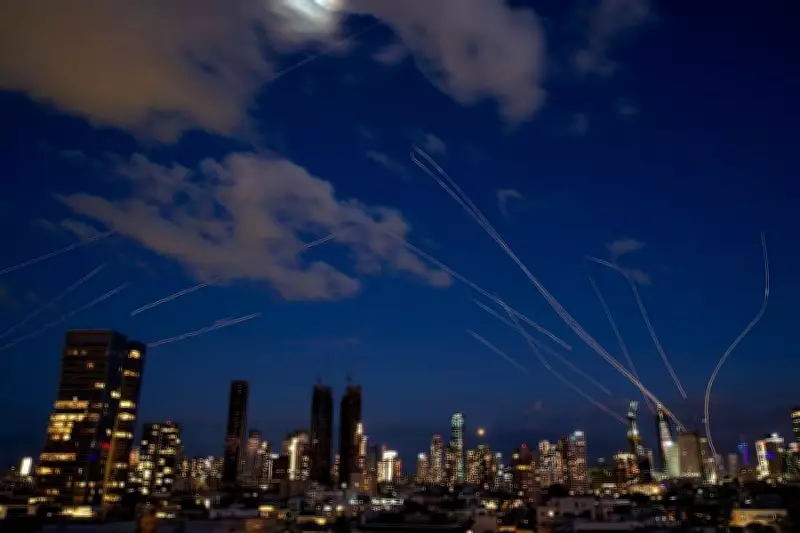
Escalating military tensions in the Middle East have severely disrupted air travel from the Philippines, leading to the cancellation of twenty-three international flights as of Saturday, February 28, 2026. The Civil Aviation Authority of the Philippines (CAAP) confirmed these cancellations, citing safety concerns and rapidly imposed airspace restrictions by several countries in the volatile region.
Major Carriers Affected by Widespread Disruptions
The flight cancellations impacted a range of prominent airlines, highlighting the broad reach of the crisis. According to CAAP reports, Philippine Airlines saw eight flights canceled, while Emirates had six flights grounded. Etihad Airways faced four cancellations, with Cebu Pacific and Qatar Airways each losing two flights, and Gulf Air canceling one. Additionally, three flights were diverted as a precautionary measure—two from Philippine Airlines and one from Qatar Airways—to ensure passenger safety amid the uncertain conditions.
Safety Measures and Government Response
CAAP Director General Retired Lt. Gen. Raul Del Rosario emphasized that the agency is implementing stringent measures to protect passengers, following directives from President Ferdinand Marcos Jr. "We are closely monitoring the situation and are in constant coordination with airlines and international aviation partners," Del Rosario stated. "The safety of passengers and flight operations remains our highest priority." This proactive approach aims to mitigate risks as the conflict evolves.

Impact on Mactan-Cebu International Airport
The disruptions have particularly affected Mactan-Cebu International Airport (MCIA), a key hub for international travel. On Sunday, March 1, the Mactan-Cebu International Airport Authority (MCIAA) confirmed the cancellation of Qatar Airways flights to Doha and Emirates flights to Dubai, specifically flight EK 338. Airport officials have urged travelers to reconfirm their bookings and update contact details to receive real-time alerts, as the situation remains fluid. Qatar Airways has temporarily suspended check-in for affected flights until further notice, adding to the travel inconveniences.
Root Causes and Regional Airspace Closures
The regional instability stems from recent military strikes involving the United States, Israel, and Iran, which have heightened tensions across the Middle East. In response, countries including Iran, the United Arab Emirates, Qatar, Kuwait, and Iraq have restricted or completely closed their airspace to civilian traffic. These actions have created significant challenges for international aviation, forcing airlines to reroute or cancel flights to ensure safety.
Support for Overseas Filipino Workers
Affected overseas Filipino workers (OFWs) are being provided with assistance to navigate the travel disruptions. Authorities have directed them to seek help at the OFW Facilitation Center in the MCIA Terminal 2 arrivals area, or at the Department of Migrant Workers (DMW) and Overseas Workers Welfare Administration (Owwa) kiosks located in the Terminal 2 departures area. This support system aims to address immediate concerns and provide guidance during the crisis.
Government Assurance and Contingency Plans
The Department of Migrant Workers (DMW) confirmed on Sunday, March 1, 2026, that Filipinos in the Middle East remain safe despite the U.S. and Israeli strikes on Iran. DMW Secretary Hans Cacdac highlighted that the department is in constant coordination with Philippine embassies to monitor the situation of OFWs. He outlined contingency plans, including the provision of basic needs and possible repatriation should the conflict escalate. While some families have inquired about the whereabouts of loved ones, Cacdac noted that all concerns are being addressed, including issues related to domestic flight cancellations.
Precautionary Advice for OFWs
The Overseas Workers Welfare Administration (Owwa has urged OFWs to follow the advice of Philippine embassies and local authorities to ensure their safety. Workers are advised to identify nearby shelters, stay alert for emergency notifications, and avoid high-risk areas. These measures are part of a broader effort to protect Filipino nationals abroad as the geopolitical situation develops.

The ongoing military tensions in the Middle East continue to pose significant challenges for global air travel, with Philippine authorities prioritizing safety and support for affected travelers and workers. As the situation evolves, further updates and adjustments to flight schedules are expected.