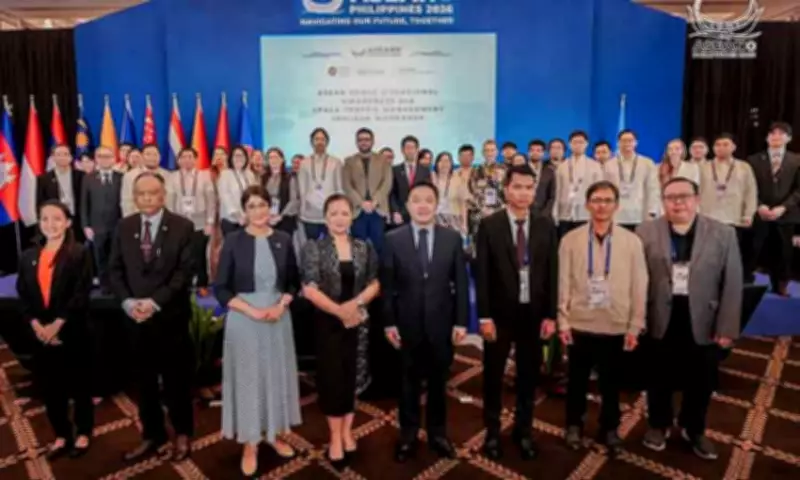
ASEAN Nations Unite to Enhance Space Safety and Traffic Management in Manila Workshop
As space becomes increasingly congested, understanding orbital activities and sharing critical data is essential to prevent collisions and safeguard satellites, which provide vital services for daily life. The Philippine Space Agency (PhilSA), in collaboration with the United Nations Office for Outer Space Affairs (UNOOSA) and Thailand's Geo-Informatics and Space Technology Development Agency (GISTDA), hosted the ASEAN Space Situational Awareness (SSA) and Space Traffic Management (STM) Seminar-Workshop on March 12-13, 2026, in Manila.
Regional Dependence on Space-Based Services
ASEAN Secretary-General Dr. Kao Kim Hourn emphasized the direct and concrete stakes for the region, noting that ASEAN economies, disaster response systems, aviation, shipping, and digital connectivity rely heavily on space-based services. UNOOSA Director Aarti Holla-Maini highlighted that protecting satellites, investments, and the services they provide requires data sharing through space traffic coordination, which enables operators to communicate and maneuver safely to avoid collisions.
Key Discussions and Objectives
The two-day workshop gathered representatives from ASEAN Member States, policymakers, technical experts, and commercial operators to advance a coordinated regional approach to space safety. Discussions focused on:

- Space Situational Awareness (SSA): Improving the observation, tracking, and prediction of object trajectories in orbit.
- Space Traffic Management (STM): Translating data into actionable measures through communication and operational coordination.
- Understanding the impacts of space weather on satellites and critical infrastructure.
- Strengthening policy frameworks to support SSA and coordination efforts.
- Building ASEAN regional capacity through collaboration, trust, and data-sharing initiatives.
Philippine Initiatives and Regional Collaboration
During the event, PhilSA showcased an exhibit on the Philippine government's efforts to monitor rocket launches and debris within its territory. PhilSA Deputy Director General Dr. Marc Caesar R. Talampas warned of growing hazards from debris and uncontrolled reentries, urging ASEAN partners to broaden the regional SSA/STM framework to cover the entire lifecycle of space objects—from launch to reentry—and develop coordinated protocols to protect both space assets and populations on the ground.
Following the seminar-workshop, PhilSA and UNOOSA signed a Memorandum of Understanding to enhance collaboration in areas such as space law, disaster risk reduction using space-based information, capacity-building, and public engagement. Initiatives include a public lecture on space law and the global release of PhilSA's children's activity book, Si Tala at ang Kanyang Lakbay Kalawakan!, which will be adapted into all six official UN languages.
Advancing ASEAN Space Cooperation
The workshop is part of the Philippines' ongoing efforts to promote regional dialogue in space governance. As ASEAN Chair, the Philippines is proposing an ASEAN Declaration on Space Cooperation to strengthen collaboration in space science, technology, and innovation, including SSA and STM. PhilSA Ad Interim Director General Dr. Gay Jane P. Perez stated that this declaration aims to enhance ASEAN's collective capacity to leverage space technologies for disaster resilience, environmental sustainability, economic growth, and inclusive development.
ASEAN Secretary-General Dr. Kao Kim Hourn commended the Philippines for driving this initiative, noting that as ASEAN's space capabilities mature, stewardship must match ambition. The anticipated ASEAN Leaders' Declaration on Space Cooperation will formalize the region's commitment to responsible, secure, and forward-looking space governance.