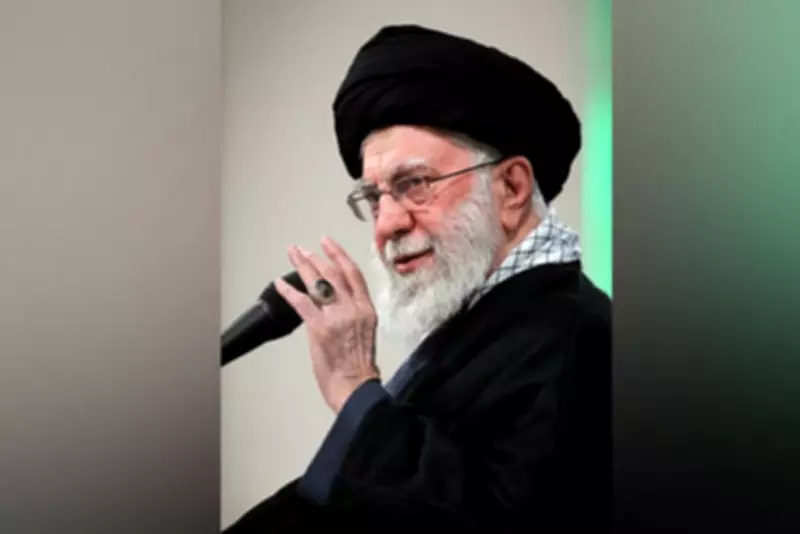
Iran Confirms Supreme Leader Khamenei Killed in Coordinated US-Israeli Airstrikes
Iran has officially confirmed that its Supreme Leader, Ali Khamenei, was killed in coordinated airstrikes conducted by the United States and Israel. This devastating development occurred on Saturday, February 28, 2026, and has the potential to dramatically reshape Iran's leadership structure while destabilizing the entire Middle East region. The strikes specifically targeted Iranian military facilities and senior officials, according to simultaneous statements released from Washington, Tel Aviv, and Tehran.
Immediate Retaliation and Escalating Regional Tensions
Within mere hours of the confirmation, Iran launched retaliatory missile attacks across the region, significantly raising fears of an expanding, broader conflict. The Iranian response targeted Israel and various US interests, with explosions reported in Israel and several Gulf states including the United Arab Emirates, Bahrain, and Qatar. Casualty reports began emerging rapidly, with Iran's official news agency reporting 165 fatalities from a strike on a girls' elementary school in Hormozgan province. Israeli officials confirmed at least one death and multiple injuries from Iranian missile attacks, while US Central Command reported three American service members killed and five seriously wounded during the initial operation.
The Profound Role and Legacy of Ali Khamenei
Born in 1939, Ali Khamenei ascended to power in 1989 following the death of Ruhollah Khomeini, the foundational leader of the Islamic Republic. As supreme leader, Khamenei served as Iran's highest political and religious authority, exercising ultimate control over the armed forces, the judiciary, and all key state institutions. For more than three decades, he meticulously shaped Iran's domestic policies and foreign relations. He personally oversaw the nation's controversial nuclear program, guided its strategic alliances with armed groups throughout the Middle East, and led its persistent confrontation with the United States and Israel. Throughout his tenure, Iran endured extensive US sanctions, which Khamenei consistently framed as part of a broader, historic struggle against foreign domination. His role was far from ceremonial; the supreme leader held the final word on all matters of war and peace, making his sudden death a profound shock to Iran's entire political system.

Details of the Coordinated Strikes
The United States and Israel described their actions as large-scale, coordinated attacks aimed at Iranian military infrastructure and high-ranking officials. US President Donald Trump stated the objective was "to defend the American people by eliminating imminent threats" originating from Iran. Israel's Defense Ministry characterized the operation as a "preemptive" strike designed to remove direct threats to Israeli security. The Israeli military detailed that approximately 200 fighter jets executed an extensive attack across western and central Iran. In Tehran, missiles struck areas perilously close to Khamenei's office. Iran immediately declared 40 days of national mourning, with crowds gathering in cities nationwide, chanting vehemently against the United States and Israel while loudly calling for vengeance.
Regional Fallout and Mobilization
Iran's regional allies signaled their readiness to join the escalating conflict. Lebanon's Hezbollah and Yemen's Houthis both condemned the US-Israeli strikes and vowed to continue their resistance. In response, Israel announced preparations to call up 100,000 reservists to reinforce its borders with Syria and Lebanon, as well as strategic positions in the West Bank, Gaza, and southern Israel. This significant mobilization strongly suggests Israeli leaders are bracing for a prolonged, multi-front confrontation.

Addressing the Leadership Vacuum
Iran moved swiftly to prevent internal instability following Khamenei's death. Authorities announced the formation of a three-member transitional council to temporarily assume the duties of the supreme leader. According to Iran's constitution, the permanent selection of a new supreme leader falls to the Assembly of Experts, a process that can be time-consuming and is likely to involve intense political maneuvering. Given that the supreme leader's authority permeates Iran's military, intelligence, and religious institutions, any uncertainty at the highest level could severely complicate critical decision-making during this volatile wartime period.
Expert Analysis on a Historic Rupture
Analysts universally agree that the killing of a sitting supreme leader crosses a major red line and could fundamentally alter the regional order. Abu-Bakr Al-Desouky, an Egyptian expert on Gulf affairs and Iranian politics, stated the assassination provides Iran with grounds to expand the conflict and broaden its military targets. Adnan Bourji, director of the Lebanese National Center for Studies, warned that "the war is still in its early stages, and so far there are no clear indications that it will end very soon." Syrian political analyst Maher Ihsan noted the strikes risk deepening widespread resentment across the Middle East. Mohammed Zakaria Aboudahab, a political science professor at Mohammed V University in Morocco, described the moment as "a fundamental rupture in the regional order."
The Path Forward and Unfolding Consequences
The coming days and weeks will be critical in determining whether this crisis escalates into a full-scale regional war or shifts toward diplomatic efforts aimed at containment. Ali Khamenei's death has irrevocably changed Iran's internal political landscape. The full, far-reaching consequences for the Middle East's balance of power are only just beginning to unfold, casting a long shadow of uncertainty over the entire region.