Seven environmental activists were detained at a police station in Lapu-Lapu City after holding a peaceful protest during the opening of the 48th ASEAN Summit on Friday, May 8, 2026.
The protest took place near the venue where regional leaders gathered to discuss political, economic, and environmental challenges facing Southeast Asia.
In a statement, Greenpeace said its members conducted a peaceful protest to urge ASEAN leaders to end the plastic and waste crisis, hold corporations accountable for environmental pollution, and steer the region away from fossil fuel dependence, which exacerbates climate impacts.

“Instead of silencing peaceful protest, ASEAN leaders must listen to the message,” Greenpeace said.
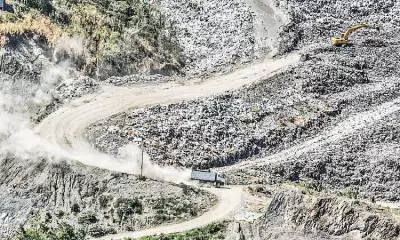
The group added that communities across Southeast Asia are already suffering from overflowing landfills, toxic fires, polluted air, and plastic pollution.
The environmental organization said its members are officially detained at the Lapu-Lapu Police Station 2 in Barangay Mactan.
In a public advisory, the Lapu-Lapu City Police Office (LCPO) reminded the public that any unauthorized rally, picket, road blockage, or other activity that disrupts operations within designated security and restricted areas during the international event is strictly prohibited.
“Any individual or group found violating existing laws, local ordinances, and established security protocols shall be dealt with accordingly under the full extent of the law,” the LCPO said.
“Security is a shared responsibility. We urge everyone to cooperate with law enforcement authorities and respect the established regulations for the success and safety of the ASEAN Summit 2026,” it added.
SunStar Cebu attempted to get more details from the LCPO but failed as of this writing.
Greenpeace called for the immediate release of the activists and urged ASEAN leaders to adopt stronger measures to reduce plastic production, phase out problematic single-use plastics, strengthen waste management policies, hold polluting corporations accountable, and support the transition to reuse systems.
The group said the “real danger” lies in systems that allow corporations to continue producing and distributing large volumes of single-use plastics while communities bear the health, environmental, and economic impacts.