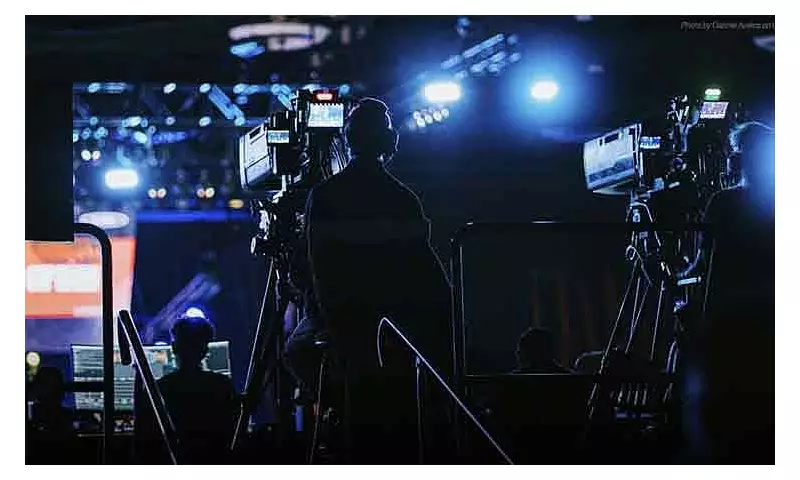
The Philippines has taken a decisive leadership role on the global stage, urging the immediate conclusion of a critical international agreement on broadcasting rights that has been in negotiation for nearly three decades.
A 28-Year Wait for a Digital-Age Solution
During the recent 47th Session of the WIPO Standing Committee on Copyright and Related Rights in Geneva, the Philippine delegation delivered a powerful joint statement developed with the Intellectual Property Office of the Philippines (IPOPHL). The message, presented by Philippine Mission Consul General Felipe “Bong” Cariño III, centered on the urgent need to convene a Diplomatic Conference to finalize the Broadcasting Organizations Treaty.
This treaty's journey began in Manila in 1997, yet it remains incomplete 28 years later. The Philippine delegation warned that further delays expose broadcasters worldwide, particularly in developing nations, to increasing threats from cross-border signal piracy. They argued that the existing 1961 Rome Convention is outdated and cannot effectively combat piracy in the digital era.

“The world is watching whether WIPO can still deliver balanced agreements,” stated Consul General Cariño III. “Twenty-eight years is long enough. Let us finish what Manila started.” The delegation emphasized that the latest draft treaty already includes necessary protections for the public domain, flexibilities for developing countries, and built-in limitations and exceptions.
Advancing a Balanced Global Copyright Framework
Beyond the broadcasting agenda, the Philippines actively pushed for a more inclusive and equitable international copyright system through several key proposals.
The country reiterated its support for WIPO to organize a regional conference for Asia-Pacific on Artist’s Resale Rights, following the model of a similar African regional conference. The Philippines expressed its willingness to host this event, noting that APAC nations share common goals in strengthening collective management systems and exploring suitable resale-right models.
Furthermore, the Philippine delegation backed proposals for two separate studies focused on the audiovisual industry. One study would examine the rights and remuneration of audiovisual authors like producers and directors. The other would focus on the rights of actors and performers, including payment mechanisms for the use of their performances.
Preparing for the Digital Future
Acting Director General Nathaniel S. Arevalo of IPOPHL stressed that the Philippine position highlights a critical need for tangible progress. “Balanced copyright must work in the real world,” ADG Arevalo said. “After nearly three decades, it is time to move forward, explore and utilize policy space, and be responsive to the challenge of enhancing the protection of creators’ and broadcasters’ IP rights while keeping access and fairness at the core.”
Bureau of Copyright and Related Rights (BCRR) Director Emerson G. Cuyo, who represented IPOPHL at the meetings, called these studies “timely and necessary.” He pointed out that digital and on-demand platforms are rapidly changing how audiovisual content is accessed and monetized. The studies would provide essential evidence for crafting policies that keep pace with technological change.
Director Cuyo added a crucial caveat: “In both [studies], however, we encourage the inclusion of diverse national experiences, particularly from developing countries and examination not only of legal rights but also of actual remuneration practices.”
He also noted that the findings will be invaluable as IPOPHL prepares to issue the implementing rules and regulations for the Beijing Treaty on Audiovisual Performances (BTAP). The BTAP, which entered into force in April 2020, sets international standards for protecting performers' rights in both recorded and live formats.