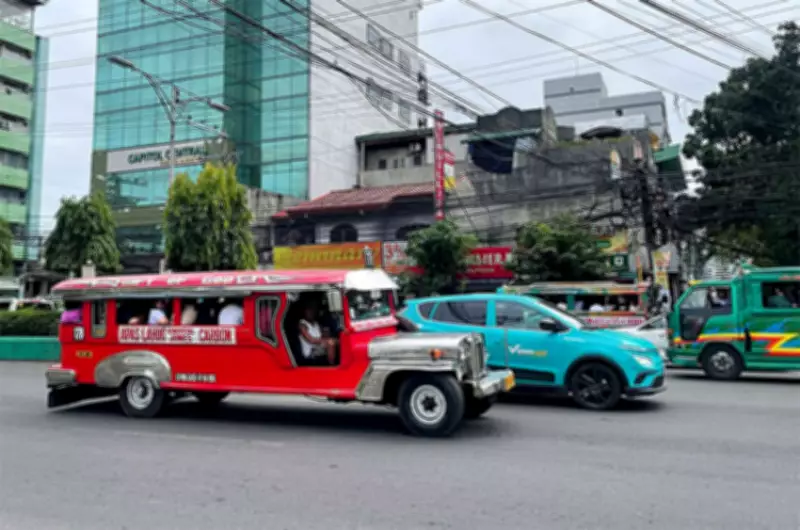
Electric Taxis from Vietnam's GSM Appear on Cebu Roads Amid Ongoing Review
Electric taxi units operated by the Vietnam-based company Green and Smart Mobility (GSM) were observed on major roads in Cebu City on Thursday, January 30, 2026. This sighting occurred even as the planned rollout of these vehicles remains under formal review and suspension, highlighting the complex dynamics between innovation and local industry concerns.
Local Opposition Halts GSM's Proposed Deployment
The appearance of these electric taxis comes at a time when GSM's proposal to deploy 600 electric taxi units in Metro Cebu is still suspended. This suspension followed strong opposition from local taxi operators, led by the United Cebu Taxi Operators Association (UCTOA). The association has raised several critical issues, including:
- Concerns over proper licensing and regulatory compliance.
- Fears that adding more vehicles could exacerbate existing traffic congestion in the city.
- Worries about the potential economic impact of a foreign-backed fleet on long-established local operators who have served the community for years.
In response to these concerns, Cebu Governor Pamela Baricuatro supported the suspension of GSM's launch, which was originally scheduled for December 19, 2025. This decision came after an appeal from local stakeholders, emphasizing the need to balance technological advancement with the welfare of existing businesses.

Broader Transport Policy and Infrastructure Challenges
To address the broader transportation issues in the province, the Cebu Provincial Government has established the Cebu Transport Council. This council is tasked with shaping long-term transport policies, particularly as the region moves toward vehicle electrification. However, significant challenges remain, as highlighted during a consultation meeting on January 5, 2026, involving GSM, the Land Transportation Franchising and Regulatory Board (LTFRB), and local taxi operators.
During this meeting, Governor Baricuatro pointed out that Cebu currently lacks sufficient charging stations and stable power supply to immediately support a large-scale electric taxi fleet. This infrastructure gap poses a major hurdle for the successful integration of electric vehicles into the local transport system.
Additionally, a report presented at the meeting revealed that Metro Cebu faces significant economic costs from traffic congestion, estimated at about P1.1 billion in daily losses, according to data from the Japan International Cooperation Agency (Jica). This staggering figure underscores the urgency of finding sustainable transport solutions.
Public Transport Reliance and Traffic Strain Concerns
The transport situation in Cebu is further complicated by the reliance on public transport. Approximately 60 percent of residents depend on public transportation for their daily commutes. However, these public transport users account for only 10 percent of the vehicles on the road, indicating a disproportionate use of private vehicles that contributes to congestion.
This imbalance raises concerns that introducing a large new taxi fleet, such as GSM's proposed 600 units, could further strain already congested streets. Stakeholders argue that any new transport initiatives must be carefully planned to avoid worsening traffic conditions and ensure equitable access for all commuters.
The dispute over GSM's electric taxis originated from a memorandum issued by the LTFRB in November 2025, under which GSM applied for the 600 units within 24 hours. Local operators filed a formal opposition on December 23, 2025, leading to the current suspension. As Cebu navigates these challenges, the future of electric mobility in the province remains uncertain, pending further reviews and collaborative solutions.