How often do we get to experience the flavors of Luzon, Visayas, and Mindanao on a single table? More than a buffet that will run until the end of June 2026, Flavors of LuzViMinda at Café bai offered diners a chance to travel across the Philippines through food.
A 14-Hand Kitchen Takeover
The hotel culinary team, including chefs Mac Dowell Labrador, JR Royol, Zheryl Jacinto, Ryan Estrada, Melisa Rocha, Richard Gomez, and Welly Rosales, came together for this unique dining experience. Each chef brought their regional expertise to the table.
Mindanao: Spice-Laden Flavors
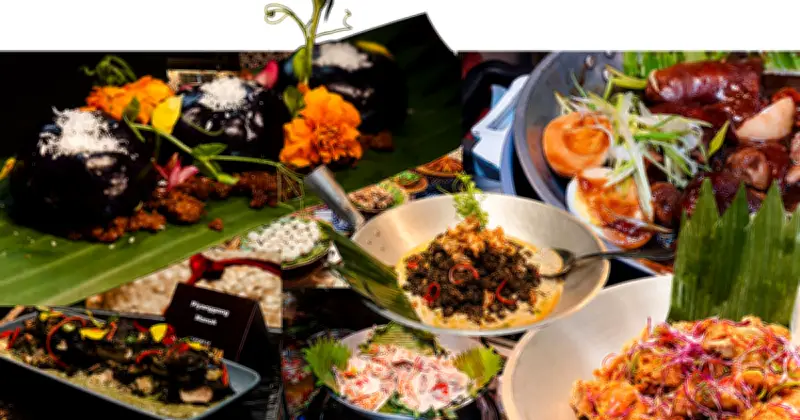
On one end of the spread were dishes from Mindanao, where spice-laden flavors and deep cultural influences were evident in every bite. Among them was piyanggang manok, a Tausug dish made with chicken braised in turmeric, lemongrass, ginger, garlic, coconut milk, and ground burnt coconut. The first bite carried a gentle smokiness that lingered on the palate, balanced by the creaminess of coconut milk that rounded out the heat of the spices.

Nearby was beef piyassak, another Tausug specialty slow-cooked in coconut milk and spices. Its dark color came from a charred coconut spice blend that has long been a staple in Muslim cuisine. The taste experience unfolded in layers — first the warmth of spices, then the subtle bitterness of burnt coconut that gave the dish its depth.
Chefs JR Royol, Mac Dowell Labrador, and Zheryl Jacinto were the culinary minds behind the spiced treasures of Mindanao. For Chef Royol, winner of MasterChef Pinoy Edition, showcasing Mindanaoan cuisine was personal. Rooted in his Igorot and Bicolano heritage, Royol spent years working in Lanao del Norte, where many of his guests were Muslims. The experience exposed him to culinary traditions that remain unfamiliar to many Filipinos despite the country’s cultural diversity.
Visayas: Familiar Comfort
Representing the Visayas was Bai Hotel Cebu’s Chef de Cuisine Ryan Estrada, who brought familiar comfort through dishes such as humba. Slow-cooked pork simmered in soy sauce, vinegar, garlic, peppercorns, bay leaves, and fermented black beans, humba remains one of the region’s most beloved dishes, embodying the sweet-savory profile often associated with Visayan cooking. Tender and glossy, the pork melted easily with each bite.
Luzon: Innovation and Resourcefulness
Luzon, meanwhile, showcased both innovation and resourcefulness. Chefs Melisa Rocha, widely known as the “Caldereta Queen,” Welly Rosales, and Richard Gomez presented dishes that drew from the culinary traditions of the northern Philippines. Alongside creations such as sinugno na gata na lamang dagat and crispy garlic chicken with laing sauce, Rocha highlighted how some of Luzon’s most iconic dishes were born from making use of ingredients others overlooked.
“In Pampanga, dishes like sisig and bopis came from parts that the Spaniards used to throw away,” she explained during the media preview. “What others discarded, Filipinos turned into food.”
Sometimes, all it takes is one meal to realize just how diverse — and connected — Filipino cuisine truly is.