Duterte Rebukes Sotto Over Supreme Court Contempt Petition
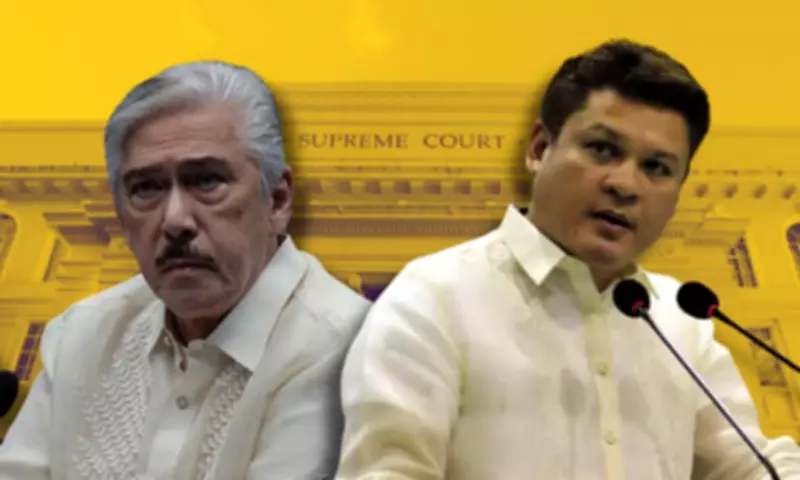
Davao City First District Representative Paolo "Pulong" Duterte has issued a strong criticism of Senate President Vicente "Tito" Sotto III this week. The rebuke follows an indirect contempt petition filed against Sotto before the Supreme Court by a group of lawyers.
Selective Approach to Constitutional Limits
In a formal statement, Duterte accused Sotto of demonstrating a selective approach to constitutional limits and the principle of separation of powers. He questioned the Senate President's consistency in applying these fundamental principles.
"If an ordinary blogger does something similar, contempt is immediate. But if the Senate President gives off an 'impeach the justices' vibe, suddenly it's 'I simply expressed disagreement'? How convenient," Duterte stated. "Separation of powers is not optional; you don't pick and choose what's convenient. The judiciary is not your committee hearing that you can grill if you dislike the ruling."

Challenge to 'Nuisance Suit' Characterization
Duterte specifically challenged Sotto's characterization of the petition as a "nuisance suit," suggesting this language revealed irritation rather than constitutional understanding. He emphasized that the Constitution encompasses not only written law but also Supreme Court interpretations that clarify its meaning.
"Calling it a 'nuisance suit' doesn't make you sound constitutional. It makes you sound irritated and ignorant," Duterte asserted.
Accusations of Inconsistent Judicial Respect
The Davao representative accused Sotto of inconsistent respect for the judiciary, noting that the Senate President lectures on decorum while simultaneously exerting political pressure on the Court. Duterte acknowledged that disagreement with judicial decisions is natural but warned that public officials cannot claim offense when called out for perceived overreach.
He stressed that freedom of speech does not exempt officials from accountability and urged Sotto to demonstrate true statesmanship in his approach to judicial matters.
Background of the Contempt Petition
The statement came after Sotto responded to the petition, calling it "merely a publicity stunt" and claiming his comments on the Supreme Court's decision were protected personal opinions. The Court had previously ruled that the impeachment complaint against Vice President Sara Duterte was barred under the one-year prohibition against multiple impeachment proceedings against the same official within a calendar year.
The petitioners, led by lawyers Ferdinand Topacio, Manuelito Luna, Harold Respicio, Mary Catherine Binag, and Virgilio Garcia, asked the Supreme Court to cite Sotto for indirect contempt. They argued that Sotto's public statements exceeded permissible commentary, undermined public trust in the judiciary, and tarnished the Court's credibility.
Legal Arguments and Responses
Topacio noted that Sotto had reportedly compared justices to first-year law students, questioning their competence. While the lawyers acknowledged Sotto's right to free speech, they stressed that public officials remain bound by rules on contempt and must not obstruct or degrade the administration of justice.
Sotto, citing Rule 71 of the Rules of Court, maintained he had committed no offense. "I did not do any of those acts. I simply expressed a disagreement with the court decision. That is protected speech under Article III, Section 4 of the 1987 Constitution," he said, adding he would formally respond once the Supreme Court directs him to do so.
Legal Experts Weigh In
Legal experts explained that indirect contempt applies to statements or actions that interfere with the judiciary's functions, such as attempts to intimidate justices or obstruct court proceedings. They noted that while free speech is protected, it does not shield public officials from consequences for comments that undermine judicial authority.
The Supreme Court's previous ruling on the impeachment complaint against Vice President Sara Duterte established that such proceedings were prohibited under the one-year rule against multiple impeachment actions against the same official within a calendar year.