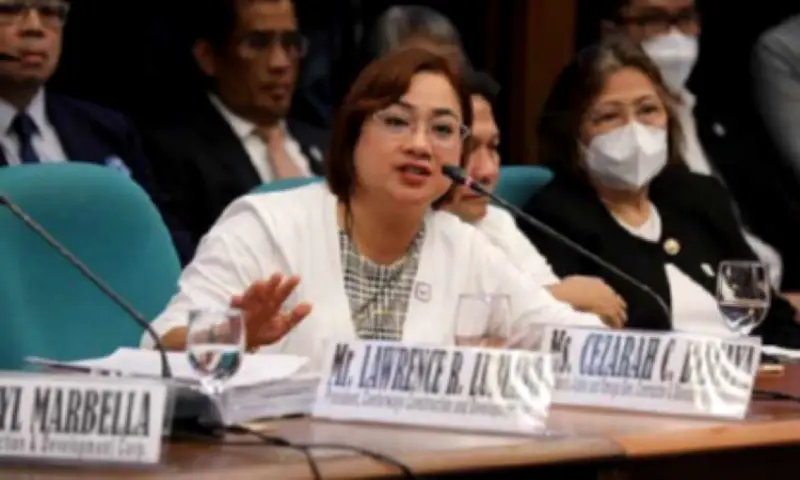
The Lapu-Lapu City Regional Trial Court Branch 27 has granted bail to contractor Cezarah Rowena “Sarah” Discaya and a Department of Public Works and Highways official in connection with a P96.5-million malversation case involving an alleged ghost flood control project along the Culaman River in Davao Occidental.
Bail Granted to Discaya and Ubungen
Presiding Judge Nelson Leyco issued a 15-page resolution on July 7, 2026, allowing Discaya to post P1 million bail and Czar Ryan Ubungen, acting chief of the finance section of the DPWH Davao Occidental District Engineering Office, to post P300,000 bail. The court found that the prosecution's evidence was currently insufficient to establish their direct criminal participation.
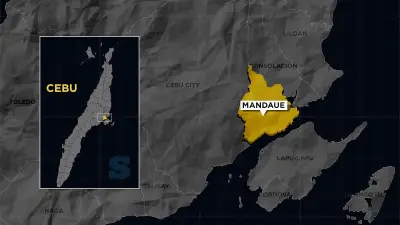
Judge Leyco emphasized that the ruling does not determine guilt or innocence but only addresses the right to bail while the case is pending. The case originated in Davao Occidental but was transferred to Lapu-Lapu City following Supreme Court guidelines on infrastructure-related corruption cases, which require such cases to be heard in the nearest designated anti-graft court.

Basis for Discaya's Bail
Discaya was accused of being the true owner of St. Timothy Construction Corp., the contractor for the project identified as Contract ID No. 22LE0029. However, Judge Leyco noted that ownership or a corporate connection alone is insufficient to establish criminal liability. Citing Supreme Court rulings, he stated that corporate officers can only be held criminally liable if there is proof they actively participated in or had the power to prevent the wrongful act.
No prosecution witness directly testified that Discaya participated in the Culaman River project. Two former St. Timothy employees denied personal knowledge of her involvement and said they had no role in bidding, document preparation, or construction. Consequently, the court ruled that Discaya must be allowed to exercise her constitutional right to bail.
Why Ubungen Was Also Granted Bail
For Ubungen, the prosecution relied primarily on his signatures on disbursement vouchers and financial certifications. Judge Leyco found that these signatures were not strong enough to show that Ubungen conspired with others in falsifying documents. The resolution stated that nothing in the vouchers strongly implicated him in the alleged conspiracy at this stage.
Strong Evidence of a Ghost Project
Despite granting bail to Discaya and Ubungen, the court found strong evidence that the flood control project was a ghost project. Judge Leyco noted several circumstances: the project was reported to be 50 percent complete after only four days, and there was a 400-meter difference between the approved starting point and the location shown in the as-built plan. The as-built plan appeared to carry nearly the same technical details as the original design despite an alleged change in location.
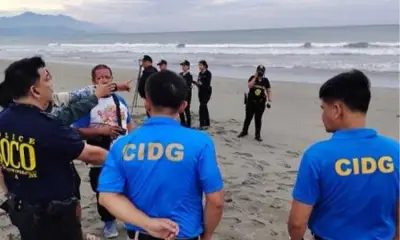
Investigators observed that the structure pointed to by the accused appeared newly built, with consistent cement color and no remnants of an old revetment. These findings supported the prosecution's claim that the structure was built only in 2025, after the scandal became public.
Flood Explanation Rejected
The accused argued that the project may have been completed in 2022 but destroyed by floods. Judge Leyco rejected this argument, stating that project documents showed the structure was designed to withstand major flooding. If built according to plan, it should have survived flash floods and heavy rains.
Who Was Denied Bail
The court denied bail to St. Timothy Construction president Ma. Roma Angeline Rimando and seven DPWH officials, finding strong evidence of guilt against them. Those denied bail include District Engineer Rodrigo Larete, Assistant District Engineer Michael Awa, Construction Section officer in charge Joel Lumogdang, Project Engineer Harold John Villaver, Quality Assurance Section officer in charge Jafel Faunillan, Planning and Design Section chief Josephine Valdez, and Maintenance Section chief Ranulfo Flores. They face charges of malversation of public funds through falsification of public documents.

Next Steps
The case will proceed to trial. Judge Leyco clarified that the bail ruling does not decide guilt or innocence, and a full-blown trial remains the proper forum for complete evidence presentation and final adjudication. Prosecutors must still prove guilt beyond reasonable doubt.