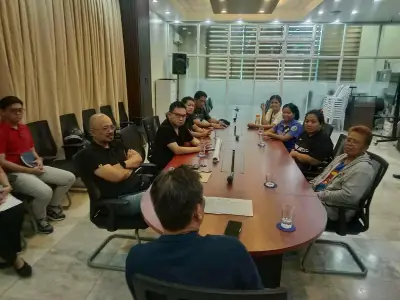
ASEAN's future depends on whether today's leaders can show the same statesmanship that founded the regional bloc in 1967, according to Dino Patti Djalal, founder and chairman of the Foreign Policy Community of Indonesia (FPCI). He made the remarks following former foreign affairs official Delia Domingo Albert's lecture at the University of San Carlos (USC) on Wednesday, May 6, 2026.
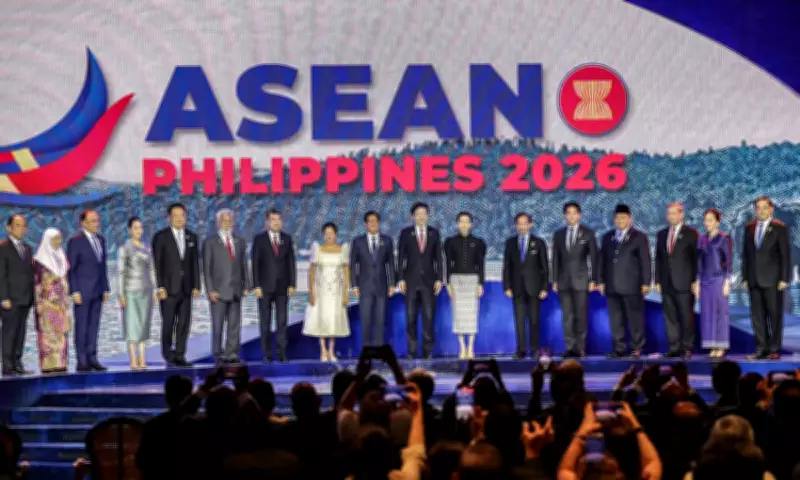
Albert stressed the need for a more people-centered Association of Southeast Asian Nations (ASEAN), saying its long-term survival depends not only on governments but on citizens. Speaking before students, diplomats, academics and members of the media ahead of the 48th ASEAN Summit in Cebu, she said ASEAN was built on "unity in diversity," allowing Southeast Asian countries with different political systems, religions, cultures and languages to cooperate despite unresolved bilateral issues.
The lecture, part of "ASEAN for the Peoples Week 2026," was organized by the FPCI in partnership with the USC Department of Political Science and the Carolinian Circle of Young Diplomats to deepen students' understanding of ASEAN diplomacy and regional cooperation.

Statesmanship
As the program closed, Djalal raised a key question on whether today's leaders still reflect the political maturity of ASEAN's founders in 1967, stressing that the bloc's future depends on prioritizing regional cooperation over narrow national interests.
"The spirit of ASEAN will only matter if you also ask another question, which is what do the people in Cebu think about what happens in other parts of Southeast Asia — in Myanmar, in Rohingya, when there's a disaster, tsunami and so on. That is what ASEAN is all about," Djalal said.
He added that ASEAN should focus on strengthening its own regional order rather than attempting to solve global conflicts. "We cannot solve problems in Africa, in the Middle East and Europe. The best thing that we can do is solve the problems in Southeast Asia because we have the structure, we have the relationships, we know the history," he said.
Djalal noted that ASEAN's founders built the organization without formal institutions at the start. "ASEAN did not have a model back then. There was no secretariat, there was no structure and so on. They relied on the wisdom and vision of the five founding fathers," he said. "The question now is, where is the statesmanship today? That's what created ASEAN in 1967 and if ASEAN can survive and go to the next level, the same factor, the statesmanship factor cannot be missed," he added.
Unity in diversity
In her lecture, Albert traced ASEAN's roots to the geopolitical tensions of the 1960s, saying it was created to preserve peace and prevent conflict among neighboring states despite political and ideological differences. She said ASEAN was formally established on Aug. 8, 1967 through the Bangkok Declaration signed by the Philippines, Indonesia, Malaysia, Singapore and Thailand, later expanding to include Brunei Darussalam, Vietnam, Laos, Myanmar, Cambodia and most recently Timor-Leste in 2025 as its 11th member.
Albert said ASEAN evolved from a loose diplomatic association into a regional community focused on political stability, economic integration and people-to-people connectivity, strengthened by the establishment of the ASEAN Secretariat in Jakarta and the ASEAN Charter in 2007. "The intention from the very beginning was really just to work together in what you call unity in diversity," she said.
She summarized ASEAN's guiding principles as "cooperation, integration and connectivity," noting its continued role in regional diplomacy through dialogue partnerships and cooperation. Albert also cited Cebu's role as a key manufacturing and trading hub linked to ASEAN markets.
Disconnect
Despite ASEAN's global recognition, Albert acknowledged a gap between leaders and ordinary citizens. "To me, this is a big flaw in ASEAN, that there is a disconnect between what leadership, what the organization is saying and doing and thinking and with the people who are supposed to be affected by it," she said.
She said ASEAN issues are often reduced to logistics and inconveniences rather than deeper discussions on trade, diplomacy and security, stressing the need for stronger public engagement.

Awareness gap
Albert cited a post-2017 survey showing only eight percent of Filipinos were aware of outcomes from ASEAN meetings hosted by the Philippines. "You have to have a very well-informed media," she said, underscoring the role of journalists in improving public understanding of ASEAN affairs. She also urged Cebuano students and institutions to maximize the city's hosting of the ASEAN summit by promoting regional awareness among the youth. "Our future is in the neighborhood," Albert said.
People-centered ASEAN
Albert emphasized the need for a more people-oriented ASEAN involving youth, women, civil society and the private sector. Quoting Singaporean academic Kishore Mahbubani, she said ASEAN's future depends on shifting "ownership of the organization from governments to the people." "Governments come and go, people do not," she said.
Albert encouraged universities to establish ASEAN-focused programs and centers to deepen understanding of regional identity and cooperation, also highlighting the role of youth and women in peacebuilding efforts.