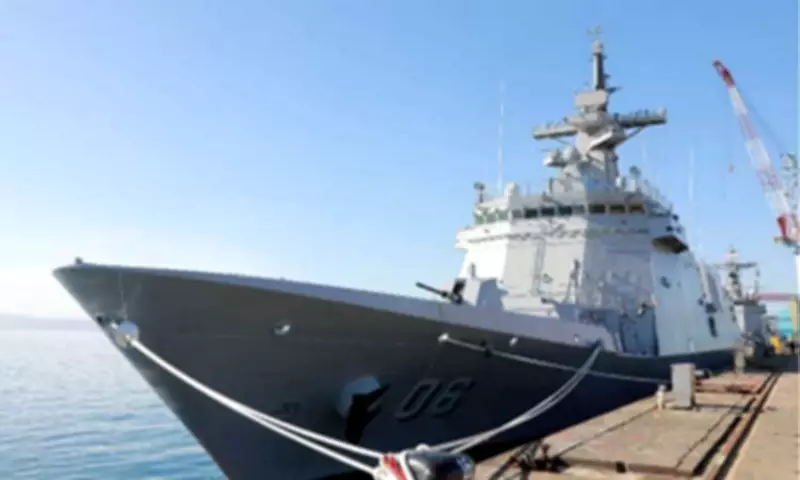
Philippine Navy Reports Chinese Warship Targeted BRP Miguel Malvar with Radar in West Philippine Sea
The Philippine Navy's Naval Defense Command has disclosed a concerning incident involving one of its guided missile frigates in contested waters. According to an official announcement made on Thursday night via Facebook, the BRP Miguel Malvar (FFG-6) was reportedly scanned by a fire control radar from a Chinese corvette while operating in the West Philippine Sea on March 7.
Incident Details and Location
The event occurred as the BRP Miguel Malvar was navigating near Sabina Shoal, which lies within the Philippines' exclusive economic zone. The Chinese vessel involved was identified as a People's Liberation Army Navy Jiangkai class corvette with bow number 622. The Philippine Navy stated that the Chinese ship aimed its fire control radar directly at the Filipino frigate, which was conducting lawful operations and exercising freedom of navigation in accordance with international maritime law.
The Naval Defense Command characterized China's use of targeting radar against a Philippine Navy vessel as "an alarming and escalatory act" that reflects a broader pattern of coercive behavior. This behavior, they emphasized, endangers lives, disrupts legitimate maritime operations, and directly challenges the sovereignty of coastal states in the region.

Sequence of Events and Response
The incident took place as the BRP Miguel Malvar was returning from international naval exercises. The ship had just participated in the 3rd International Fleet Review and Multilateral Navy Exercise held in India from February 18 to 26 and was en route to the Naval Operating Base in Subic, Zambales.
During its transit, the Filipino vessel detected emissions from the Chinese corvette that clearly indicated the fire control radar was targeting the BRP Miguel Malvar. In response to this provocative action, the Philippine Navy ship immediately issued a radio challenge, directing the Chinese vessel to leave the area to prevent any potential misunderstanding or escalation.
Following the radio challenge, the Chinese corvette eventually stowed its fire control radar, indicating compliance with the Philippine Navy's directive. However, the Chinese vessel continued to tail the BRP Miguel Malvar for several hours before ultimately departing the area. No further escalatory actions were reported after the initial radar targeting incident.
Official Statements and Implications
Philippine Navy spokesperson for the West Philippine Sea, Rear Admiral Roy Vincent Trinidad, provided additional context on Friday, describing the Chinese warship's actions as "an alarming and provocative action that created unnecessary risk and could have led to misinterpretation and misunderstanding at sea."
Trinidad emphasized that the incident underscores the critical need for all nations to exercise restraint and maintain professional conduct in maritime operations. He confirmed that the BRP Miguel Malvar followed established protocols by immediately issuing the radio challenge and that the Chinese vessel's subsequent actions demonstrated it had heeded the warning.
At the time of the incident, the BRP Miguel Malvar was conducting a routine maritime sovereignty patrol in the vicinity of Sabina Shoal. Despite this concerning encounter, Trinidad reaffirmed that ships and aircraft of the Armed Forces of the Philippines will continue to conduct lawful maritime patrols and sovereignty patrols within the country's exclusive economic zone.
Broader Context and Philippine Position
This incident occurs against the backdrop of ongoing territorial disputes in the South China Sea, where multiple nations including China and the Philippines have overlapping claims. The West Philippine Sea represents the portion of the South China Sea that falls within the Philippines' exclusive economic zone as defined under international law.
The Philippine Navy maintains that its operations are consistent with international law and the country's sovereign rights and jurisdiction. Trinidad reiterated the Philippines' firm commitment to protecting its sovereignty, sovereign rights, and jurisdiction in the West Philippine Sea while advocating for peaceful and rules-based resolution of disputes in the region.

This latest incident highlights the persistent tensions in these strategically important waters and raises questions about maritime safety protocols and the potential for miscalculation during naval encounters. The Philippine Navy's prompt response and adherence to established procedures prevented further escalation, but the targeting of a naval vessel with fire control radar represents a significant concern for regional stability and maritime security.