Cyanide Detected in Yellow Bottles from Chinese Vessels Near BRP Sierra Madre
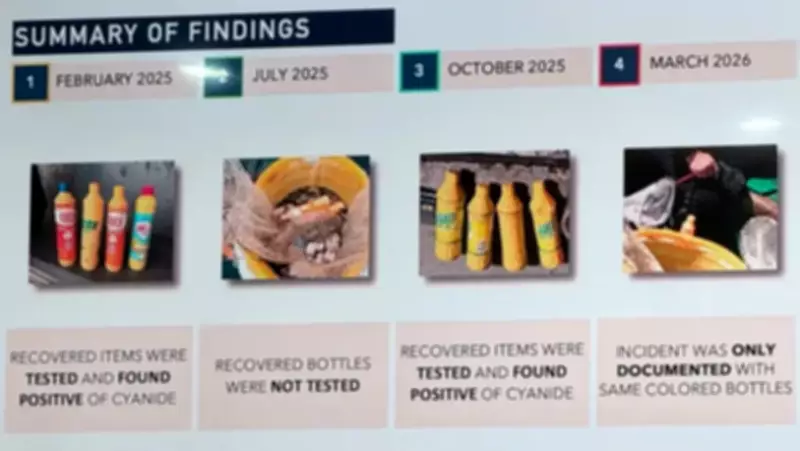
The National Security Council (NSC) has officially confirmed that yellow bottles recovered from Chinese boats operating near the BRP Sierra Madre at Ayungin Shoal tested positive for the toxic chemical cyanide. This alarming discovery was disclosed by NSC spokesperson Cornelio Valencia Jr., who detailed that the Philippine Navy retrieved these bottles on two separate occasions: February 20 and October 24 of the previous year.
Forensic Analysis and Environmental Concerns
Following their recovery, the bottles were subjected to rigorous forensic examination by the National Bureau of Investigation Forensic and Scientific Research Service. The presence of cyanide in the area has escalated serious concerns, as it poses direct threats to Philippine Navy personnel stationed nearby and jeopardizes the livelihoods of Filipino fishermen who depend on these waters.
Additionally, NSC officials have issued warnings about the destructive impact of cyanide on the surrounding coral reefs. This chemical contamination could undermine the structural stability of the BRP Sierra Madre, a vessel that has been grounded at the shoal for decades, further complicating maritime security in the region.

Condemnation and Enhanced Security Measures
The NSC has strongly condemned the reported use of such hazardous substances by Chinese vessels, labeling the actions as irresponsible and unacceptable. In response to this threat, the Armed Forces of the Philippines, in coordination with the Philippine Coast Guard, have been directed to intensify their maritime domain awareness efforts. This includes:
- Strengthening patrol operations in the vicinity to monitor and deter further illegal activities.
- Implementing measures to prevent additional environmental damage to the delicate marine ecosystem.
- Enhancing surveillance to safeguard national security and protect local communities from potential harm.
This incident underscores ongoing tensions in the South China Sea and highlights the critical need for vigilant environmental and security protocols to address such provocations effectively.