Philippine Authorities Confirm Cyanide Contamination in Seized Bottles from Chinese Vessels
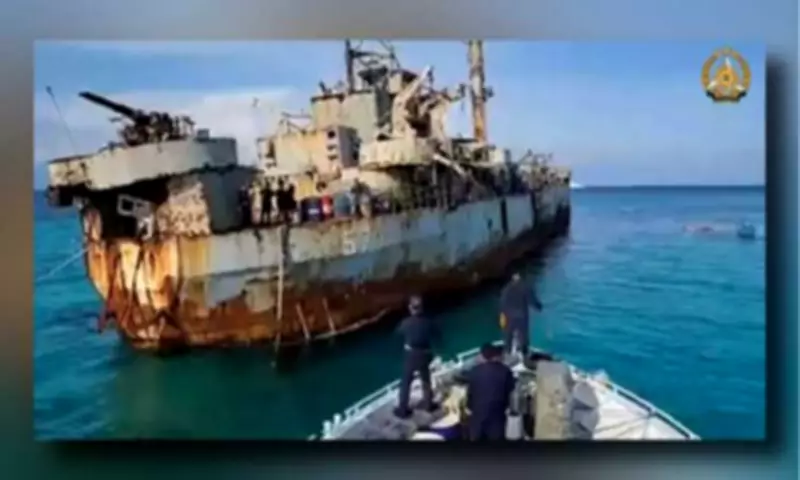
The National Security Council (NSC) of the Philippines has disclosed that bottles recovered by the Philippine Navy from Chinese sampans operating near the BRP Sierra Madre (LS-57) in Ayungin Shoal within the West Philippine Sea have tested positive for cyanide. This alarming discovery was announced on Monday, following laboratory analysis conducted by the National Bureau of Investigation’s Forensic and Scientific Research Service.
Details of the Seizure and Analysis
The Philippine Navy seized these yellow bottles from Chinese sampans in two separate incidents: one in February 2025 and another on October 24, 2025. According to NSC spokesperson Assistant Director General Cornelio Valencia Jr., the laboratory analysis conclusively established that the bottles contain cyanide, a highly toxic chemical known to cause severe and irreversible damage to both humans and marine ecosystems.
Valencia emphasized that the deliberate use of cyanide raises serious concerns about illegal and destructive practices. These actions threaten Philippine Navy personnel stationed at the BRP Sierra Madre, the fragile marine environment of the West Philippine Sea, and the livelihood of Filipino fisherfolk who depend on these waters for their sustenance.

Environmental and Legal Implications
In his statement, Valencia highlighted that such actions, if proven intentional, constitute a blatant violation of Philippine environmental laws, international maritime norms, and the obligations of states under the United Nations Convention on the Law of the Sea (UNCLOS). He described the use of cyanide in Ayungin Shoal as a form of sabotage aimed at killing local fish populations, which deprives Navy personnel of a vital food source.
Moreover, Valencia warned that cyanide can damage the reef, potentially compromising the structural foundations of the BRP Sierra Madre. Severe reef damage not only threatens the stability of the vessel but also could allow external actors to fabricate an environmental crisis, blaming the Philippines for pollution—a tactic previously used to distract from illegal activities in the area.
Sovereign Rights and Security Measures
Valencia reiterated that Ayungin Shoal lies well within the Philippines’ exclusive economic zone, where the country exercises sovereign rights and jurisdiction. He condemned the operation of Chinese vessels engaging in activities involving hazardous substances as both irresponsible and unacceptable.
In response to this development, the NSC has directed the Armed Forces of the Philippines, the Philippine Coast Guard, and all relevant agencies to heighten maritime domain awareness, strengthen patrols, and take all necessary measures to prevent further environmental harm and safeguard national security interests in the West Philippine Sea.
Government's Firm Stance
Valencia concluded with a strong message: The Philippines will not tolerate any act—whether by state or non-state actors—that endangers its personnel or the marine environment, violates its sovereign rights, or undermines peace and stability in the West Philippine Sea. The government remains resolute in defending the nation’s territory, protecting its natural resources, and upholding the rule of law.