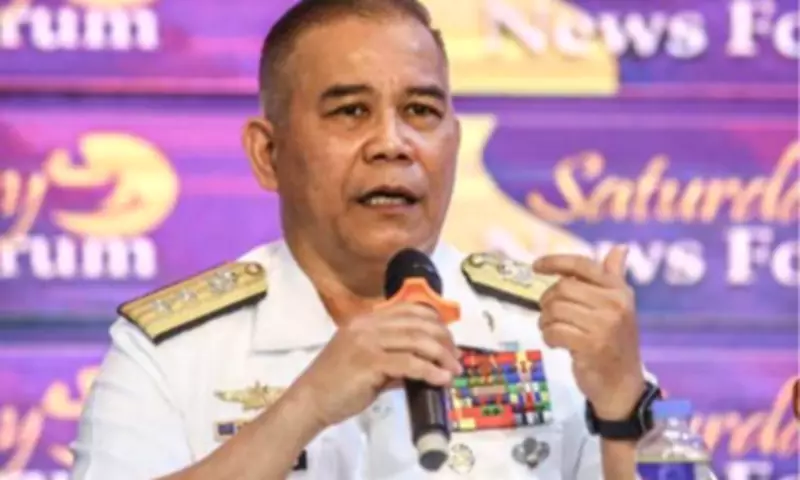
A senior Philippine military official has firmly stated that there are no signs of the United States withdrawing its military assets from the Philippines, even as conflicts in the Middle East prompt redeployments elsewhere. Rear Admiral Roy Vincent Trinidad, the Philippine Navy spokesperson for the West Philippine Sea and Inspector General, provided this assurance in an interview with the Philippine News Agency on Friday.
Clarifying Misconceptions About US Asset Movements
Rear Admiral Trinidad addressed concerns that the US might be preparing to pull out assets from the Philippines, similar to recent actions in South Korea. In South Korea, the US has withdrawn Patriot air defense missile batteries and components of its THAAD anti-missile systems to redeploy them to the Middle East. However, Trinidad emphasized that this is a specific theater arrangement and does not indicate a broader withdrawal from the Philippines.
"There are no indications of the US pulling out military assets from the Philippines. The situation in South Korea involves specific air defense systems being redeployed to the Middle East, which is a separate theater arrangement and does not apply here," Trinidad explained. He declined to identify the particular US assets in the Philippines, citing security reasons, but stressed that the overall military presence remains unchanged.

Strengthening of the RP-US Alliance
Trinidad highlighted the ongoing strengthening of the Philippines-United States alliance, pointing to several key developments. He noted that the upward trajectory of this partnership is evident through continuing maritime activities and enhanced engagements under the Mutual Defense Board-Security Engagement Board (MDB-SEB).
Additionally, he referenced the recent approval of the Philippine Enhanced Resilience Act, which authorizes USD 2.5 billion in security assistance over the next five years. This significant funding boost underscores the commitment to bolstering defense capabilities and cooperation between the two nations.
Role of EDCA Sites in Mutual Defense
The Rear Admiral also discussed the Enhanced Defense Cooperation Agreement (EDCA) sites, where the US has access to facilities within Philippine bases. He clarified that these sites are dedicated to mutual defense and humanitarian assistance, not offensive operations.
"Our alliance with the US continues to strengthen, and there has been no change in the level of support being provided," Trinidad affirmed. He added that EDCA sites are strictly regulated and are not permitted to be used as staging areas for offensive actions, ensuring they align with the defensive and humanitarian goals of the agreement.
This reassurance comes amid global tensions, particularly in the Middle East, which have led to adjustments in US military deployments in other regions like South Korea. However, Trinidad's statements confirm that the Philippines remains a stable partner in the US defense strategy, with no reductions in military support or asset presence anticipated in the near future.