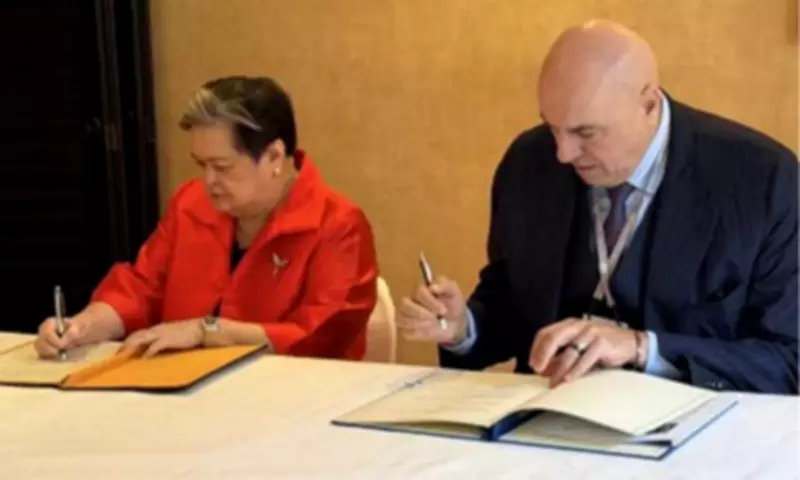
Philippines and Italy Seal New Defense Cooperation Agreement at Munich Conference
In a significant diplomatic move, the Philippines and Italy have officially signed a new bilateral defense cooperation agreement, marking a pivotal step in strengthening their strategic partnership. The signing ceremony took place on the sidelines of the prestigious Munich Security Conference in Germany on Saturday, February 14, 2026.
Key Signatories and Agreement Details
Foreign Affairs Secretary Ma. Theresa Lazaro represented the Philippines, while Italian Minister of Defense Guido Crosetto signed on behalf of Italy. This new pact effectively replaces an expired memorandum of understanding that had governed previous defense relations between the two nations.
Secretary Lazaro emphasized the importance of this development, stating that the signing serves as "another concrete step to move the Philippine-Italy cooperation forward." The agreement comes after more than a year of careful review and negotiations between the two countries.

Expanded Cooperation Areas
According to Philippine Ambassador to Italy Neal Imperial, who communicated via text message to the Philippine News Agency, the new defense agreement encompasses several critical areas of collaboration:
- Defense procurement between the two nations
- Defense co-production initiatives
- Logistics cooperation
- Technology collaboration in defense sectors
Ambassador Imperial welcomed the signing, noting that "this important agreement elevates the political and security partnership between the Philippines and Italy." He further described it as "a clear demonstration of Italy's seriousness in engaging with one of the most strategic countries in the Indo-Pacific in the important area of defense cooperation."
Strategic Context and Regional Implications
The agreement occurs within a broader strategic framework. Italy anchors its engagements in the Indo-Pacific region on a 2021 European Union Strategy, which aims to forge closer relations with Indo-Pacific nations to help reinforce a free, open, and rules-based regional order.
Italy has expressed commitment to contributing to maritime security in the region and regards the United Nations Convention on the Law of the Sea (UNCLOS) as a "key tool for managing territorial and maritime disputes in the South China Sea." UNCLOS, often called the constitution for the seas, forms the basis of the 2016 Arbitral Award that invalidated sweeping Chinese claims in the South China Sea.
In 2024, Minister Crosetto highlighted Italy's strategic perspective, stating that Italy views the Indo-Pacific as equally important as the Mediterranean region. He stressed the urgency of defusing tensions in the area to prevent armed conflict.
Future Prospects and Questions
While the agreement establishes a framework for enhanced defense cooperation, specific implementation details remain to be developed. Ambassador Imperial deferred to the Department of National Defense when questioned about whether the new deal would facilitate Italian participation in Philippines-led multilateral sails in the West Philippine Sea.
The signing represents a tangible manifestation of Italy's growing engagement in the Indo-Pacific and the Philippines' efforts to diversify and strengthen its defense partnerships. As both nations move forward with implementing this agreement, observers will be watching how this new cooperation translates into concrete projects and enhanced security capabilities in the region.