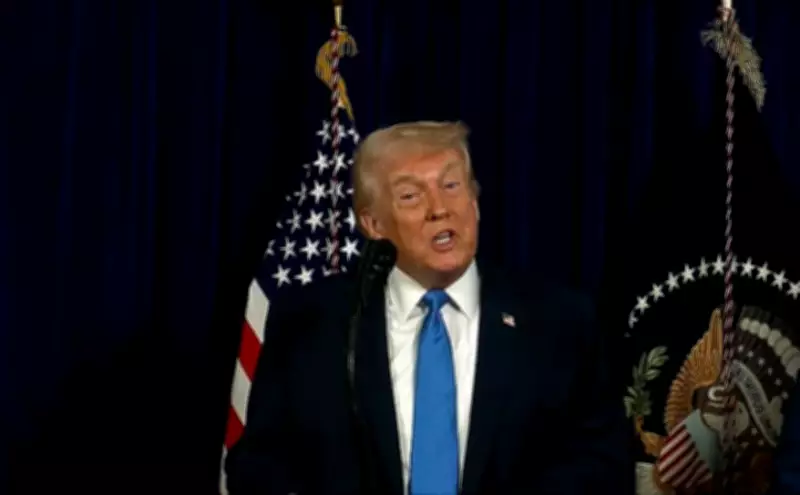
In a significant development on Wednesday, April 8, 2026, United States President Donald Trump unveiled a sweeping foreign policy shift targeting Iran, marking a bold move in international relations. Through a post on his Truth Social account, Trump declared that any nation found supplying military weapons to Iran will face an immediate 50 percent tariff on all goods exported to the United States.
Enforcement and Isolation Strategy
Trump emphasized that this policy will be enforced "with no exclusions or exemptions," as part of a broader strategy to isolate Iran from external military support. He described recent developments as a "very productive" regime change, suggesting a new phase in U.S.-Iran relations. The President claimed that the United States will work closely with Iran moving forward, with key objectives including:
- Ensuring the cessation of uranium enrichment activities.
- Securing deeply buried nuclear material with assistance from U.S. forces.
Surveillance and Negotiations
Trump added that critical nuclear sites in Iran remain under "exacting" satellite surveillance conducted by the U.S. Space Force, highlighting ongoing monitoring efforts. He noted that negotiations are currently in progress regarding tariff and sanctions relief, with agreements reportedly reached on several points. This indicates potential diplomatic advancements alongside the stringent economic measures.

Stability and Reconstruction Plans
Framing the move as a step toward global stability, Trump called it a "big day for world peace." He signaled plans for U.S. involvement in Iran's reconstruction, which includes managing trade flow through the strategically vital Strait of Hormuz. This involvement could reshape regional economic dynamics and security protocols.
Economic Projections and Regional Impact
The President projected strong economic prospects, suggesting that reconstruction efforts might usher in a "Golden Age of the Middle East." He stated that Washington will maintain a presence to oversee the transition, aiming to foster stability and growth in the region. This announcement underscores a shift in U.S. foreign policy with potential long-term implications for international trade and geopolitical alliances.