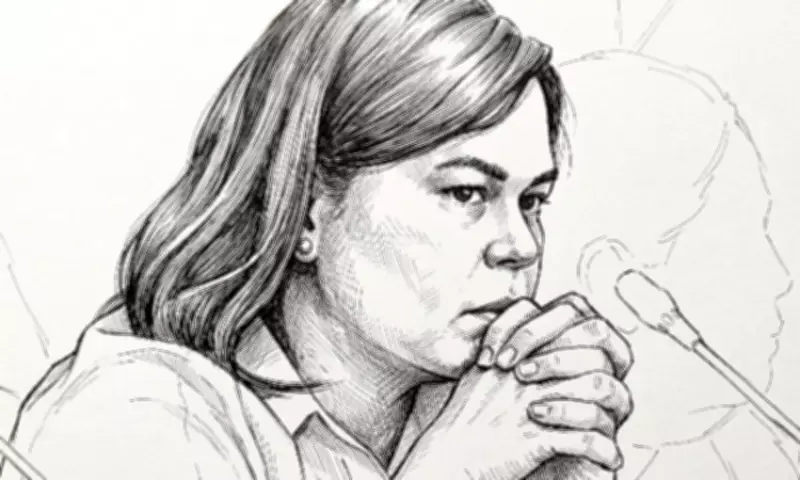
House Justice Committee Advances Impeachment Proceedings Against Vice President
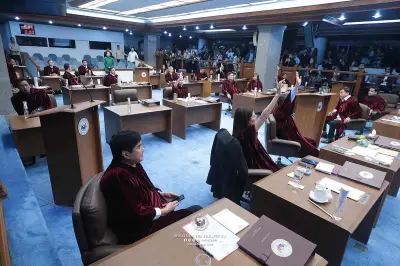
Despite the ongoing global oil crisis resulting from the US-Israel-Iran conflict, government operations in the Philippines continue uninterrupted. The House Justice Committee has maintained its schedule, proceeding with the impeachment hearing against Vice President Sara Duterte-Carpio after determining the complaint against her contained sufficient grounds.
Legal Challenges and Due Process Concerns
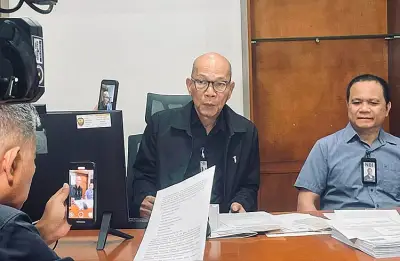
The legal representatives for Vice President Duterte-Carpio submitted a formal response challenging the proceedings on due process grounds. Her attorneys argued that the standards for evaluating the sufficiency of impeachment complaints have been inconsistent when comparing the current case against the Vice President with previous complaints against President Ferdinand "Bongbong" Marcos Jr.
In her carefully worded "ad cautilam" (with caution) response, the Vice President formally requested the House justice panel to dismiss the impeachment complaints entirely. Her legal team contended that the allegations do not constitute impeachable offenses and that the complaints fail to present the "ultimate facts" necessary to substantiate the accusations.

Specific Allegations Under Scrutiny
The impeachment complaints against Vice President Duterte-Carpio center on two primary allegations:
- Alleged misuse of confidential funds during her tenure
- Supposed threats made against President Ferdinand Marcos Jr., First Lady Liza Araneta Marcos, and former House Speaker Martin Romualdez
Her legal response specifically addressed the more serious accusation, stating: "The impeachment complaints brazenly accuse the Vice President of entering a supposed 'contract to kill' yet they fail to present any shred of proof that any such contract ever existed."
Committee Determination and Next Steps
Following the submission of the Vice President's response and a subsequent reply from the House prosecution team, the Justice Committee made a significant determination. The panel concluded that Duterte-Carpio's answer lacked substantive content and failed to adequately address the allegations against her.
This finding has prompted the committee to move forward with what has been termed a "mini-impeachment trial." This preliminary phase will allow both complainants and the respondent to present their respective cases before any formal impeachment proceedings would advance to the full House of Representatives.
The Attendance Dilemma
A critical question now emerges regarding the Vice President's participation in these preliminary hearings. While her legal team could technically argue that she is not legally obligated to attend these initiatory proceedings, the political implications of such a decision carry substantial weight.
House Justice Committee Chair Gerville Luistro has clarified the procedural standing: "VP Sara can opt to attend or not during the 'mini-impeachment trial.' It is her prerogative. The hearing is only to determine the evidence of the complainants as well as the respondents. It is not yet a trial. There is no summons yet, no compulsion, no immediate penalty for absence."
Beyond Legal Technicalities: The Political Dimension
Impeachment represents far more than ordinary legal proceedings. As the Constitution's most powerful mechanism for ensuring accountability among the nation's highest officials, impeachment carries profound political and moral dimensions. The fundamental expectation remains straightforward: when called to account for one's actions in public office, responsible officials should demonstrate willingness to engage with the process.
Choosing to abstain from participation at this early stage would represent more than a legal strategy—it would constitute a significant political calculation. While the Vice President might technically avoid immediate legal consequences for non-attendance, such a decision could establish a concerning precedent for future accountability proceedings.

The Power of Presence and Public Perception
Attendance at these preliminary hearings does not equate to an admission of guilt. Rather, participation offers the Vice President a strategic opportunity to present her perspective directly, challenge accusations before they gain political traction, and demonstrate confidence in her position. By engaging proactively, she could potentially dismantle the case against her before it develops momentum.
Conversely, absence from these proceedings would allow the narrative to develop without her direct input, potentially permitting accusers to define the factual landscape uncontested. In an era of fragile public trust in governmental institutions, leaders strengthen democratic processes by confronting scrutiny directly rather than retreating behind technical legal protections.
The House Justice Committee will continue its proceedings regardless of the Vice President's decision regarding attendance. The impeachment complaint will either advance or be dismissed based on the evidence presented. However, should Duterte-Carpio choose not to participate, each development in the case will inevitably raise persistent questions about her willingness to engage with the accountability process when given the opportunity.
In the court of public opinion—where impeachment proceedings ultimately derive their political force—voluntary participation carries substantial symbolic weight. While legal compulsion may be absent at this preliminary stage, the moral expectation of transparency and accountability remains paramount for officials occupying the nation's highest offices.