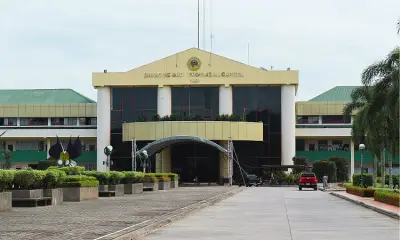
The Supreme Court of the Philippines has taken the drastic step of ordering the dismissal and permanent disbarment of a sitting regional trial court judge found responsible for orchestrating the murder of a fellow magistrate.
A Grave Betrayal of Judicial Duty
In a landmark ruling posted on Tuesday, December 23, 2025, the Supreme Court En Banc commanded the removal of Judge Oscar D. Tomarong, the presiding judge of Regional Trial Court (RTC) Branch 28 in Liloy, Zamboanga del Norte. This severe administrative penalty stems from his involvement in the 2019 killing of Judge Reymar L. Lacaya, who was then presiding over RTC Branch 11 in Sindangan, within the same province.
The high court's decision followed disciplinary proceedings initiated by the Judicial Integrity Board (JIB). These proceedings were triggered by Tomarong's criminal conviction for planning the assassination of his colleague. The two judges had been reassigned to each other's court branches in 2019.

The Fatal Attack and the Plot
The tragic incident occurred after a court hearing at Branch 28 in Liloy. As Judge Lacaya walked toward his car parked behind the court building, gunshots rang out. He was later discovered lifeless beside his vehicle.
During the criminal trial, a key witness, Juliber Cabating—a public works employee who also served as an errand aide for Judge Tomarong—provided damning testimony. Cabating stated under oath that Tomarong directly instructed him to find hired killers to murder Judge Lacaya. Furthermore, he testified that Tomarong provided the payment of P250,000 for the hit, which was handed to the assassins through him.
Swift and Severe Sanctions
The Supreme Court imposed the maximum administrative penalties available. It ordered Tomarong's dismissal from the judiciary service, the forfeiture of all his retirement benefits, disbarment from the practice of law, and perpetual disqualification from any future government employment.
The Court firmly classified murder as a crime of moral turpitude, which it defined as an act that is grossly immoral, dishonest, and contrary to one's duty to society. Such a grave offense warrants dismissal under the Rules of Court. The justices emphasized that Tomarong's actions represent one of the most serious possible violations of judicial duty and trust.
"At a time when rising attacks against judges have necessitated the adoption of protective measures, a judge committing the murder of a fellow judge must be punished swiftly and severely," the Supreme Court declared in its ruling.
The Court also clarified that a final criminal conviction is not a prerequisite for imposing administrative sanctions. Disciplinary cases require only substantial evidence of wrongdoing, a standard met in this case. Although Tomarong's criminal conviction is still under appeal, the Supreme Court proceeded with its administrative ruling.
Unfit for the Legal Profession
In disbarring Tomarong, the Supreme Court cited the Code of Professional Responsibility and Accountability, which forbids lawyers from engaging in unlawful, dishonest, or immoral conduct. The Court stressed that a lawyer who demonstrates "utter disregard for the sanctity of human life" has no place within the honorable legal profession.
Finally, the Supreme Court reminded all lower courts of their obligation to promptly report any convictions of judges and court personnel to the Judicial Integrity Board. This directive aims to ensure accountability and uphold the integrity of the entire judiciary system in the Philippines.