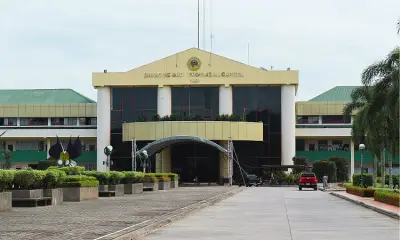
Supreme Court's Final Ruling on VP Duterte Impeachment Reshapes Political Landscape
The Supreme Court of the Philippines has delivered a definitive and unanimous ruling that firmly rejects all impeachment complaints targeting Vice President Sara Duterte. This landmark decision represents far more than a simple procedural conclusion—it constitutes a fundamental transformation of how political accountability functions within the nation's democratic framework.
Procedural Barriers Become Impenetrable Walls
The Court's comprehensive judgment systematically dismantled the impeachment efforts through multiple legal mechanisms. First, it determined that the House of Representatives failed to meet established procedural standards in presenting the complaints. More significantly, the justices invoked the constitutional one-year bar provision, effectively blocking even the fourth and final impeachment complaint from proceeding forward.
This dual-pronged approach has created what legal experts describe as an unprecedented barrier to impeachment proceedings. By stripping the Senate of its constitutional power to hear the case, the Supreme Court has effectively transferred ultimate authority over impeachment eligibility to the judicial branch.

From Judicial Review to Political Redirection
The Court's position has evolved significantly since it first addressed these matters in July 2025. What began as judicial review has transformed into what political analysts characterize as a deliberate reconfiguration of impeachment mechanisms. The justices have progressively narrowed the pathways available for future impeachment attempts, establishing what many observers describe as restrictive new parameters.
For accountability advocates across Central Luzon and throughout the Philippines, this ruling delivers a profound disappointment. The opportunity for public examination of serious allegations through the constitutional impeachment process has been effectively terminated by what critics describe as procedural technicalities overriding substantive concerns.
Institutional Implications and Political Consequences
Vice President Duterte's supporters have celebrated the unanimous decision as institutional vindication, portraying the Court's stance as evidence of judicial independence and procedural rigor. However, beneath this surface interpretation lies a more complex reality: the ruling fundamentally alters how future impeachment efforts must be structured and pursued.
The immediate consequences are already materializing. Any possibility of a Senate trial has evaporated completely. The House of Representatives now confronts the limitations of its own procedures and must reconsider how to approach oversight of high-ranking officials. Legislators who viewed impeachment as a vital check on executive power must now navigate significantly constrained options.
Civic Trust and Democratic Accountability Tested
This moment extends beyond legal technicalities to test the very foundations of civic trust in Philippine institutions. Citizens who associate justice with transparency and accountability now face a judicial system that has prioritized procedural compliance over substantive examination of allegations against powerful officials.
While legal scholars may appreciate the Court's devotion to due process principles, ordinary Filipinos—particularly in Central Luzon where demands for accountability have been most vocal—are left grappling with questions about whether technicalities should supersede truth-seeking in matters of national importance.
Historical Legacy and Future Implications
Legal experts anticipate that this decision will be studied for generations as a defining moment in Philippine constitutional law. The ruling meticulously documents every procedural deficiency while simultaneously establishing a blueprint for future impeachment attempts that will undoubtedly be referenced in both academic settings and court proceedings.

Politically, the landscape has been permanently altered. As impeachment transforms from an accessible constitutional remedy to what some describe as a procedural fortress, opposition forces must recalibrate their strategies for oversight and accountability. The Supreme Court has not merely resolved a specific case but has fundamentally rewritten how political accountability functions throughout the republic.
History will ultimately judge whether this ruling strengthens Philippine institutions through clearer legal standards or diminishes democratic accountability by creating insurmountable procedural barriers. The nation now contemplates whether the Supreme Court has upheld its constitutional supremacy or inadvertently constrained its role as guardian of democratic principles.