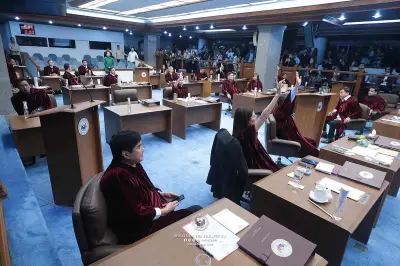
The Supreme Court of the Philippines has put an end to a decade-long legal ordeal for a public school teacher from Capiz, Western Visayas, shielding her from repeated administrative complaints centered on her personal relationship. The High Court's Second Division firmly upheld the principle that a settled case cannot be resurrected by repackaging old accusations.
A Case That Refused to End
In a decisive 10-page ruling promulgated on July 31, 2025, and made public on December 21, the Court denied a petition filed by the Civil Service Commission (CSC). The CSC had sought to reverse a Court of Appeals (CA) decision that favored the teacher, identified in court documents as Elena.
The saga began when Elena married Mario in 1998. However, Mario had been married twice before, in 1980 and 1985. This relationship became the subject of multiple administrative complaints. In 2002, the CSC in Western Visayas suspended Elena for one year for immorality and conduct prejudicial to the best interest of the service. Years later, the Department of Education also found her liable but noted she had already served the penalty.

Despite these rulings, Mario's daughter from his first marriage, Marjorie, filed a new administrative complaint in 2014. She alleged that Elena continued to cohabit with her father, arguing this constituted a fresh offense. The CSC agreed with Marjorie, leading to another round of legal battles.
The Supreme Court's Final Word
The Supreme Court, however, found no merit in reviving the case. It affirmed the CA's ruling that the 2014 complaint was barred by res judicata—a legal doctrine that prevents the re-litigation of cases already resolved with finality. This principle is akin to double jeopardy but applies in civil and administrative contexts.
The Court meticulously applied the "same evidence test," a key method for determining if two cases are identical. It concluded that the 2014 complaint was fundamentally rooted in the same factual core—Elena's relationship with Mario—that had been adjudicated and penalized years earlier.
"If one takes away the main narrative of petitioner (Elena) and the late (Mario's) relationship, respondent's complaint would have no leg to stand on," the CA had stated, a point the Supreme Court fully endorsed.
Broader Implications for Justice and Fairness
Beyond Elena's personal relief, the decision carries significant weight for the Philippine justice system. The Supreme Court underscored the vital purposes of the res judicata doctrine:
- It protects individuals from harassment through endless lawsuits.
- It prevents courts and agencies from issuing conflicting rulings.
- It ensures the stability and finality of judicial and administrative decisions.
The Court explicitly stated that this doctrine applies not only to courts but also to quasi-judicial bodies like the Civil Service Commission. The ruling sends a clear message that once a penalty has been served and a matter is closed, it cannot be endlessly reopened, safeguarding citizens from procedural abuse.
For Elena, the Supreme Court's ruling finally draws a line under a chapter of her life that has been under scrutiny for over a decade, affirming that justice also means closure.