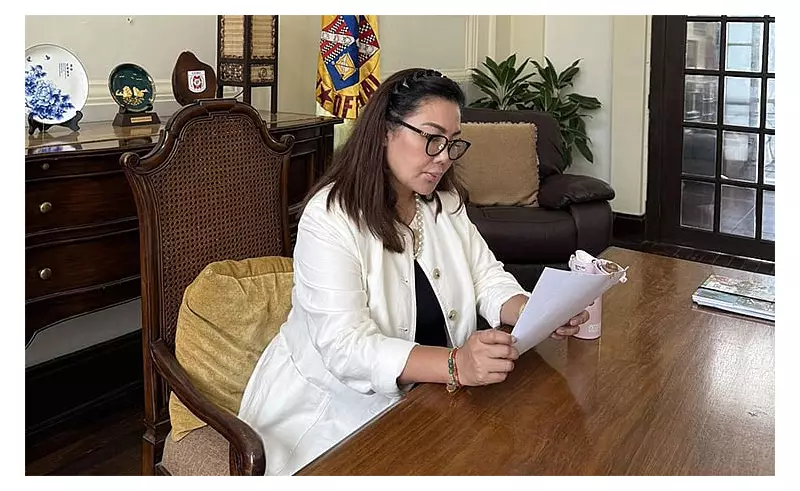
In a decisive move to safeguard its rich cultural legacy, the Province of Cebu has officially established a central body to oversee and protect its historical treasures. Governor Pamela Baricuatro has signed an executive order creating the Cebu Province Heritage Site Commission, a powerful new authority tasked with the conservation and regulation of heritage sites across the entire province.
A New Authority for Heritage Governance
The commission was formally created through Executive Order (EO) 79, Series of 2025, which Governor Baricuatro signed on December 12, 2025. This order aims to operationalize the body that was originally mandated under the Cebu Provincial Heritage Site Ordinance. The primary goal is to ensure uniform governance, consistent technical oversight, and effective policy coordination for all heritage conservation initiatives in Cebu.
The Commission will serve as the primary authority in administering all heritage sites owned by the provincial government. Its power also extends to privately-owned heritage sites that are formally placed under its stewardship. A critical function of the new body is to regulate all restoration, renovation, and construction activities within declared heritage zones. This will be done by issuing mandatory clearances that must be obtained before any work can begin.

Leadership and Key Functions
Governor Pamela Baricuatro herself will chair the newly formed Commission. Provincial Administrator Joseph “Ace” Durano has been appointed as its Executive Director, ensuring day-to-day operational leadership.
The Commission's membership is designed to bring together expertise from various sectors. It includes representatives from key provincial offices and the chairpersons of relevant Provincial Board committees, namely those for tourism, infrastructure, arts and culture, environment, and education. To add national perspective and academic rigor, the body also includes representatives from the Philippine National Museum, the University of San Carlos, and the Ramon Aboitiz Foundation Inc.
The Commission's mandate is broad and impactful. Its key functions include:
- Reviewing and approving architectural and engineering plans for heritage sites.
- Directly supervising restoration and conservation projects.
- Determining the allowable uses for heritage properties to prevent inappropriate development.
- Maintaining an updated and official registry of all declared heritage sites in Cebu.
Broader Mandate and Future Impact
Beyond regulatory oversight, the Commission is empowered with proactive duties that will shape Cebu's cultural landscape for years to come. It is mandated to receive and evaluate petitions for new heritage site declarations, allowing communities to nominate important landmarks. The body will also draft and enforce the implementing rules and regulations needed to put the heritage ordinance into full effect.
A significant part of its role involves coordination. The Commission will serve as the main link between the provincial government and national agencies, local government units (LGUs), civil society organizations, and private sector partners. This collaborative approach is seen as essential to strengthening heritage protection and boosting cultural promotion across the island.
The creation of this centralized commission marks a significant step forward in institutionalizing heritage conservation in Cebu. It provides a clear legal framework and a dedicated body of experts to ensure that the province's historical and cultural sites are preserved for future generations, balancing protection with responsible development.