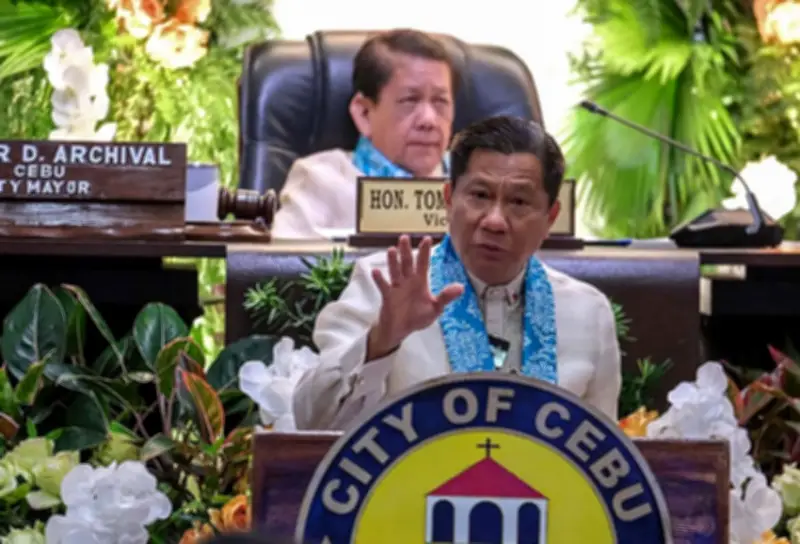
CEBU City Mayor Nestor Archival believes members of the minority bloc also deserved committee chairmanships following the reorganization of the Cebu City Council, while urging both political camps to work together in pursuing programs for the city’s development.
Mayor's Remarks on Council Reorganization
Speaking to reporters after delivering his first State of the City Address (Soca), Archival said he respects the decision of the majority bloc on the distribution of committee assignments but expressed hope that political differences would not hinder the council’s work.
“It could have been nicer and better, but things happen because this is politics, actually. Realignments are always there,” Archival said.

Archival said the majority should find ways to work closely with the minority to ensure both blocs remain aligned in pursuing programs that benefit the people of Cebu City.
New Committee Assignments
He made the remarks after the City Council approved its reorganization for Fiscal Year 2026-2027, during which most of the key committee chairmanships were retained by members of the majority bloc.
Under the new committee assignments, only Councilor Nyza Archival of the minority bloc was given chairmanships, heading the Committees on Tourism, Arts and Culture, and Sister Cities Relations and Big Brother Program. Councilor Paul Labra chairs the Committee on Public Order.
Meanwhile, Minority Floor Leader Sisinio Andales and Assistant Minority Floor Leader Alvin Arcilla and Jose Abellanosa were not assigned any committee chairmanships.
Mayor's Stance on Assignments
Archival, however, said the assignment of committees ultimately rests with the council.
“I don’t have any idea on that. The majority has its own decision. They have their own reasons on what they think is best,” he said.
Despite the political realignment within the council, the mayor expressed optimism that both blocs could work together in pursuing programs that would benefit Cebu City residents.
He emphasized that while council members belong to different political parties, they should remain united in pursuing a common direction centered on the welfare of the public.
Health Initiatives Continuity
Archival also expressed hope that ongoing health initiatives started under former Health Committee chair Councilor Michelle Cellona would continue despite the leadership change.
Following the reorganization, Councilor David Tumulak was designated chairman of the Committee on Health, Hospitals, Services and Sanitation, replacing Cellona, who chaired the committee during the previous fiscal year.
Archival cited the city’s partnership with the World Mosquito Program, which uses Wolbachia technology to combat mosquito-borne diseases, as among the projects initiated under Cellona’s leadership.
According to Archival, the program involves a $1.5-million partnership between the City Government and the World Mosquito Program and is the first of its kind in the Philippines.
“Michelle has already accomplished a lot, especially the Wolbachia program. It’s a partnership worth $1.5 million, and Cebu is the pilot area in the Philippines,” he said.
He added that Cellona also spearheaded the city’s Mental Health Council, another initiative he hopes will continue under the new committee leadership.
“I would love that the majority, especially the Committee on Health, will find a way to align with the projects that Michelle had already started. After all, these are for the welfare of our people,” Archival said.
Asked whether the change in committee leadership could affect the implementation of these programs, the mayor said he hopes it will not.
“I hope not. We just have to align them. Everybody is on talking terms. It’s not as if there is any hatred,” he said.
Long-Term Development Agenda
The council’s reorganization came immediately after Archival delivered his inaugural Soca, during which he unveiled the Cebu City 2035 roadmap centered on sustainable, smart and inclusive governance. The mayor reiterated that while political alignments may shift inside the legislative body, cooperation between the executive and legislative branches remains crucial in implementing the administration’s long-term development agenda.