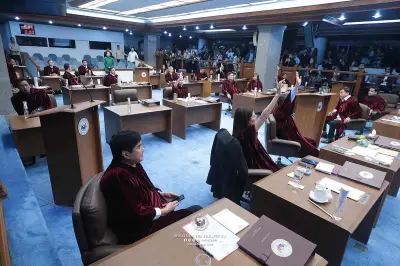
The Cebu provincial government's executive department is now carefully considering the future legal and operational status of the Cebu People's Action Center (CPAC). This review follows a recommendation from the legislative department and the recent decision by the 17th Sangguniang Panlalawigan to withhold its budget allocation.
Funding Freeze Prompts Structural Review
Aldwin Empaces, the Assistant Provincial Administrator, confirmed the ongoing evaluation. The move comes directly after the provincial board declined to allocate funds for CPAC in the current budget cycle. Legislators cited that the center's current setup might be in conflict with existing rules and regulations.
Empaces explained that the core issue under examination is whether CPAC should be formally established as a separate office or maintain its current structure. "We will still discuss whether it will be made into an office or if it will remain status quo," Empaces stated. He emphasized that transforming CPAC into a full-fledged office requires meticulous thought, as it would entail a need for additional and permanent funding from the provincial coffers.

Clarifying CPAC's Role and Current Structure
In light of the debate, Empaces provided crucial clarification on CPAC's nature. He stressed that CPAC is not a formal office but a program operating under the Office of the Governor. The personnel managing its day-to-day functions are job order employees, not permanent plantilla positions.
The program was originally established via an executive order, aligning with the mandates of Republic Act No. 9485, or the Anti-Red Tape Act of 2007. Its primary functions are to provide public assistance, address grievances, and serve as a channel for citizen feedback, thereby enhancing government transparency and efficiency.
Service Continuity and Disaster Role Assured
Despite the administrative review, provincial officials have moved to reassure the public. Empaces gave a firm guarantee that the services provided by CPAC will not be disrupted or diminished during this period of assessment.
He highlighted the center's critical role, especially as a support unit during calamities. CPAC acts as an augmentation force for the Provincial Social Welfare and Development Office (PSWDO) and the Provincial Health Office. "They are really augmentation support because the PSWDO has only a few people, and the province is very large," Empaces noted. "So we really have to be present... at least the services. So this will continue under the PSWDO."
This assurance underscores the program's value in extending the provincial government's reach, ensuring that essential public services and disaster response mechanisms remain accessible across Cebu's vast communities, regardless of its final administrative form.