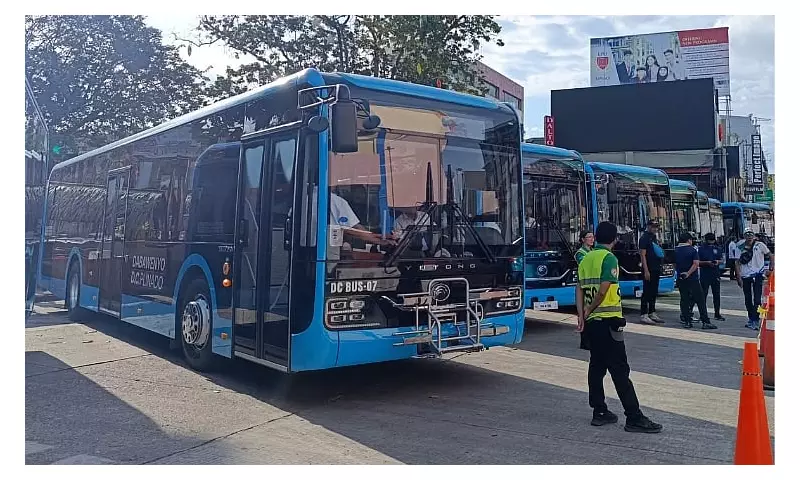
The City Government of Davao has officially launched ten brand-new, low-floor buses as part of the Davao City Interim Bus Service (DIBS), marking a significant step toward modernizing public transportation in the region. The buses were displayed at City Hall Grounds on Thursday, November 27, 2025, with operations scheduled to begin on December 5, 2025.
Addressing Transportation Challenges
Davao Bus Project Manager Atty. Tristan Dwight Domingo explained that the local government unit procured these buses to meet the growing need for reliable public transportation. He emphasized that the city aims to provide humane, convenient, safe, and dependable transit options for all residents.
"The DCBus project was developed to help alleviate and provide interim options for all of us particularly during peak hours when transportation choices become even more limited in the city," Domingo stated during the launch event.

Acting Davao City Vice Mayor Rodrigo 'Rigo' Duterte II highlighted that transportation planning and traffic management remain top priorities for the LGU. He stressed the importance of implementing DIBS as part of their commitment to providing Dabawenyos with a modern public transport system.
Bus Routes and Operational Details
The bus service will operate from Monday to Saturday during peak hours: 6-10 a.m. and 4-9 p.m., covering 124 designated bus stops across the city. The service will be completely free of charge for commuters, though officials noted they are still finalizing some additional permits required for full operation.
Southbound routes include: Toril to Guillermo Torres or Sandawa, Toril to Roxas, Mintal to Sandawa, Mintal to Roxas, and Bangkal to Roxas.
Northbound routes feature: Buhangin to Roxas and several Panacan routes via Angliongto and R. Castillo.
Each route is expected to complete three trips daily, with scheduling designed to minimize impact on existing jeepney operators. The buses can accommodate approximately 90 passengers each, with 46 regular seats, two dedicated seats for persons with disabilities (PWDs), and standing room for 15 additional passengers.
Modern Features and Facilities
The new buses come equipped with several modern amenities, including ramps for easier PWD access and bike racks for cyclists. The city has established a dedicated garage and operations command center at the Davao City Overland Transport Terminal (DCott), where the bus fleet management system and transport monitoring tools are housed.
Domingo revealed that the buses will operate under specific guidelines: eating and drinking are prohibited inside the vehicles, while bringing durian is permitted provided it's properly stored and doesn't spread odor. Market-goers may ride as long as their goods don't leak liquids.
If the proposed ordinance receives city council approval, bus drivers will have authority to determine whether passengers can board based on compliance with these rules.
Driver Training and Community Responsibility
Twenty-two drivers were officially pinned during the ceremony by Rigo Duterte II and Domingo, symbolizing their readiness to operate the new buses. These drivers will be assisted by 22 Civil Security Unit personnel and will work in morning and evening shifts, with two replacement drivers available for emergencies.
Acting Mayor Sebastian 'Baste' Duterte appealed to residents to take good care of the new units, noting Dabawenyos' reputation for discipline. "We will behave as expected of us, so this is really my request to all of you — that we do not damage or misuse our equipment," he urged.
The mayor clarified that these ten buses represent a temporary solution while awaiting national government funding for the larger Davao Bus Project. "The national government is not supporting us in this kind of desire, and we believe that the Dabawenyos are ready to move forward," he stated.
Domingo emphasized that the DIBS operations will serve as preparation for the eventual implementation of the comprehensive Davao Bus Project, helping residents adapt to modern public transportation systems.