Gov't Orders Local Officials to Stay, Lead During Typhoon Crisis
The combined impact of typhoon Tino and the imminent threat of super typhoon Uwan has prompted a major shift in the government's approach to local governance during disasters. A critical directive from the Department of the Interior and Local Government (DILG) is now forcing a re-evaluation of where public officials' priorities should lie when their constituents are in peril.
Immediate Travel Suspension for All Local Officials
In a decisive move, the DILG has suspended all foreign travel—both official and unofficial—for every elected and appointed local government official and employee across the Philippines. This ban is effective from Sunday, November 9, to Saturday, November 15, 2025.
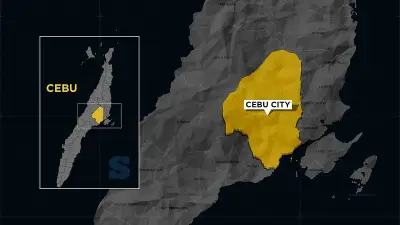
The order was formalized in Memorandum Circular 2025-110, signed by DILG Secretary Juan Victor Remulla on Saturday, November 8. It mandates the immediate cancellation or postponement of any planned trips abroad. This action comes after reports confirmed that several mayors from Cebu’s 5th District had sought permission for personal travel just before typhoon Tino made landfall on Tuesday, November 4.

Why the Presence of Officials is Non-Negotiable
This DILG directive underscores a fundamental principle for a disaster-prone nation: leadership must be visible and accountable during a crisis. The circular is grounded in the recommendation of the National Disaster Risk Reduction and Management Council (NDRRMC) and the legal authority of President Ferdinand Marcos Jr.'s Proclamation 1077, which declared a one-year state of national calamity.
The travel suspension serves three critical purposes in disaster risk reduction and management:
- Ensuring Uninterrupted Services: It guarantees that essential services and rehabilitation efforts are not hampered by the absence of key local leaders.
- Prioritizing On-the-Ground Coordination: The physical presence of officials is vital for direct oversight, resource allocation, and swift implementation of response plans.
- Safeguarding Public Welfare: Visible leadership helps maintain public trust, order, and the efficient distribution of aid when lives and property are at risk.
The DILG has issued a stern warning that any violation of this order will result in administrative and criminal charges under the Local Government Code (RA 7160) and the Philippine Disaster Risk Reduction and Management Act (RA 10121).
Exceptions and Related Suspensions
While the ban is comprehensive, a narrow exception exists. Travel may be permitted only if it is deemed absolutely necessary for urgent government business directly related to disaster response or mitigation. Such exceptions require prior approval from both the DILG Secretary and the Office of the President.
In a related move to mitigate the impact of super typhoon Uwan, the Office of the President has also suspended classes at all levels in Central Visayas, Western Visayas, and the Negros Island Region on Monday, November 10, and Tuesday, November 11. Government work in several regions, including the National Capital Region, has been suspended for November 10, though agencies involved in vital services must remain fully operational.
Super Typhoon Uwan: What to Expect
As of the 5 p.m. advisory on Sunday, November 9, from the Philippine Atmospheric, Geophysical and Astronomical Services Administration (Pagasa), the eye of super typhoon Uwan was located 110 km north of Daet, Camarines Norte. Packing maximum sustained winds of 185 km/h and gustiness of up to 230 km/h, it was moving west-northwest at 30 km/h.
Uwan is forecast to make landfall near Baler or Dipaculao in Aurora on Monday morning. It will then cross Nueva Vizcaya, Benguet, and Ifugao before emerging over the Lingayen Gulf. Pagasa warns of life-threatening winds and heavy rainfall, particularly in areas under TCWS Nos. 4 and 5. Widespread flooding, landslides, and power interruptions are anticipated.

For the Visayas, including Cebu, Bohol, Negros, and Leyte, the storm's outer circulation will bring occasional rains and gusty conditions. A gale warning is in effect, with waves as high as 5.5 meters expected, prompting the suspension of sea travel in affected areas.
This series of actions places an unprecedented focus on the accountability of local leadership. The coming days will be a critical test of whether every mayor and governor is on the ground, leading their communities through recovery and preparation for the next potential disaster.