Lapu-Lapu City marked its 65th anniversary of transforming from the town of Opon into a chartered city under Republic Act 3134, signed into law by President Carlos Garcia in 1961. The city is named after Datu Lapulapu, who defeated Ferdinand Magellan in the 1521 Battle of Mactan.
Historical Background
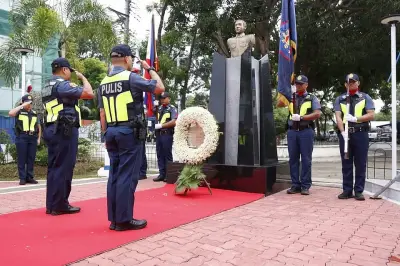
Opon's barren terrain might have been overlooked by Spanish colonizers if not for Magellan's death there. In the 1730s, a church was built for Birhen sa Regla, the town's patroness. In 1866, a monument to Magellan was erected at the site of his death.
Residents primarily engaged in fishing, carving, guitar-making, and boat-building due to unsuitable land for agriculture. After the Spanish left, Americans led by Dean Worcester established the Visayan Refining Company, which became the country's largest coconut oil producer by 1920. Another major business was the Cebu Shipyard and Engineering Works, both providing local employment.

Education and World War II
Education flourished under American rule, with Saint Alphonsus Catholic School opening in 1916. However, World War II halted progress as Japanese occupation stifled economic activities, leading many Oponganons to become guerrilla fighters. They monitored a Japanese-built aircraft landing strip.
Post-War Developments
After WWII, when Sergio Osmeña Jr. became Cebu governor in 1951, he proposed moving the airport from Lahug in Cebu City to Opon's landing strip. President Ramon Magsaysay approved the plan in 1955 but did not see its completion after his plane crashed in 1957. Construction of the Mactan Alternate Airport continued under President Garcia, whose wife Leonila Dimataga was from Opon. Her brother, Mariano Dimataga, was mayor at the time.
The airport initially served military purposes alongside the Mactan Air Base. The Mandaue-Opon Bridge, another Osmeña project, was completed under President Ferdinand Marcos Sr. in 1973, boosting commercial aviation.
Economic Growth
In 1979, Marcos and Mayor Maximo Patalinjug Jr. opened the Mactan Economic Zone for multinational investments. Tambuli Beach Resort also launched, promoting Cebu as an "Island in the Pacific." The Mactan-Cebu International Airport became the tourism backbone of the southern Philippines.
Since then, the airport expanded, two more bridges and economic zones were added, along with world-class hotels, resorts, convention facilities, schools, training centers, malls, banks, telecoms, hospitals, and other amenities. International events like ASEAN and APEC have chosen the city for meetings.
Future Prospects
Mayor Cindi Chan, Vice Mayor Celsi Sitoy, and Congressman Junard Chan assure more developments, including the Lapu-Lapu Expressway, a fourth Mactan-Mandaue Bridge, North Reclamation Area Development, socialized housing, a coastal road, sports oval, and a new city hall. With faith in Birhen sa Regla and a commitment to progress, Lapu-Lapu City's future looks bright. After all, 65 is still a young age for a city.