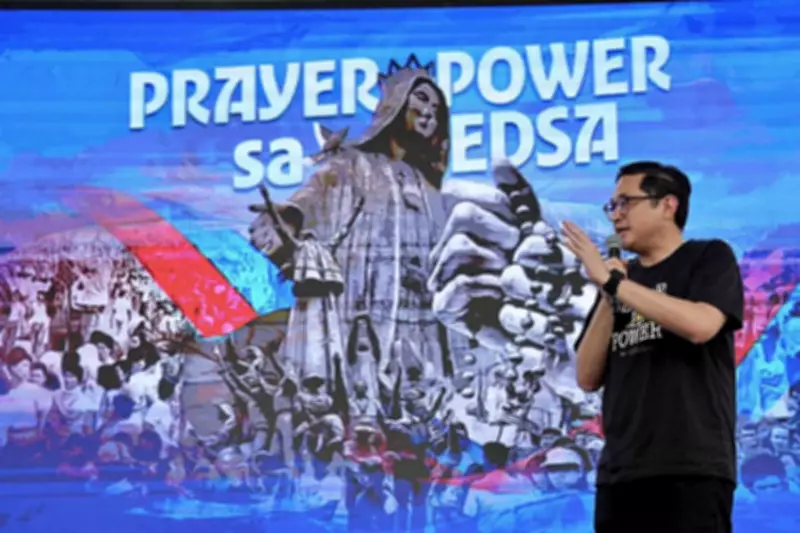
Senator Bam Aquino Advocates for Political Unity on Edsa 40th Anniversary
Senator Bam Aquino has issued a powerful call for unity among the nation's political leaders, urging them to transcend partisan divisions as the Philippines commemorated the 40th anniversary of the historic Edsa People Power Revolution on February 25, 2026. In his statement, Aquino emphasized that the country's pressing challenges demand cooperation rather than continued polarization.
Focus on Urgent National Needs
Aquino stressed that leaders must set aside political conflicts and colors to address the urgent needs of Filipinos, particularly in critical areas such as education and governance. He reflected on the enduring "Aquino versus Marcos" narrative in Philippine politics, noting that the current generation from both families has found common ground in governance.
"There were times when being called 'yellow' made you seem like a bad person," Aquino acknowledged, referring to the political label associated with his family. He described carrying the Aquino name as a "double-edged sword" but expressed unwavering pride in his family's legacy despite political attacks.

Family Legacy and Public Service Principles
Aquino revealed that his approach to public service is deeply influenced by his relatives, including the late Senator Benigno "Ninoy" Aquino Jr., former President Corazon Aquino, and former President Benigno "Noynoy" Aquino III.
"If there's one thing I learned from Ninoy, Cory, Noynoy, and my other relatives in government, it is consistency," he stated. Aquino outlined key principles he upholds:
- Maintaining a low profile and avoiding extravagant lifestyles, as learned from Cory Aquino.
- Remaining courageous on issues, inspired by Ninoy Aquino.
- Studying and working diligently, following the example of Noynoy Aquino.
Collaboration with President Marcos Jr. on Education
In a significant disclosure, Aquino mentioned that he recently met with President Ferdinand Marcos Jr. at Malacañan Palace to discuss the education crisis. While acknowledging that their views on history may never align, he emphasized that the public should not suffer while politicians argue.
"In education, we must first accept that we will always disagree on certain things," Aquino said. "You cannot convince me, and I cannot convince you on certain matters in our history. But the needs of the people are severe and urgent."
Legislative Progress and Certified Urgent Bills
Three of Aquino's legislative proposals have been certified as urgent by the President, demonstrating tangible progress in bipartisan cooperation:
- The Classroom-Building Acceleration Program
- The Citizens Access and Disclosure of Expenditures for National Accountability (Cadena) Act
- The Party-list System Reform Bill
Aquino asserted that the country's worsening problems necessitate unity among leaders and closer collaboration between the Senate and the Executive branch to ensure public welfare.
The True Lesson of Edsa: Beyond Personal Vendettas
Aquino emphasized that the true lesson of the Edsa Revolution is that public service should not be driven by personal or family vendettas. He noted that even leaders from opposing sides of history must work together for effective governance.
"There should be no baggage between us," Aquino declared. "The people have too many problems for us to dwell on personal conflicts. If I am the Education Committee chairman and you are the President, it cannot be that you refuse to sign a law because I am an Aquino, or that I refuse to craft good laws because you are a Marcos. That cannot happen."
Strength of Philippine Democracy Lies in Cooperation
According to Aquino, the strength of Philippine democracy resides in the ability of political rivals to cooperate for the common good.
"The way our system works is that even those who are opponents or not allies must come together for the people," he explained. "That is the beauty of our system."

As the nation looks toward the future, Aquino concluded that the Edsa anniversary should remind leaders that while history cannot be altered, the future of the Filipino people depends on their capacity to work together beyond political colors.