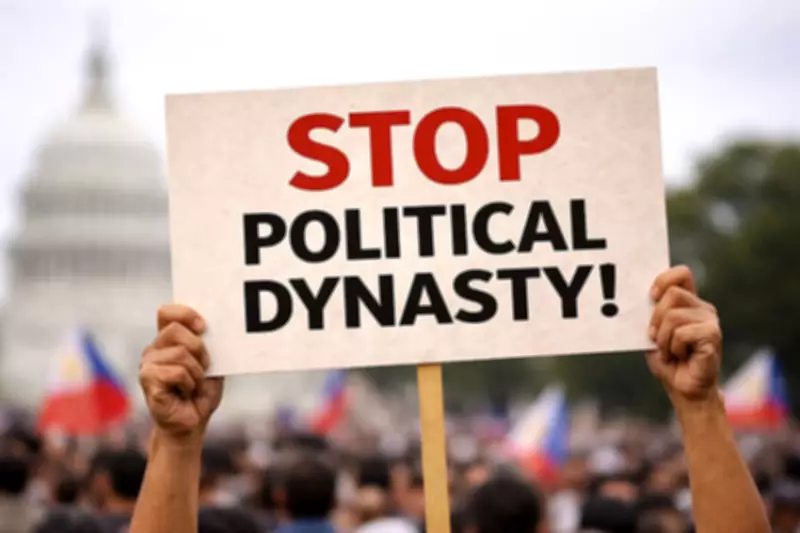
In a significant move on Thursday, February 19, 2026, the Catholic Educational Association of the Philippines (CEAP) and the Catholic Bishops’ Conference of the Philippines-Episcopal Commission on Catholic Education (CBCP-ECCE) have aligned with the growing demand to end political dynasties in the country. Issuing a joint statement with Simbahang Lingkod ng Bayan and Caritas Philippines, these prominent Catholic organizations voiced strong support for the latest legislative efforts aimed at passing a prohibition on political dynasties, while actively encouraging the youth to participate in this critical cause.
A Call for Structural Reform and Youth Engagement
The groups emphasized the urgent need for change, stating, "Let us break the hold of dynasties. In faith and solidarity, we commit to structural reform now -- for justice, for the poor, for the common good." They directly addressed younger generations, urging, "To the youth, insist that leadership be earned, not inherited. The passage of a genuine political dynasty prohibition law is a collective step toward a future, where political space is broadened, new voices are empowered, and equality is no longer deferred but fully realized."
The Impact of Dynastic Rule on Society
CEAP and CBCP-ECCE highlighted that the Filipino people have endured prolonged suffering due to the dominance of a few families in political offices. They argued that it is unacceptable for elective positions to be monopolized by family members, which deprives others of equal opportunities. "Political dynasties distort the meaning of public service, transforming elective office into a hereditary privilege rather than a mission of responsibility," the groups explained. "When power rotates across spouses, children, cousins, and in-laws, new leaders and innovative solutions are systematically blocked."

Furthermore, they pointed out that patronage networks create invisible barriers, turning political competition into a closed system guarded by name recognition and inherited resources. "We remind our public officials once again: Public office is a trust, not a private property," they added, reinforcing the ethical dimensions of governance.
Key Recommendations for Effective Legislation
To ensure a robust and enforceable ban on political dynasties, CEAP and CBCP-ECCE proposed several detailed recommendations:
- The law should prohibit close relatives up to the fourth civil degree of consanguinity or affinity from simultaneously holding or consecutively occupying elective positions.
- It must limit a maximum of two relatives per family to hold elective offices, with one allowed in a local position and one in a national role, without overlapping jurisdictions.
- The legislation must eliminate loopholes for circumvention, such as substitution, rotation, or position-swapping, to keep political opportunities accessible to new leaders.
- A reasonable mandatory pause should be instituted for term-limited officials and their close relatives before they can seek the same office, fostering fresh leadership while permitting eligible individuals to pursue other positions.
- Similar restrictions must apply to party-list representatives to prevent political families from maintaining undue influence through alternative avenues.
Current Legislative Landscape
It is noteworthy that over 20 bills targeting political dynasties are currently pending in Congress, indicating a broader legislative interest in addressing this issue. The involvement of Catholic education groups adds moral weight to these efforts, potentially galvanizing public support and political action.
This statement marks a pivotal moment in the ongoing debate over political reform in the Philippines, as influential religious and educational institutions join forces to advocate for a more equitable and democratic political system.