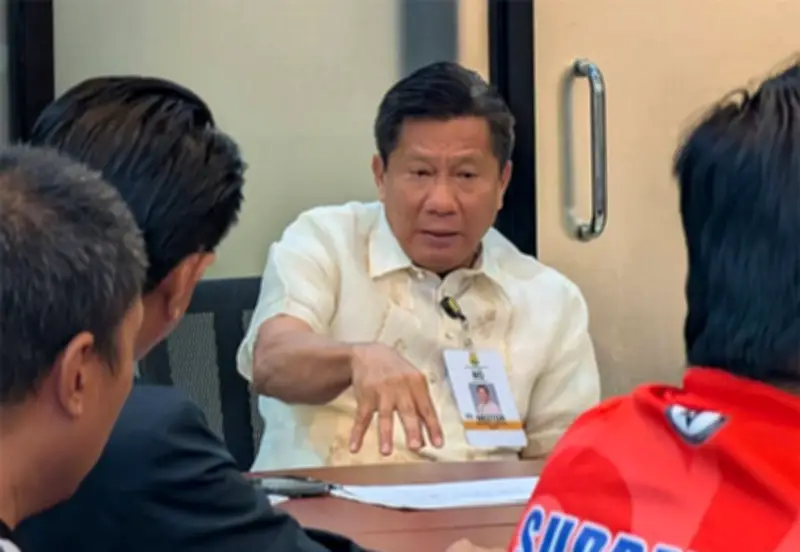
Cebu City Mayor Nestor Archival has declined to support the Cebu City Council’s proposal to reject the South Road Properties (SRP) component of the Cebu Bus Rapid Transit (CBRT) realignment, stating that the city has no authority to cancel a project owned and implemented by the National Government. Instead, Archival said he would write to the Department of Transportation (DOTr) to seek clarification and possible adjustments to the project’s alignment, stressing that key portions of the CBRT infrastructure have already been built and that the SRP segment has long been part of the approved project.
Mayor’s Stance on SRP Alignment
“I will just send a letter to the DOTr because I don’t know how we can remove something that has already been installed. The infrastructure is already there. What remains are the stations, but the route itself already exists,” Archival said in an interview Wednesday, July 8, 2026. He was responding to calls from several city councilors, backed by Vice Mayor Tomas Osmeña, to reject the inclusion of the SRP segment in the CBRT realignment, arguing that the project should instead prioritize serving commuters from Bulacao and other southern barangays.
Archival said documents he reviewed showed that the SRP alignment was already part of the transport project’s earlier plans. He recalled discussions with DOTr officials when he requested that the exclusive center lane of the BRT corridor be temporarily opened to jeepneys. According to the mayor, transportation officials told him that while they had originally intended to prioritize other sections of the project, implementation in those areas would have required more time and would likely have faced stronger opposition from affected sectors. “They told me it would take a lot of time and effort because there would be many complaints. Here, there were fewer issues, so implementation became easier,” Archival said.

Proposed Route Extension
To address the concerns raised by Osmeña and the City Council, Archival said he would instead request the DOTr to study extending the Phase 1 BRT route. He said the proposed adjustment would retain the existing Phase 1 alignment from Ayala Center Cebu to SRP while extending operations from SRP to Mambaling and Bulacao before looping back to SRP. The mayor explained that the original CBRT concept envisioned buses traveling from Bulacao to Mambaling, passing through SRP before proceeding to the South Bus Terminal, Jones Avenue, the Capitol area, Escario Street, Ayala Center Cebu, the Cebu IT Park, Talamban, and back along the route.
However, revisions were later introduced, including the construction of a station in SRP and the extension of the BRT line from Bulacao toward Talisay City before reconnecting to SRP. These changes expanded the project’s route length from about 24 kilometers under the original concept to approximately 34 kilometers in the final alignment approved by the DOTr. Despite these adjustments, Archival maintained that the original transport vision associated with Osmeña remained substantially intact. “The original concept is still there,” he said, adding that the council’s concern has always been to ensure that commuters in Bulacao are fully served by the system.
Practicality Over Politics
Asked whether he would support the council’s call to completely remove the SRP component from the project, Archival answered in the negative. “I don’t know how to cancel it,” he said. “The DOTr’s reports already show that SRP has long been included in the plan.” The mayor also pointed out that documents approving the alignment had already been signed, including those bearing the signature of the vice mayor. He acknowledged that questions remain on why the SRP segment was implemented ahead of other portions of the project but said the DOTr had explained that constructing that section first was more practical because it faced fewer implementation challenges.

According to Archival, beginning construction on the first phase also demonstrated progress on the project, which was important in maintaining the confidence of development partners. “At least there was already a Phase 1 because otherwise the World Bank could have said that nothing was being done,” he said. Responding to questions about reports that the World Bank had canceled a significant portion of its financing for the project, Archival said he believes the bank still intends to support Cebu’s public transport program. “My understanding is that there is still an intention to help,” he said. He added that one reason for the restructuring was that the government had been paying substantial standby fees on loan proceeds that had remained largely unused because of prolonged implementation delays. “They saw that the government was bleeding because we kept paying standby fees,” Archival said.
Limited City Authority
Archival also stressed that removing the SRP component now would create another problem since infrastructure has already been built. “Whether you like it or not, it’s already there. If we cancel it, what do we do with it? Not put buses there?” he said. The mayor emphasized that the city government has limited authority over the project because it is owned by the national government. “I don’t have the power because this is not our project. We are only beneficiaries,” he said. He likewise said the City Council cannot simply order the removal of the SRP segment because the CBRT is funded and implemented by the national government, although Cebu City residents ultimately share in repaying the country’s obligations as taxpayers.
Relationship with Vice Mayor
Asked whether the disagreement over the CBRT alignment would affect his relationship with Osmeña, Archival downplayed any conflict. He said differing views on the project do not translate into personal differences. “We have different ideas, but that doesn’t mean there is a conflict of personal interests,” he said. Archival acknowledged Osmeña’s position that the project should have first benefited poorer communities in the south instead of passing through commercial districts. He maintained that the DOTr proceeded with the SRP segment first because it was easier to implement and faced fewer obstacles. “We simply have different perspectives. In government, you go with the least resistance. We just navigate based on the situation,” he said. Despite their differing positions, the mayor indicated that he intends to continue working with the vice mayor while pursuing what he believes is the most practical approach to moving the CBRT project forward.