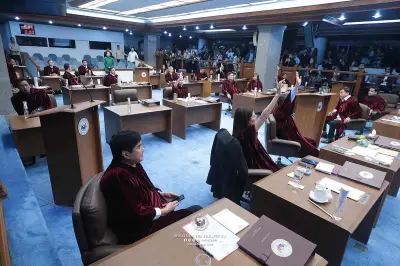
The events that took place on May 11, 2026, in the House of Representatives and the Senate were not merely simple political occurrences. That day served as a clear mirror of how patronage politics, driven by self-interest and a lack of concern for the nation, quietly but systematically destroys the foundation of a country. The public witnessed not a serious search for truth or meaningful decision-making, but a carefully orchestrated show of deception that had long been prepared.
The Core of Patronage Politics
At the heart of patronage politics is the prioritization of self-interest over the welfare of the majority. Decisions are not guided by principle or the law, but by the question of who will be hurt, who will be favored, and who needs protection. The statements and actions of lawmakers on that day showed careful balancing rather than courage. Maintaining power and the goodwill of the powerful seemed more important than accountability to the people.
Selfishness in patronage politics is not always overt. It is often hidden in silence when one should speak, in avoidance when one should take a stand, and in sudden enthusiasm when there is a reward in return. In this system, concern for the nation becomes mere rhetoric, used in speeches but set aside in actual decision-making. The interests of a few become the measure of right and wrong.

How Self-Interest Strengthens the System
This system becomes even stronger when self-interest prevails. Political support becomes an investment that must be repaid or grown. Government positions become tools to repay debts, provide protection, or turn a blind eye. In the deliberations of May 11, it was clear that some steps were not shaped by rational analysis but by the need to protect political alliances. When loyalty is directed at patrons rather than the Constitution, representative democracy loses its meaning.
One of the deepest damages caused by patronage politics is the reversal of accountability. In a healthy society, power comes from the people and returns to them in the form of service and accountability. In a system ruled by self-interest, accountability is directed away from the public and toward those who have the power to provide protection. The result is a legislature more concerned with managing risk than defending what is right.
The Failure of Checks and Balances
The existence of two legislative chambers is designed to provide balance, thorough analysis, and prevent abuse of power. But when the two chambers are united by the same interest, these safeguards lose their purpose. Deliberation becomes a mere formality, and decisions appear to have been agreed upon before any discussion. Democracy becomes a mere form, empty of substance.
The effect of this culture does not remain within the halls of Congress. It gradually teaches the people that ability is secondary to connections, that justice is flexible for the influential, and that public service is a path to personal gain. Over time, public trust weakens and is replaced by numbness and detachment from the democratic process.
The Fragile Order of Patronage
Patronage politics is often defended as a practical necessity to maintain order. But an order based on greed and self-interest is fragile. It lacks a strong foundation and easily collapses when the balance of power shifts. The events of May 11 exposed this weakness: a system that thrives not on principles but on the exchange of favors.
The significance of May 11 lies in the clarity it revealed. It showed how a lack of service can be dressed up as concern and passed off as normal politics. Patronage politics destroys a nation, not in one fell swoop, but through the gradual erosion of morality and accountability.
The Lesson of May 11
If there is a lesson from the deception on May 11, it is this: democracy cannot be saved by processes alone. It needs leaders willing to set aside self-interest and choose what is right, even at the risk of danger or threat. Otherwise, the halls of power will remain full, but the spirit of service that should dwell there will be hollow.

Being deceived is painful. But it is more painful when those who deceive you are the people you trust, not only for your future but for the country you still try to love despite everything. This is the essence of the story of May 11. And this deception is the worm that will repeatedly rot our nation.
Do you still feel the pain, or have you been numbed by politicians who repeatedly deceive you? The more painful question is this: why do you repeatedly allow yourself to be deceived?