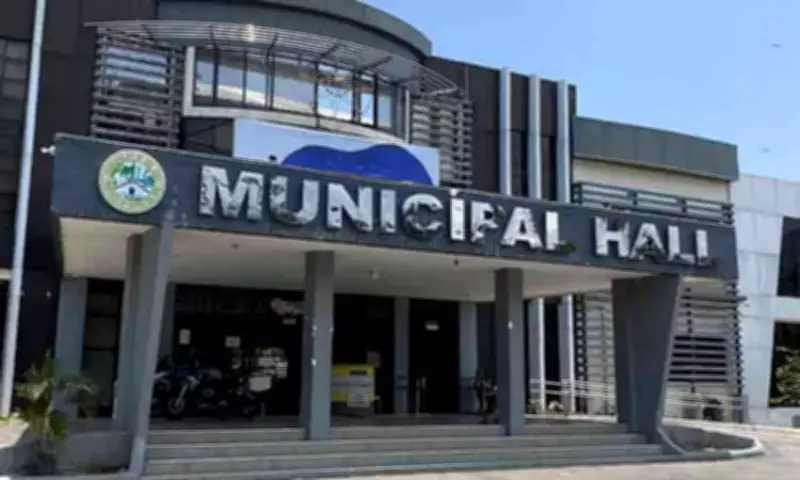
Mayor Jose Nelson “Tata” Sala welcomed the recognition of Santa Cruz as the wealthiest municipality in Davao Region, saying the distinction reflects the town’s commitment to sound fiscal management, transparency, and responsible governance.
In a statement released after the publication of the 2024 Annual Financial Report on Local Government Units by the Commission on Audit (COA), Sala thanked municipal employees, stakeholders, and residents for helping sustain the town’s strong economic standing.
“This distinction is a testament to the Municipality's commitment to sound fiscal management, transparency, and responsible governance,” Sala said. “More importantly, it reflects the collective effort of our officials, employees, stakeholders, and the people of Sta. Cruz, who continue to place their trust in public service.”

According to the COA report, Santa Cruz posted total assets of ₱1.980 billion, allowing it to retain its title as the richest municipality in the region. The assets include infrastructure projects, public facilities, cash reserves, land assets, equipment, and investments that reflect the local government’s financial capacity to fund programs and sustain long-term development.
The recognition came months after the municipality’s cityhood bid failed to advance, an issue that triggered political debate in the province and among various sectors. Sala acknowledged that the campaign for cityhood became politicized but stressed that Santa Cruz continues to demonstrate financial stability and institutional growth even without conversion into a city.
He said the municipality remains focused on improving public services, expanding economic opportunities, and implementing programs that directly benefit residents. Local observers noted that cityhood proposals in the Philippines often become politically sensitive because of concerns over revenue allocation, taxation, land use, and political representation.
Despite the setback, local officials said Santa Cruz’s economic performance shows it can operate at a level comparable to highly urbanized local government units. Over the years, Santa Cruz has posted strong economic activity driven by agriculture, tourism, trade, and infrastructure development.
The municipality serves as one of the gateways to Mount Apo, the country’s highest peak, making tourism a major contributor to local income and investment. The town also produces coconut, banana, cacao, and other high-value crops that support livelihoods and regional trade.
Sala said the recognition should not be viewed solely as a financial ranking but also as proof of the municipality’s ability to deliver quality governance and sustainable development. “We emphasize that this recognition goes beyond financial standing; it represents our capacity to deliver better services, strengthen local programs, and invest in sustainable development for our community,” he said.
He added that his administration remains committed to ensuring public funds are used efficiently, transparently, and equitably. Sala also dedicated the recognition to the people of Santa Cruz, saying the municipality’s continued progress would not have been possible without public trust and cooperation.
Aside from Santa Cruz, Carmen ranked second with ₱1.973 billion in assets, followed by Malita with ₱1.933 billion. Monkayo and Santo Tomas completed the top five. The report also highlighted the growing financial strength of municipalities in Davao de Oro, with six towns entering the top 15 wealthiest municipalities in the region.