The Department of Social Welfare and Development (DSWD) in Davao Region has reported a significant milestone for its flagship anti-poverty initiative in 2025. More than 257,000 households benefited from the Pantawid Pamilyang Pilipino Program (4Ps), receiving billions in conditional cash grants to bolster family welfare and support the national development agenda.
Exceeding Targets in Cash Grant Distribution
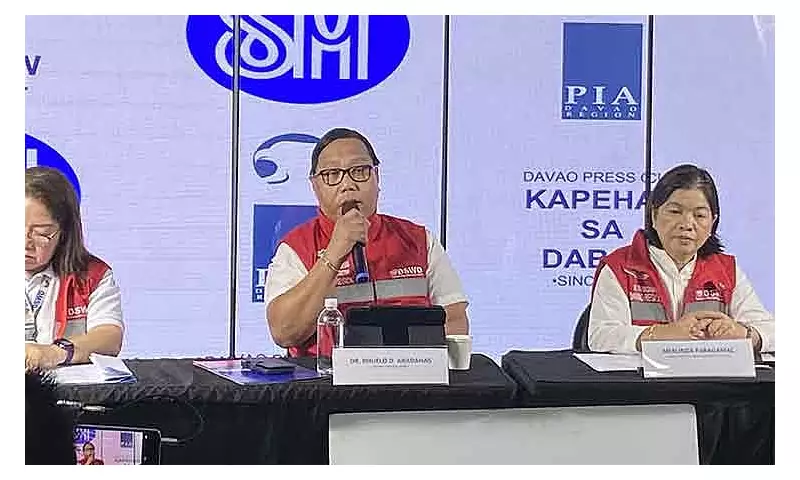
During the year-end Kapehan sa Dabaw held at SM City Davao on December 22, 2025, DSWD-Davao Regional Director Rhuel O. Aranas presented the annual accomplishments. He revealed that a total of 257,059 households received conditional cash grants amounting to P2.519 billion. This impressive figure slightly exceeded the year's target, achieving a 100.07 percent performance rate.
Director Aranas emphasized that this performance reflects the Field Office's dedication to providing social welfare services that are accessible, timely, and responsive. This effort is aligned with both the DSWD Strategic Plan 2024–2028 and the broader Bagong Pilipinas national development agenda. He reiterated that 4Ps remains a cornerstone in the region's fight against poverty and its mission to promote child and family welfare, especially among the most vulnerable sectors.

Household Progress and Program Compliance
By the close of 2025, 225,486 households remained as active beneficiaries in Davao Region. The year also saw 38,383 households exit or graduate from the program. These exits occurred after families reached a state of self-sufficiency or due to natural attrition, such as no longer having monitored children aged 0 to 18.
An assessment of family well-being showed positive trends. Using the Social Welfare and Development Indicators, the DSWD evaluated 238,842 households, which represents 99.22 percent of covered families. The evaluation confirmed measurable improvements in social functioning and overall household capacity.
Compliance with the program's conditions also surpassed goals. DSWD XI reported that 350,230 monitored children met the education requirements, achieving 103.09 percent of the target. In health, 216,324 households complied with the set conditions, equivalent to 102.04 percent of the goal. Furthermore, thousands of households participated in Family Development Sessions, and over 11,700 active parent groups were strengthened across the region.
Innovations and Future Direction
To enhance program delivery, the DSWD Field Office implemented the SOAR Strategy in 2025. This stands for Sustain the Gains, Optimize Program Processes, Accelerate Access and Mobilization, and Recalibrate Safety and Support. The strategy guided operational improvements and reinforced accountability throughout the region's provinces and cities.
The year also saw several innovations supporting 4Ps implementation, including:
- The Bagong Pilipinas Caravan.
- The First 1,000 Days Campaign.
- The pilot rollout of the i-Registro system.
- A child-focused Family Development Session module developed with Save the Children.
- An expansion of the e-Panalo digital financial literacy campaign, which included distributing smartphones to beneficiaries.
The agency stated its commitment to continuously refining the 4Ps program. The goal is to sustain the gains achieved and assist more families in transitioning toward long-term self-reliance and stability.